2017 Chevrolet Equinox: Best bet

Owners filed 67 complaints with NHTSA about the 2017 Chevrolet Equinox in its first five years on the road, about 24 for every 100,000 sold: 0.4× the rate of a typical Equinox year. That's among the fewest of any Equinox year.

The biggest problem area, counting serious complaints more, is the air bags (13% of complaints, median 29,000 miles).

Complaint index
0.4×
per vehicle sold, vs. a typical Equinox year
Rank
2nd of 14
1st = fewest complaints
Complaints
67
first five years; 24 per 100,000 sold
Recalls
0
campaigns
2nd generation, 2010–2017 · Updated September 24, 2026 · How we rate
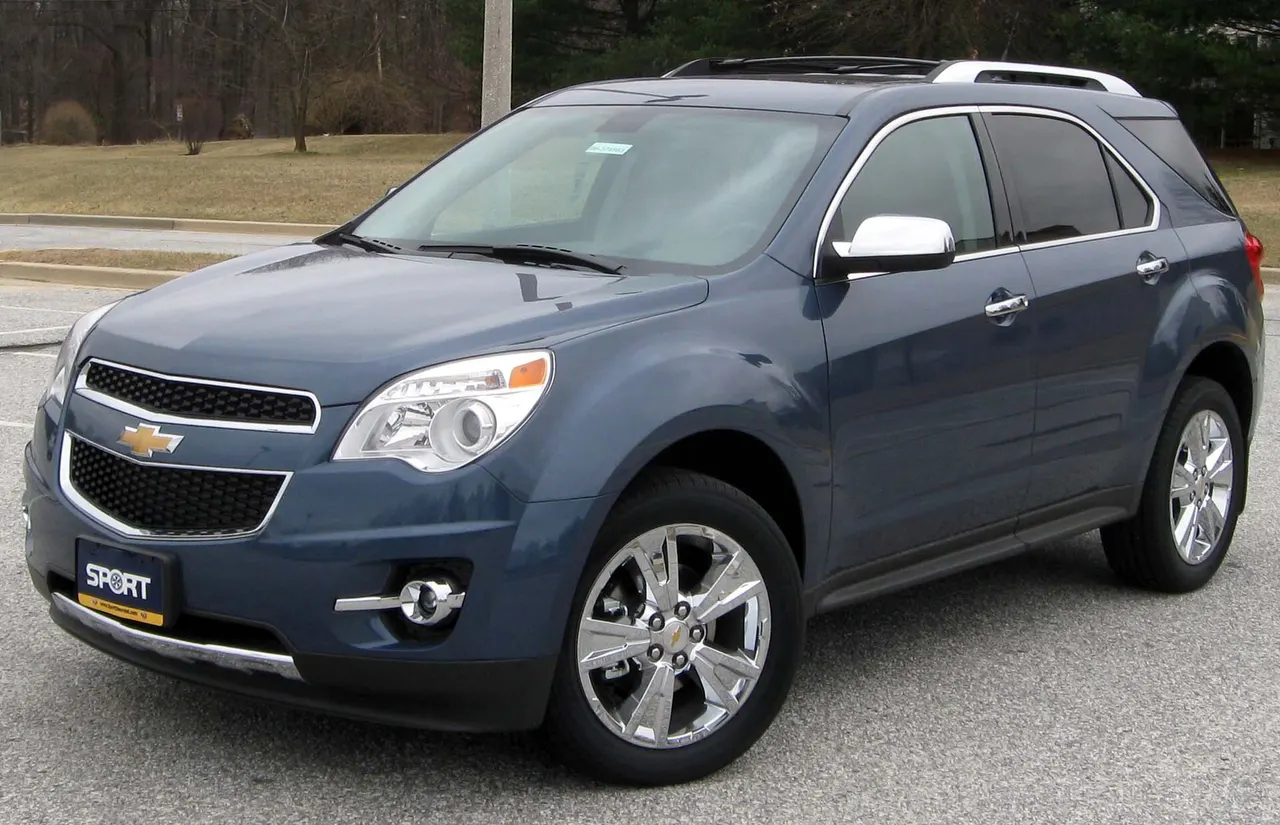
2011 Chevrolet Equinox LTZ

Photo: 2011 Chevrolet Equinox LTZ · IFCAR, public domain, via Wikimedia Commons

Problem areas

Ranked by severity-weighted complaints · share · median miles
  1. Air bags13% · 9 complaints · median 29,000 miles
  2. Engine33% · 22 complaints · median 74,000 miles
  3. Brakes10% · 7 complaints · median 35,000 miles
  4. Body and structure7% · 5 complaints · median 55,000 miles
  5. Powertrain12% · 8 complaints · median 49,000 miles
  6. Electrical9% · 6 complaints · median 35,000 miles
  7. Speed control6% · 4 complaints
  8. Visibility7% · 5 complaints
  9. Driver assistance1% · 1 complaints
  10. Fuel and propulsion4% · 3 complaints

Bars rank problem areas by complaints weighted for severity (crashes, fires, injuries and deaths count more). A complaint can name more than one area. Mileage is reported on about half of complaints.

What owners describe

Air bags

Owners report that air bags sometimes failed to deploy in crashes ranging from moderate to severe, occasionally with warning lights or seat belt problems noted before or after. Some say dealers couldn't diagnose the issue or found no applicable recall.

Warning signs:
Some owners noticed an 'Air Bag Needs Service' or airbag warning light, locked seat belts, or a fume-like odor before or after the collision.
What shops did:
Some owners report dealers could not find the cause, replaced seat belts, or told owners no recall applied; others say the vehicle was towed and totaled without repair.
Mileage:
most between 20,000 and 135,000 miles, among 10 complaints that give it

“the air bags became inoperable and failed to inflate or expose themselves out of the housing, and an “Air Bag Needs Service” warning message was displayed”

“a message will appear service tire monitor system and all gauges on the dash do not work, the radio, heating a/c also stops”

Brakes

Owners describe brake problems ranging from grinding noises and pulsating pedals to warning lights and reduced stopping power, sometimes leading to collisions. Dealers have cut or replaced rotors or identified a faulty brake control component, but a few owners say the issue returned or couldn't be fixed.

Warning signs:
Some report grinding noises from the front brakes, warning lights for stabili-trak, ABS, and emergency brake, or a hard brake pedal before the problem occurred.
What shops did:
A few owners say dealers cut or replaced rotors or diagnosed a faulty brake control modulator, though repairs sometimes did not resolve the issue or parts were unavailable.
Mileage:
most between 30,000 and 65,000 miles, among 9 complaints that give it

“heard a loud grinding sound coming from the passenger’s side front of the vehicle”

“I felt my brakes started pulsating, making it difficult for me to come to a complete stop”

Engine

Many owners of this model describe sudden oil loss or heavy oil consumption tied to a frozen or clogged PCV valve and rear main seal, sometimes causing the engine to stall or fail outright. Warning signs often included odd noises, warning lights, or oil pooling under the car, with repairs ranging from seal replacement to full engine swaps.

Warning signs:
Many report knocking, rattling or grinding engine noises, oil smell, reduced-power or check-engine/StabiliTrak warnings, shaking, and visible oil puddles before the vehicle stalled.
What shops did:
Dealers and independent mechanics most often diagnosed a blown rear main seal or clogged PCV valve, replacing seals, PCV parts, or in some cases the entire engine, though some found no leak or couldn't duplicate the issue.
Mileage:
most between 70,000 and 105,000 miles, among 51 complaints that give it

“the PCV valve was frozen however, the repairs were unknown to the contact as the mechanic stated that the issue was resolved”

“the vehicle was consuming 5 quarts of oil for every 2,000 miles driven”

Summaries are written with AI from the owner complaints shown on NHTSA's site and checked against them; quotes are word for word.

NHTSA lists no recalls for the 2017 Chevrolet Equinox.

A recall only helps if the repair was done. Enter the vehicle's 17-character VIN on NHTSA's official recall lookup before you buy.

Service bulletins

Chevrolet sent NHTSA 1,078 service bulletins and other notices to dealers covering the 2017 Equinox. These are repair instructions, not recalls. Warranty extensions and bulletins about its top problem areas:

  • 22-NA-244 · May 2024 · Warranty extensionThis service bulletin provides information about GM Accessories - Dealer-Installed, Repaired or Replaced During Warranty Coverage Period.
  • 00-06-01-026R · June 2025This service bulletin provides information on replacing the intake manifold when the engine is replaced after severe internal engine damage.
  • 23-NA-153 · May 2025The service bulletin advises the tech of a normal transmission shift condition and the delay in throttle response when the throttle plate is opened rapidly and advises the customer that it is normal…
  • 15-NA-010 · May 2025This service bulletin provides information to dealership personnel for new vehicles with less than 1,000 miles that may not pass California smog inspection or smog inspection in other states.
  • 25-NA-100 · April 2025This warranty administration bulletin provides policy information on vehicles outside of a California Emissions State who move to and register their vehicle in a California Emission State may be…
  • 25-NA-052 · March 2025This bulletin advises the technician to flush the cooling system multiple times if oil has been found in the cooling system and replace the parts that may be contaminated due to oil in system.
  • 25-NA-065 · March 2025This informational bulletin instructs the tech when fuel/fluid is needed to be tested and where it can be sent for analysis.
  • 21-NA-043 · January 2025This bulletin advises the dealers to maintain the vehicle stock on hand by doing a full inspection on the vehicles before being sold (prepping) to the customer.

All 2017 Equinox bulletins on NHTSA ›

Questions owners ask

Is the 2017 Chevrolet Equinox reliable?
Owners filed 67 complaints with NHTSA about the 2017 Chevrolet Equinox in its first five years on the road, about 24 for every 100,000 sold: 0.4× the rate of a typical Equinox year. That's among the fewest of any Equinox year. Ratings compare Equinox years with each other using complaints filed with NHTSA; they don't measure every problem owners have.
What are the most common 2017 Equinox problems?
Owners' complaints most often involve the air bags (13%), the engine (33%) and the brakes (10%). A complaint can name more than one area.
Has the 2017 Chevrolet Equinox been recalled?
NHTSA lists no recalls for the 2017 Chevrolet Equinox.

Sources

Owner complaints, recalls and manufacturer communications from NHTSA's public data files, as of September 24, 2026. Complaints are counted once each, over the model year's first 60 months on the road. UsedScore is not affiliated with NHTSA or Chevrolet. The 2017 Chevrolet Equinox on NHTSA.gov · How we rate