2014 Honda Pilot: Best bet

Owners filed 57 complaints with NHTSA about the 2014 Honda Pilot in its first five years on the road, about 50 for every 100,000 sold: 0.5× the rate of a typical Pilot year. That's among the fewest of any Pilot year.

The biggest problem area, counting serious complaints more, is the engine (21% of complaints, median 24,000 miles).

Complaint index
0.5×
per vehicle sold, vs. a typical Pilot year
Rank
5th of 14
1st = fewest complaints
Complaints
57
first five years; 50 per 100,000 sold
Recalls
3
campaigns
2nd generation, 2009–2015 · Updated September 24, 2026 · How we rate
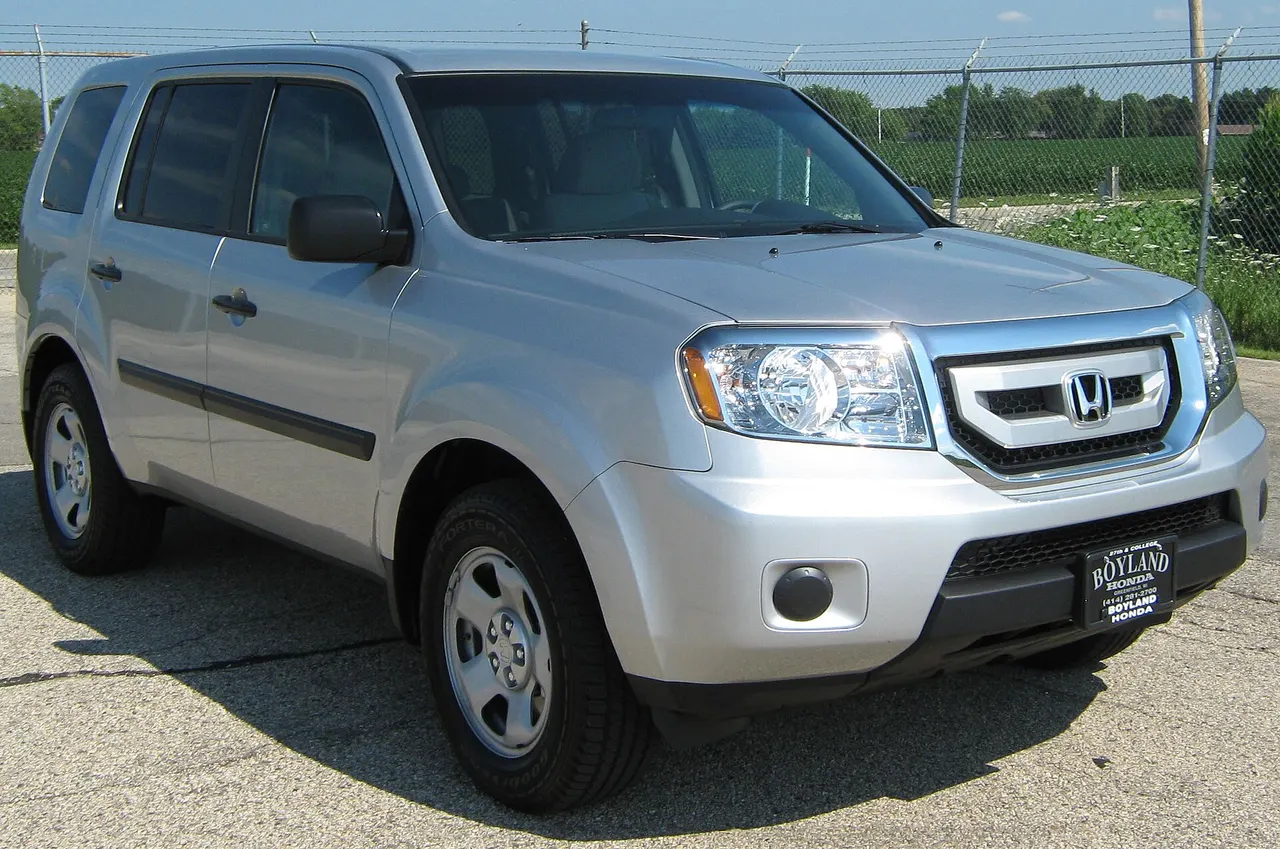
2011 Honda Pilot LX

Photo: 2011 Honda Pilot LX · U.S. National Highway Traffic Safety Administration, public domain, via Wikimedia Commons

Problem areas

Ranked by severity-weighted complaints · share · median miles
  1. Engine21% · 12 complaints · median 24,000 miles
  2. Air bags9% · 5 complaints
  3. Wheels and tires25% · 14 complaints · median 35,000 miles
  4. Brakes16% · 9 complaints · median 38,000 miles
  5. Electrical7% · 4 complaints
  6. Speed control5% · 3 complaints
  7. Powertrain9% · 5 complaints · median 19,000 miles
  8. Fuel and propulsion4% · 2 complaints
  9. Steering7% · 4 complaints
  10. Seats and belts4% · 2 complaints

Bars rank problem areas by complaints weighted for severity (crashes, fires, injuries and deaths count more). A complaint can name more than one area. Mileage is reported on about half of complaints.

What owners describe

Engine

Many owners of this Pilot describe engine misfires from fouled spark plugs and worn piston rings, often paired with rough idle, vibration, or stalling. Repairs ranged from repeated plug and coil replacements to full engine rebuilds, with several owners citing a prior recall on earlier model years that didn't cover theirs.

Warning signs:
Owners report check engine, VTM-4 and VSA lights, rough idle, shaking or vibration, rpm surges, loss of power, stalling and clunking or rumbling noises before the failure.
What shops did:
Dealers commonly replaced spark plugs and coils, sometimes repeatedly, diagnosed piston ring or cylinder misfire codes, and in several cases rebuilt or replaced the engine, often at owner expense.
Mileage:
most between 15,000 and 50,000 miles, among 13 complaints that give it

“Had intermitent misfires on #1 and #2 cylinders. Replaced both plugs and coils on those cylinders.”

“They stated the piston rings need to be replaced and I am getting a cylinder #3 misfire.”

Wheels and tires

Owners of this Pilot report multiple wheel rims cracking at the weld seam over time, leading to slow air leaks and flat tires. Dealers frequently replaced individual rims, but many owners say the cracking recurred on other wheels despite normal driving conditions.

Warning signs:
Many owners noticed a tire pressure warning light or a slow leak before finding a crack at the wheel's weld joint.
What shops did:
Dealers often replaced the cracked rim, sometimes under warranty and sometimes at the owner's expense, and repeat cracks recurred on other wheels.
Mileage:
most between 35,000 and 50,000 miles, among 14 complaints that give it

“A hairline fracture appears in the wheel weld causing the tire to deflate.”

“Tiny air channels developed through parts of the welding joint, allowing air to slowly escape.”

Summaries are written with AI from the owner complaints shown on NHTSA's site and checked against them; quotes are word for word.

  • NHTSA 19V502000June 20199,555 vehicles

    Air bags: frontal: passenger side: inflator module

    Honda (American Honda Motor Co.) is recalling certain 2009-2014 Acura TSX, 2011-2014 TSX Sport Wagon, 2010-2013 ZDX, 2008-2012 Honda Accord, 2010-2011 Accord Crosstour, 2006-2011 Civic and Civic Hybrid, 2008-2010 Civic GX NGV, 2012-2015 Crosstour, 2007-2011 CR-V, 2009-2013 Fit, 2014 Fit EV, 2010-2014 Insight, and 2009-2015 Pilot vehicles. The vehicles are equipped with passenger frontal air bag inflators assembled as a recall remedy part or replacement service part, that may explode due to propellant degradation occurring after long-term exposure to high absolute humidity, temperature and temperature cycling.

    Risk: An inflator explosion may result in sharp metal fragments striking the driver or other occupants resulting in serious injury or death.

    Fix: Honda will notify owners, and dealers will replace the passenger frontal air bag inflator, free of charge.
  • NHTSA 19V378000May 201919,138 vehicles

    Air bags: frontal: passenger side: inflator module

    Honda (American Honda Motor Co.) is recalling certain 2009-2014 Acura TSX, 2011-2013 TSX Sport Wagon, and 2010-2012 ZDX and 2008-2012 Honda Accord, 2010-2011 Accord Crosstour, 2006-2011 Civic, Civic Hybrid and Civic NGV, 2012-2014 Crosstour, 2007-2011 CR-V, 2009-2013 Fit, 2010-2013 Insight, and 2009-2015 Pilot vehicles. The front passenger air bag inflator may have been installed incorrectly during replacement.

    Risk: An incorrectly installed air bag inflator may not properly deploy the passenger frontal air bag in the event of a crash, increasing the risk of injury.

    Fix: Honda will notify owners, and dealers will inspect the inflator installation and, if necessary, replace the passenger frontal air bag module assembly, free of charge.

  • NHTSA 18V661000September 20181,355,406 vehicles

    Air bags: frontal: passenger side: inflator module

    Honda (American Honda Motor Co.) is recalling certain 2014 Honda Insight and Acura TSX and TSX Wagon, 2014-2015 Honda Crosstour and Pilot vehicles nationwide, as well as certain 2014 Honda FCX Clarity and Fit EV vehicles in Florida, Hawaii, Puerto Rico, Texas, Alabama, Georgia, Louisiana, Mississippi, South Carolina, California, American Samoa, Guam, the Northern Mariana Islands (Saipan) and the U.S. Virgin Islands. Honda is also recalling certain 2011-2013 Acura TSX, TSX Wagon and ZDX, Honda Crosstour, Insight, Fit and Pilot vehicles, 2011-2012 Honda Accord and 2011 Honda Civic NGV, Civic, Civic Hybrid and CR-V vehicles in Arizona, Arkansas, Delaware, the District of Columbia, Illinois, Indiana, Kansas, Kentucky, Maryland, Missouri, Nebraska, Nevada, New Jersey, New Mexico, North Carolina, Ohio, Oklahoma, Pennsylvania, Tennessee, Virginia and West Virginia. Lastly, Honda is recalling certain 2010-2013 Acura TSX and ZDX, Honda Crosstour, Fit, Insight and Pilot, 2011-2013 TSX Wagon, 2010-2012 Honda Accord and 2010-2011 Honda Civic NGV, Civic, Civic Hybrid and CR-V vehicles in Alaska, Colorado, Connecticut, Idaho, Iowa, Maine, Massachusetts, Michigan, Minnesota, Montana, New Hampshire, New York, North Dakota, Oregon, Rhode Island, South Dakota, Utah, Vermont, Washington, Wisconsin and Wyoming. These vehicles are equipped with certain air bag air bag inflators assembled as part of the frontal air bag modules, and used as original equipment or replacement equipment (such as after a vehicle crash necessitating replacement of the original air bags), may explode due to propellant degradation occurring after long-term exposure to higher absolute humidity, temperature and temperature cycling.

    Risk: An inflator explosion may result in sharp metal fragments striking the driver or other occupants resulting in serious injury or death.

    Fix: Honda will notify owners, and dealers will replace the passenger frontal air bag inflator, free of charge.

A recall only helps if the repair was done. Enter the vehicle's 17-character VIN on NHTSA's official recall lookup before you buy.

Service bulletins

Honda sent NHTSA 84 service bulletins and other notices to dealers covering the 2014 Pilot. These are repair instructions, not recalls. Warranty extensions and bulletins about its top problem areas:

  • 19-003-1 · August 2019 · Warranty extensionCustomer Support Program For Front Passenger's Airbag Inflator for 2010-12 Accord and Other Listed Years and Models (Expires September 30, 2028)
  • A26-002 · February 2026The piston ring function deteriorates due to ring low wear toughness and sticking from sludge.
  • A25-060 · August 2025The piston ring function deteriorates due to ring wear and sticking from sludge.
  • ONL6Z6072025 · July 2025Owner Notification Letter - the piston ring function can deteriorate due to ring low wear toughness and sticking from sludge.
  • AEBM06172025901 · June 2025Dealer Message - Piston ring effectiveness may be reduced due to excessive wear and oil sludge build-up, which can cause oil to adhere to the spark plug, potentially leading to carbon fouling and…
  • ATI&04082024901 · April 2024Dealer Message - American Honda Motor Co., Inc.
  • ATI&03212024905 · March 2024Dealer Message - American Honda Motor Co., Inc.
  • ATI&03192024902 · March 2024Dealer Message - American Honda Motor Co., Inc.

All 2014 Pilot bulletins on NHTSA ›

Questions owners ask

Is the 2014 Honda Pilot reliable?
Owners filed 57 complaints with NHTSA about the 2014 Honda Pilot in its first five years on the road, about 50 for every 100,000 sold: 0.5× the rate of a typical Pilot year. That's among the fewest of any Pilot year. Ratings compare Pilot years with each other using complaints filed with NHTSA; they don't measure every problem owners have.
What are the most common 2014 Pilot problems?
Owners' complaints most often involve the engine (21%), the air bags (9%) and the wheels and tires (25%). A complaint can name more than one area.
Has the 2014 Honda Pilot been recalled?
Yes. NHTSA lists 3 recall campaigns for the 2014 Honda Pilot, the most recent in June 2019 (air bags). Enter the vehicle's VIN on NHTSA's recall lookup to see whether the repairs were done.

Sources

Owner complaints, recalls and manufacturer communications from NHTSA's public data files, as of September 24, 2026. Complaints are counted once each, over the model year's first 60 months on the road. UsedScore is not affiliated with NHTSA or Honda. The 2014 Honda Pilot on NHTSA.gov · How we rate