2017 Nissan Rogue: Use caution

Owners filed 312 complaints with NHTSA about the 2017 Nissan Rogue in its first five years on the road, about 81 for every 100,000 sold: 1.2× the rate of a typical Rogue year. That's above average, so use caution.

The biggest problem area, counting serious complaints more, is the brakes (30% of complaints, median 25,000 miles).

Complaint index
1.2×
per vehicle sold, vs. a typical Rogue year
Rank
9th of 14
1st = fewest complaints
Complaints
312
first five years; 81 per 100,000 sold
Recalls
6
campaigns
2nd generation, 2014–2020 · Updated September 24, 2026 · How we rate
2017–2020 Nissan Rogue

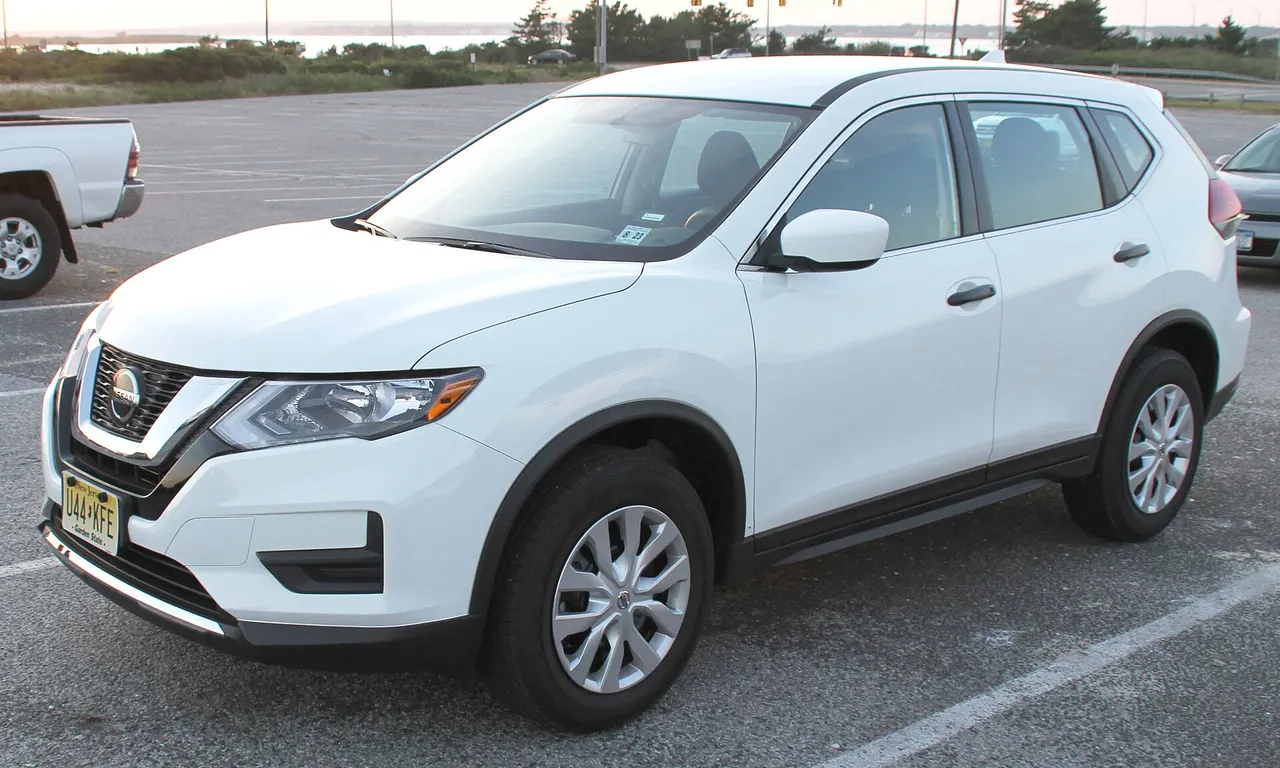
Photo: 2017–2020 Nissan Rogue · Tony Hisgett, CC BY 2.0, via Wikimedia Commons

Problem areas

Ranked by severity-weighted complaints · share · median miles
  1. Brakes30% · 94 complaints · median 25,000 miles
  2. Air bags11% · 34 complaints · median 16,000 miles
  3. Powertrain16% · 50 complaints · median 35,000 miles
  4. Driver assistance12% · 38 complaints · median 11,000 miles
  5. Engine10% · 32 complaints · median 14,000 miles
  6. Speed control6% · 20 complaints · median 19,000 miles
  7. Seats and belts9% · 27 complaints · median 31,000 miles
  8. Steering5% · 15 complaints · median 14,000 miles
  9. Electrical8% · 24 complaints · median 18,000 miles
  10. Body and structure3% · 10 complaints · median 37,000 miles

Bars rank problem areas by complaints weighted for severity (crashes, fires, injuries and deaths count more). A complaint can name more than one area. Mileage is reported on about half of complaints.

What owners describe

Air bags

Owners describe two recurring issues: air bags that did not deploy in crashes, and passenger-side air bag warning lights or occupant sensors that stayed on or off incorrectly. Many say dealers identified sensor or control unit problems but repairs were costly and sometimes not covered.

Warning signs:
Many report a dashboard air bag or passenger seat warning light illuminating or cycling on and off, sometimes with a passenger seat 'off' indicator despite someone sitting there.
What shops did:
Dealers often diagnosed a faulty occupant sensor, control unit, or seat and quoted repairs costing several hundred to several thousand dollars, sometimes not covered under warranty; in some cases sensors were reprogrammed or replaced without resolving the light.
Mileage:
most between 10,000 and 40,000 miles, among 28 complaints that give it

“the dealer, who informed the contact that the OCS control module and OCS sensors needed to be replaced”

“The passenger seat sensors register that someone is not sitting in the seat when someone is.”

Brakes

Many owners of this Rogue report the automatic emergency braking system suddenly activating with no obstacle present, causing abrupt stops or near-collisions. Some also describe the brakes failing to stop the car when needed, with dealers frequently unable to find or permanently fix the cause.

Warning signs:
Many describe warning beeps, chimes, or dashboard alerts, a grinding or shuddering sensation, and sudden hard braking with no obstruction ahead.
What shops did:
Dealers often could not duplicate the problem, sometimes replaced or recalibrated the sensor, reprogrammed the system, or performed a software update, but several owners report the issue recurring afterward.
Mileage:
most between 10,000 and 45,000 miles, among 90 complaints that give it

“The vehicle shuddered and the car went from 60 MPH to about 15-20 MPH in a matter of a couple hundred feet”

“My automatic emergency brake warning had beeped only twice before the car stopped”

Powertrain

Owners of this Rogue commonly describe transmission trouble, ranging from hesitation and RPM surges to sudden loss of power or full CVT failure, sometimes while driving in traffic. Repairs often meant an expensive transmission replacement, and several owners say dealers first struggled to diagnose or reproduce the issue.

Warning signs:
Many report shuddering or vibration, RPM surges, grinding or burning smells, hesitation on acceleration, and illuminated check-engine lights before the failure.
What shops did:
Dealers often diagnosed a failed CVT or valve body and replaced the transmission, though some owners say technicians could not duplicate or find the problem, and some repairs were not covered once out of warranty.
Mileage:
most between 15,000 and 80,000 miles, among 53 complaints that give it

“At just over 60,000 miles the vehicle began to chug at slow acceleration.”

“the vehicle began to slow down and the engine rpm's began to increase to about 5000 rpm”

Summaries are written with AI from the owner complaints shown on NHTSA's site and checked against them; quotes are word for word.

  • NHTSA 23V093000February 2023712,458 vehicles

    Electrical system: ignition: anti-theft: immobilizer/proximity: key/sender

    Nissan North America, Inc. (Nissan) is recalling certain 2014-2020 Rogue and 2017-2022 Rogue Sport vehicles equipped with a jackknife style ignition key. The jackknife key may collapse into a folded position while driving.

    Risk: Driver contact with a key in the collapsed position could inadvertently shut off the vehicle while driving, increasing the risk of a crash. Additionally, if the vehicle shuts off while driving, the air bags may not deploy in a crash as intended, increasing the risk of injury.

    Fix: Dealers will insert a spacer into the key slot of the jackknife key, free of charge.

  • NHTSA 22V875000November 2022125,215 vehicles

    Electrical system: wiring

    Nissan North America, Inc. (Nissan) is recalling certain 2017 Rogue vehicles. Water may leak into and corrode the dash side harness connector.

    Risk: A corroded dash side harness connector increases the risk of a fire.

    Fix: Dealers will apply grease and repair any corroded connector as necessary, free of charge.

  • NHTSA 22V549000July 20225,904 vehicles

    Service brakes, hydraulic: power assist: hydraulic

    Nissan North America, Inc. (Nissan) is recalling certain 2017-2019 Rogue Hybrid vehicles. The hydraulic brake booster assembly may overheat internally, resulting in a loss of power brake assist. As such, these vehicles fail to comply with the requirements of Federal Motor Vehicle Safety Standard number 135, "Light Vehicle Brake Systems."

    Risk: A loss of power brake assist can extend the distance required to stop the vehicle, increasing the risk of a crash.

    Fix: Dealers will replace the hydraulic brake booster supply unit, free of charge.

  • NHTSA 21V839000October 20215,905 vehicles

    Engine and engine cooling: engine: engine control module (ECU/ECM) · Hybrid propulsion system

    Nissan North America, Inc. (Nissan) is recalling certain 2017-2019 Rogue Hybrid vehicles. Contact with the Electronic Control Module (ECM) bracket may damage the engine harness, causing a blown fuse.

    Risk: A blown fuse may cause an engine stall, increasing the risk of a crash.

    Fix: Dealers will install a harness protector cover, free of charge.

  • NHTSA 17V663000October 20174,883 vehicles

    Seats · Seat belts

    Nissan North America, Inc. (Nissan) is recalling certain 2016-2017 Nissan Rogue vehicles. The recliner joints on the lower seat frame for the rear seats may have improper welds. As such, these vehicles fail to comply with the requirements of Federal Motor Vehicle Safety Standards (FMVSS) number 207, "Seating Systems," and 210, "Seat Belt Assembly Anchorages."

    Risk: The insufficient welds can increase the risk of injury to the occupants in the event of a crash.

    Fix: Nissan will notify owners, and dealers will inspect the seat frames and replace any defective lower seat frames, free of charge.

  • NHTSA 16V244000April 20163,296,947 vehicles

    Air bags: sensor: occupant classification

    Nissan North America, Inc. (Nissan) is recalling certain model year 2016-2017 Nissan Maxima, 2013-2016 Nissan Altima, NV200, LEAF, Sentra, and Pathfinder, 2014-2016 Nissan NV200 Taxi, Infiniti QX60, QX60 Hybrid, and Q50 Hybrid, 2014-2017 Nissan Rogue and Infiniti Q50, 2015-2016 Nissan Murano, Murano Hybrid, and Chevrolet City Express, 2014-2015 Nissan Pathfinder Hybrid, and 2013 Infiniti JX35 vehicles. In these vehicles, the front seat passenger Occupant Classification System (OCS) may incorrectly classify an adult passenger as a child or classify the seat as empty despite it being occupied. As a result, the passenger frontal air bag may be turned off and not deploy in the event of a crash.

    Risk: If the passenger frontal air bag does not deploy as intended in the event of a crash, the passenger is at an increased risk of injury.

    Fix: Nissan will notify their owners.

A recall only helps if the repair was done. Enter the vehicle's 17-character VIN on NHTSA's official recall lookup before you buy.
Service bulletins

Nissan sent NHTSA 270 service bulletins and other notices to dealers covering the 2017 Rogue. These are repair instructions, not recalls. Warranty extensions and bulletins about its top problem areas:

  • NTB19-033G · February 2025INTELLIGENT CRUISE CONTROL INOPERATIVE AND AEB/FEB WARNING LIGHT ON OR RADAR OBSTRUCTION MESSAGE DISPLAYED WITH DTC C1A16 OR C2582 IF YOU CONFIRM IMPORTANT: The purpose of ACTION (on the next page)…
  • NTB19-042F · February 2025AUTOMATIC EMERGENCY BRAKING WARNING LIGHT BLINKING APPLIED SYSTEMS: Vehicles equipped with a lane camera (see Figure 1) SERVICE INFORMATION If the Automatic Emergency Braking (AEB) warning light or…
  • NTB19-071D · September 2024DTC B00A0-00 STORED This bulletin has been amended.
  • NTB22-080 · September 2024CAMPAIGN BULLETIN Hydraulic Brake Booster Voluntary Safety Recall Campaign Reference: R22A6 Date: September 18, 2024 Attention: Dealer Principal, Sales, Service & Parts Managers SAFETY RECALL…
  • NTB12-103I · June 2024CVT/TCM CALIBRATION DATA “WRITE” PROCEDURE This bulletin has been amended.
  • NTB17-003F · December 2023FLUID LEAK CAUSED BY TRANSFER ASSEMBLY RIGHT SIDE DRIVE SHAFT OIL SEAL This bulletin has been amended.
  • NTB21-094B · December 2023TRANSFER ASSEMBLY SEAL REPLACEMENT FOR AWD FRONT DRIVE SHAFT REMOVAL This bulletin has been amended.
  • NTB12-103H · May 2023CVT/TCM CALIBRATION DATA “WRITE” PROCEDURE This bulletin has been amended.

All 2017 Rogue bulletins on NHTSA ›

Questions owners ask

Is the 2017 Nissan Rogue reliable?
Owners filed 312 complaints with NHTSA about the 2017 Nissan Rogue in its first five years on the road, about 81 for every 100,000 sold: 1.2× the rate of a typical Rogue year. That's above average, so use caution. Ratings compare Rogue years with each other using complaints filed with NHTSA; they don't measure every problem owners have.
What are the most common 2017 Rogue problems?
Owners' complaints most often involve the brakes (30%), the air bags (11%) and the powertrain (transmission and drivetrain) (16%). A complaint can name more than one area.
Has the 2017 Nissan Rogue been recalled?
Yes. NHTSA lists 6 recall campaigns for the 2017 Nissan Rogue, the most recent in February 2023 (electrical system). Enter the vehicle's VIN on NHTSA's recall lookup to see whether the repairs were done.

Sources

Owner complaints, recalls and manufacturer communications from NHTSA's public data files, as of September 24, 2026. Complaints are counted once each, over the model year's first 60 months on the road. UsedScore is not affiliated with NHTSA or Nissan. The 2017 Nissan Rogue on NHTSA.gov · How we rate