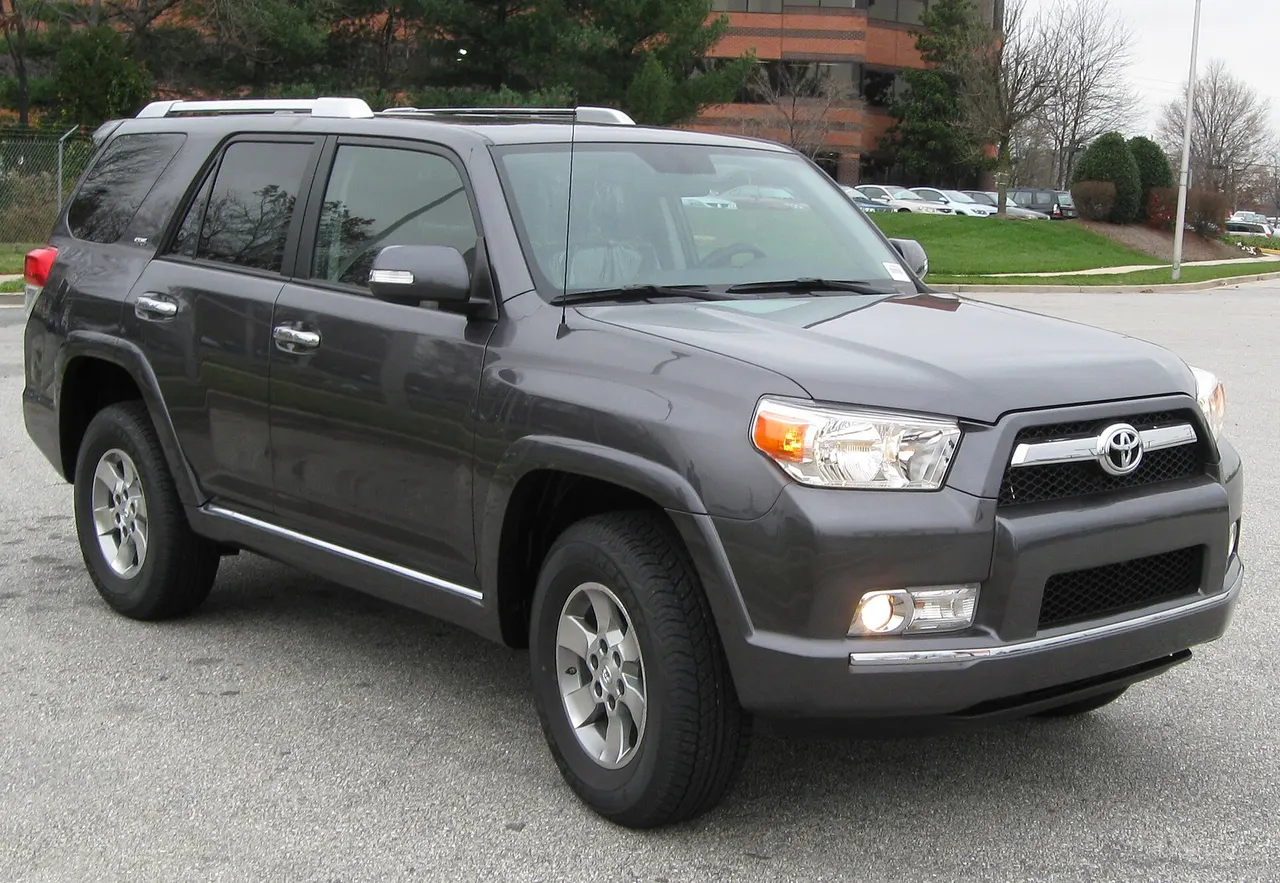
NHTSA 19V741000October 2019928,220 vehicles
Air bags: frontal: passenger side: inflator module · Air bags: frontal: driver side: inflator module
Toyota Motor Engineering & Manufacturing (Toyota) is recalling certain 2010-2016 4Runner, 2003-2006 Tundra, 2003-2013 Corolla, 2009-2010 Corolla Matrix, 2004-2005 RAV4, 2002-2007 Sequoia, 2011-2013 Sienna, 2008-2012 Scion xB, 2008-2009 Lexus IS-F, 2007-2012 Yaris and Lexus ES350, 2010-2017 Lexus GX460, 2002-2010 Lexus SC430, 2006-2012 Lexus IS250 and IS350 and 2010-2015 Lexus IS250C and IS350C vehicles. These vehicles had their driver or passenger frontal air bag inflators previously replaced under a prior recall using inflators of the same design. The inflators may explode due to propellant degradation occurring after long-term exposure to high absolute humidity, temperature and temperature cycling.
Risk: An inflator explosion may result in sharp metal fragments striking the driver or other occupants resulting in serious injury or death.
Fix: Toyota will notify owners.
NHTSA 19V005000January 20191,299,448 vehicles
Air bags: frontal: passenger side: inflator module
Toyota Motor Engineering & Manufacturing (Toyota) is recalling certain 2014-2016 Toyota 4Runner, 2014-2015 Scion xB, Lexus IS350C, IS250C, 2014 Toyota Sienna, Lexus IS-F, and 2014-2017 Lexus GX460 vehicles sold, or ever registered in the states of Alabama, California, Florida, Georgia, Hawaii, Louisiana, Mississippi, South Carolina, Texas, Puerto Rico, American Samoa, Guam, the Northern Mariana Islands (Saipan), and the U.S. Virgin Islands or "Zone A." Toyota is also recalling certain 2011-2013 Toyota Corolla, Corolla Matrix, Lexus IS250, IS350, 2011-2016 4Runner, 2011-2015 Scion xB, Lexus IS350C, IS250C, 2011-2014 Toyota Sienna, Lexus IS-F, 2011-2017 Lexus GX460, and 2011-2012 Lexus ES350 vehicles ever registered in the states of Arizona, Arkansas, Delaware, District of Columbia, Illinois, Indiana, Kansas, Kentucky, Maryland, Missouri, Nebraska, Nevada, New Jersey, New Mexico, North Carolina, Ohio, Oklahoma, Pennsylvania, Tennessee, Virginia, and West Virginia or "Zone B." Toyota is also recalling certain 2010-2013 Toyota Corolla, Corolla Matrix, Lexus IS350, 2010-2016 4Runner, 2010-2013 Lexus IS250, 2010-2015 Scion xB, Lexus IS350C, IS250C, 2010-2017 Lexus GX460, 2010-2014 Lexus IS-F, and 2010-2012 Lexus ES350 vehicles ever registered in the states of Alaska, Colorado, Connecticut, Idaho, Iowa, Maine, Massachusetts, Michigan, Minnesota, Montana, New Hampshire, New York, North Dakota, Oregon, Rhode Island, South Dakota, Utah, Vermont, Washington, Wisconsin, and Wyoming or "Zone C." These vehicles are equipped with air bag inflators assembled as part of the passenger frontal air bag modules, used as original equipment or replacement equipment (such as after a vehicle crash necessitating replacement of the original air bags), that may explode due to propellant degradation occurring after long-term exposure to high absolute humidity, temperature and temperature cycling.
Risk: An inflator explosion may result in sharp metal fragments striking the driver or other occupants resulting in serious injury or death.
Fix: Toyota will notify owners.
NHTSA 18V024000January 2018628,018 vehicles
Air bags: frontal: passenger side: inflator module
Toyota Motor Engineering & Manufacturing (Toyota) is recalling certain 2013 Scion xB, Toyota Corolla, Corolla Matrix, Sienna, 4Runner, Lexus IS250, IS350, IS250C, IS350C, IS-F, and GX460 vehicles sold, ever registered, in the states of AL, CA, FL, GA, HI, LA, MS, SC, TX, PR, AS, GU, the MP (Saipan), and the U.S. VI or "Zone A." Toyota is also recalling certain 2010 Scion xB, Toyota Corolla, Corolla Matrix, Yaris, 4Runner, Lexus IS250, IS350, IS250C, IS350C, ES350, IS-F, GX460, and Pontiac Vibe vehicles sold, ever registered, in the states of AZ, AR, DE, DC, IL, IN, KS, KY, MD, MO, NE, NV, NJ, NM, NC, OH, OK, PA, TN, VA, and WV or "Zone B." Toyota is also recalling certain 2009 Scion xB, Toyota Corolla, Corolla Matrix, Yaris, Lexus IS250, IS350, ES350, IS-F, and Pontiac Vibe vehicles ever registered in the states of AK, CO, CT, ID, IA, ME, MA, MI, MN, MT, NH, NY, ND, OR, RI, SD, UT, VT, WA, WI, and WY or "Zone C." These vehicles are equipped with certain air bag inflators assembled as part of the passenger frontal air bag modules used as original equipment or replacement equipment. In the event of a crash necessitating deployment of the passenger frontal air bag, these inflators may explode due to propellant degradation occurring after long-term exposure to absolute humidity and temperature cycling.
Risk: An inflator explosion may result in sharp metal fragments striking the driver or other occupants resulting in serious injury or death.
Fix: Toyota will notify the Toyota, Scion and Lexus owners.
NHTSA 16V577000August 2016425 vehicles
Engine and engine cooling: exhaust system: manifold/header/muffler/tail pipe
Southeast Toyota Distributors, LLC (SET) is recalling certain model year 2010-2015 Toyota 4Runner vehicles manufactured September 3, 2009, to December 1, 2014. The affected vehicles may be equipped with accessory exhaust tips installed by SET or SET dealers that may contact people and possibly burn them while they are standing behind the vehicle.
Risk: Contact with an exhaust tip may result in personal injury.
Fix: SET will notify owners, and dealers will install a re-designed exhaust tip that is smaller in diameter and is more recessed behind the bumper, free of charge.
NHTSA 16V396000June 20167,749 vehicles
Seats: front assembly: seat heater/cooler
Southeast Toyota Distributors, LLC (SET) is recalling certain 2005-2011 4Runner, Highlander, Sequoia, and Sienna, 2005-2010 Avalon and Tundra, 2006-2008 Camry Solara, 2006-2010 Highlander hybrid, 2006-2011 Rav4 and Tacoma, 2007-2010 FJ Cruiser, 2007-2011 Camry hybrid, 2009-2010 Venza, 2010-2012 Prius, 1988-1990 and 2005-2010 Camry, and 1989 and 2009-2010 Corolla vehicles equipped with aftermarket accessory seat heaters with a copper strand heating element. The electrical wiring in the seat heaters may be damaged when the seat cushion is compressed.
Risk: If damaged, the copper strand heating element may short circuit, increasing the risk of a fire.
Fix: SET will notify owners, and dealers will disconnect the seat heaters, free of charge, and refund the purchase price of the seat heater accessory.
NHTSA 16V340000May 20161,754,517 vehicles
Air bags: frontal: passenger side: inflator module
Toyota Motor Engineering & Manufacturing (Toyota) is recalling certain model year 2008-2011 Scion xB and Lexus IS F, 2009-2011 Toyota Corolla and Corolla Matrix, 2006-2011 Toyota Yaris, Lexus IS250 and Lexus IS350, 2010-2011 Toyota 4Runner, Lexus IS250C, Lexus IS350C and Lexus GX460, 2011 Sienna, 2007-2011 Lexus ES350, and 2009-2010 Pontiac Vibe vehicles, originally sold, or ever registered, in Alabama, California, Florida, Georgia, Hawaii, Louisiana, Mississippi, South Carolina, Texas, Puerto Rico, American Samoa, Guam, the Northern Mariana Islands (Saipan), and the U.S. Virgin Islands, or "Zone A." Additionally, unless included in "Zone A" above, Toyota is recalling certain model year 2008 Scion xB and Lexus IS F, 2007-2008 Toyota Yaris, 2006-2008 Lexus IS250 and Lexus IS350 and 2007-2008 Lexus ES350 vehicles, originally sold, or ever registered, in Arizona, Arkansas, Delaware, District of Columbia, Illinois, Indiana, Kansas, Kentucky, Maryland, Missouri, Nebraska, Nevada, New Jersey, New Mexico, North Carolina, Ohio, Oklahoma, Pennsylvania, Tennessee, Virginia, and West Virginia, or "Zone B." Vehicles of these model years and models that were not originally sold or ever registered in either Zones A or B are not subject to this safety recall. These vehicles are equipped with certain air bag inflators assembled as part of the passenger frontal air bag modules, and used as original equipment or replacement equipment. In the event of a crash necessitating deployment of the front air bags, these inflators may rupture due to propellant degradation occurring after long-term exposure to absolute humidity and temperature cycling.
Risk: An inflator rupture may result in metal fragments striking the vehicle occupants resulting in serious injury or death.
Fix: Toyota will notify the Toyota and Lexus owners.
NHTSA 15V515000August 20152,530 vehicles
Engine and engine cooling: exhaust system: manifold/header/muffler/tail pipe
Southeast Toyota Distributors, LLC (SET) is recalling certain model year 2010-2015 Toyota 4Runner vehicles manufactured March 29, 2010, to July 30, 2015. The affected vehicles may be equipped with accessory exhaust tips installed by SET or SET dealers that may contact people and possibly burn them while they are standing behind the vehicle.
Risk: Contact with an exhaust tip may result in personal injury.
Fix: SET will notify owners, and dealers will install a re-designed exhaust tip that is smaller in diameter and is more recessed behind the bumper, free of charge.
NHTSA 14V743000November 20143,233 vehicles
Seats: front assembly: seat heater/cooler
Southeast Toyota Distributors, LLC (SET) is recalling certain model year 2010-2011 Prius and Corolla, 2009-2011 Venza, 2006-2010 Avalon, 2007-2010 FJ Cruiser, 2005-2011 Sienna and Sequoia, 2006-2011 Tacoma 4x2 and 4x4, Camry, Highlander, Tundra 4x2 and 4x4, and 2007-2011 Rav4 and 4Runner. The affected vehicles may experience compression of the seat cushion which may damage the seat heater wiring.
Risk: Damage to the seat heater wiring could cause the wires to short, increasing the risk of the seat burning and causing personal injury to the occupant.
Fix: SET will notify owners, and dealers will disconnect the heaters with copper strand heating elements and refund the purchase price of the seat heater accessory, free of charge.
NHTSA 13V123000April 20137,525 vehicles
Equipment: other: labels
Southeast Toyota is recalling certain model year 2008 and 2010-2013 Toyota Tundra, 2010-2012 Rav4, 2012 Toyota Sequoia, 2010-2011 Toyota Corolla, 2010-2011 Toyota Camry and Camry Hybrid, 2010-2013 Toyota Highlander and Highlander Hybrid, 2010-2013 Toyota FJ Cruiser, 2011 Toyota Land Cruiser, 2010-2013 Toyota Venza, 2010-2011 Toyota 4Runner, 2010-2013 Toyota Tacoma, 2011-2012 Toyota Sienna, 2012 Toyota Prius, 2013 Scion FR-S, 2011 Scion XD, 2011 Scion XB, and 2012 Scion TC vehicles. These vehicles were sold with labels that were outside the allowable one percent of accuracy of actual weight added. Thus, these vehicles fail to comply with the requirements of Federal Motor Vehicle Safety Standard (FMVSS) Number 110, "Tire Selection and Rims."
Risk: An inaccurate label could lead to owners overloading their vehicles and tires. An overloaded vehicle can result in a tire failure which may result in a vehicle crash, personal injury, or property damage.
Fix: Southeast Toyota will notify owners and provide a corrected label with instructions concerning its installation.
NHTSA 13V014000January 20133,235 vehicles
Seats · Air bags: frontal: sensor/control module-inactive
Southeast Toyota Distributors, LLC (SET) is recalling certain models interspersed through model years 2009 through 2013 as follows: model year 2009-2012 Tacoma, 4Runner, Camry, Camry Hybrid, Prius, and RAV4; model year 2009-2010 Avalon, FJ Cruiser, and Highlander Hybrid; model year 2010-2013 model year Corolla, Sienna and Tundra; model year 2009-2013 Highlander and Venza; model year 2012 Prius V; and model year 2010-2012 Sequoia. During modification by SET to include accessories such as leather seat covers, seat heaters or headrest DVD systems, these vehicles may not have had the passenger seat occupant sensing system calibration tested. Without passing the calibration test, the occupant sensing system may not operate as designed.
Risk: If the front passenger seat occupant sensing system is out of calibration, the front passenger airbags may not deploy or they may deploy inappropriately for the passenger's size and position. This could increase the risk of personal injury during the event of a vehicle crash necessitating airbag deployment.
Fix: Southeast Toyota will notify owners, and dealers will test the sensitivity of the occupant detection sensors, and recalibrate them as necessary.
NHTSA 10V035000February 2010271,417 vehicles
Equipment: other: labels
Gulf states toyota is recalling certain model year 2005-2010 vehicles for failing to comply with the requirements of federal motor vehicle safety standard no. 110, "tire selection and rims." these vehicles were sold between september 1, 2005 and june 2, 2008 without the requisite load carrying capacity modification labels.
Risk: This does not meet the standard requirements.
Fix: Dealers will mail to consumers the corrected label or the customer will have the option for dealers to install the label free of charge.
NHTSA 10V036000February 2010153,418 vehicles
Equipment: other: labels
Southeast toyota is recalling certain model year 2005-2011 passenger vehicles for failing to comply with the requirements of federal motor vehicle safety standard no. 110, "tire selection and rims." these vehicles were sold without the requisite load carrying capacity modification labels.
Risk: A driver may overload a vehicle which may increase the risk of a crash.
Fix: Dealers will mail to consumers the corrected label or the customer will have the option for dealers to install the label free of charge.
A recall only helps if the repair was done. Enter the vehicle's 17-character VIN on NHTSA's official recall lookup before you buy.