2018 Toyota 4Runner: Solid
Owners filed 43 complaints with NHTSA about the 2018 Toyota 4Runner in its first five years on the road, about 31 for every 100,000 sold: 0.9× the rate of a typical 4Runner year. That's close to a typical year.
The biggest problem area, counting serious complaints more, is the air bags (12% of complaints, median 10,000 miles).
- Complaint index
- 0.9×
- per vehicle sold, vs. a typical 4Runner year
- Rank
- 6th of 14
- 1st = fewest complaints
- Complaints
- 43
- first five years; 31 per 100,000 sold
- Recalls
- 5
- campaigns
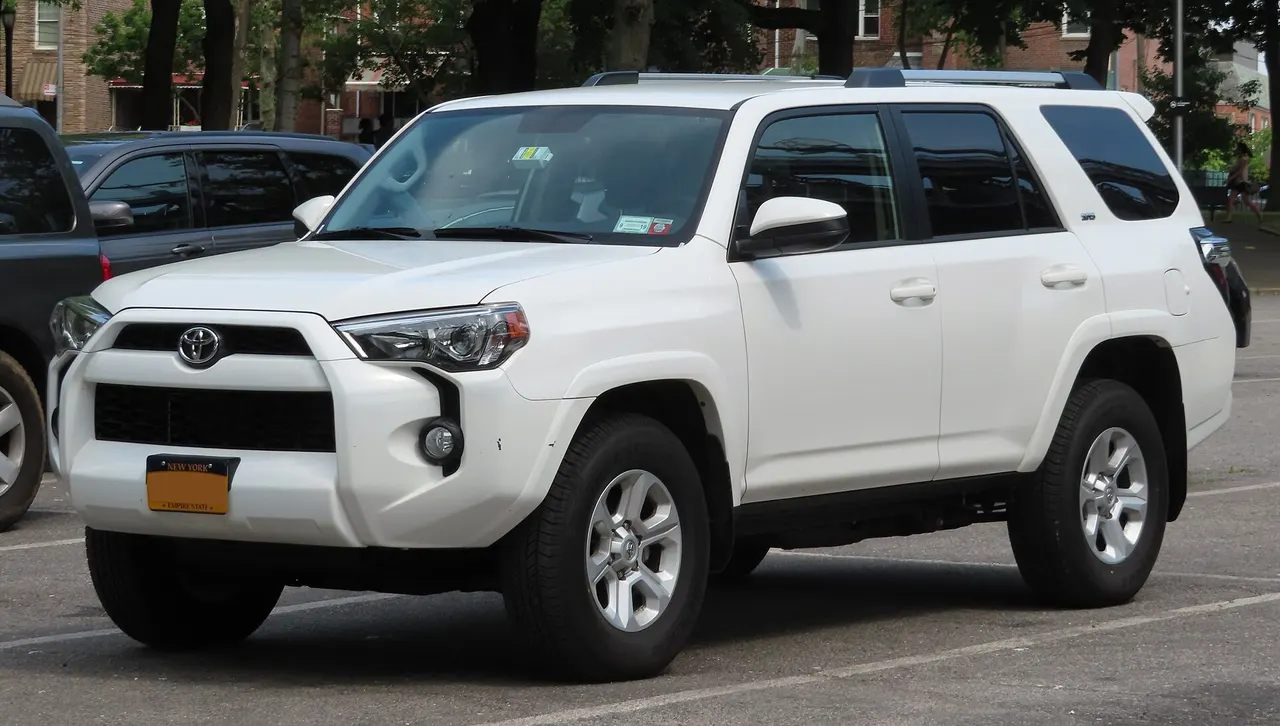
Photo: 2019 Toyota 4Runner SR5 · Kevauto, CC BY-SA 4.0, via Wikimedia Commons

Problem areas
Ranked by severity-weighted complaints · share · median miles- Air bags12% · 5 complaints · median 10,000 miles
- Steering21% · 9 complaints · median 1,000 miles
- Body and structure12% · 5 complaints · median 15,000 miles
- Brakes9% · 4 complaints
- Fuel and propulsion14% · 6 complaints
- Engine7% · 3 complaints
- Powertrain5% · 2 complaints
- Electrical5% · 2 complaints
- Wheels and tires5% · 2 complaints
- Seats and belts5% · 2 complaints
Bars rank problem areas by complaints weighted for severity (crashes, fires, injuries and deaths count more). A complaint can name more than one area. Mileage is reported on about half of complaints.
Recalls (5)
Check a VIN on NHTSA ›- NHTSA 20V682000November 20201,525,742 vehicles
Fuel system, gasoline: delivery: fuel pump
Toyota Motor Engineering & Manufacturing (Toyota) is recalling certain 2018-2019 4Runner, 2019-2020 Avalon, 2019 Corolla Hatchback, 2017-2019 Highlander, 2018-2020 Camry, 2020 Corolla, 2018-2019 Land Cruiser, 2017-2020 Tacoma, 2019-2020 RAV4, 2019-2020 Sequoia, 2017-2020 Sienna, 2019-2020 Tundra, 2018-2020 Lexus ES350, 2017 Lexus GS200t, 2017-2019 Lexus GS350, 2019 Lexus GS300, 2018-2020 Lexus LC500h, 2019-2020 Lexus LS500, 2018-2019 Lexus GX460, 2017 Lexus IS200t, 2019 Lexus IS300, 2019 Lexus IS350, 2018-2020 Lexus LC500, 2018 Lexus LS500, 2019 Lexus LS500h, 2018-2019 Lexus LX570, 2017 Lexus RC200t, 2019 Lexus RC300, RC350, 2017 and 2019-2020 Lexus RX350, 2018-2020 RX350L, 2019 Lexus UX200, 2018-2019 Lexus NX300 vehicles. The low-pressure fuel pump inside the fuel tank may fail.
Risk: If the fuel pump fails, the engine can stall while driving, increasing the risk of a crash.
Fix: Toyota will notify owners, and dealers will replace the fuel pump assembly with an improved one, free of charge.
- NHTSA 19V670000September 201934 vehicles
Suspension · Steering
Southeast Toyota Distributors, LLC (SET) is recalling certain 2018-2019 Toyota 4Runner vehicles. During installation, certain steering and suspension components may not have been properly tightened.
Risk: Loose fasteners may cause a loss of vehicle control, or cause an accessory to detach from the vehicle and become a road hazard. Either of these scenarios can increase the risk of a crash or injury.
Fix: SET will notify owners, and dealers will inspect and re-tighten the steering and suspension fasteners as necessary, free of charge.
- NHTSA 18V753000October 20181,295 vehicles
Equipment: other: labels
Southeast Toyota Distributors, LLC (SET) is recalling certain 2017-2019 Toyota 4Runner vehicles that SET modified to be equipped with a TRD wheel package. The Gross Vehicle Weight Rating (GVWR) on the certification label may be incorrect, possibly resulting in the vehicle being overloaded. As such, these vehicles fail to comply with the requirements of Federal Motor Vehicle Safety Standard (FMVSS) number 110, "Tire Selection and Rims."
Risk: An overloaded vehicle can increase the risk of a crash.
Fix: SET will notify owners and mail them corrected certification labels, free of charge.
- NHTSA 17V831000December 2017649 vehicles
Equipment: other: labels
Toyota Motor Engineering & Manufacturing (Toyota) is recalling certain 2017-2018 Toyota 4Runner and Tundra, 2018 Toyota Highlander, RAV4 and Lexus GX460 and 2017 Toyota Sienna and Tacoma vehicles. These vehicles may have incorrect load carrying capacity modification labels. As such, these vehicles fail to comply with the requirements of Federal Motor Vehicle Safety Standard (FMVSS) number 110, "Tire Selection and Rims."
Risk: An incorrect load information label can result in the operator overloading the vehicle and increasing the risk of a crash.
Fix: Toyota will notify owners and provide them with corrected labels, free of charge.
- NHTSA 17V763000November 2017431 vehicles
Structure: body: hood
Southeast Toyota Distributors, LLC (SET) is recalling certain 2015-2018 Toyota 4Runner vehicles equipped with an accessory Billet Grille Overlay installed by SET or provided by SET and installed by SET dealers. The U-nut that secures the overlay grille may fracture, allowing the Billet Grille Overlay to detach from the vehicle.
Risk: If the Billet Grille Overlay detaches while driving, it can become a road hazard, increasing the risk of a crash.
Fix: SET will notify owners, and dealers will replace the securing U-nuts with upgraded hardware, free of charge.
A recall only helps if the repair was done. Enter the vehicle's 17-character VIN on NHTSA's official recall lookup before you buy.
Service bulletins
Toyota sent NHTSA 192 service bulletins and other notices to dealers covering the 2018 4Runner. These are repair instructions, not recalls. Warranty extensions and bulletins about its top problem areas:
- T-SB-0035-24 Rev2 · December 2024Acid rain results from rainwater or other airborne moisture that become acidic due to industrial chemical impurities in the atmosphere.
- T-SB-0038-24 Rev2 · December 2024To prevent brake rotor rust from forming during transportation and storage, wheel film will be used instead of a cardboard type of anti-rust cover.
- T-SB-0039-24 Rev2 · December 2024The condition known as acid rain is caused by airborne chemicals or particles in the atmosphere, which mix with rainwater, nighttime dew, or high humidity to form acidic compounds.
- T-SB-0061-23 Rev2 · December 2024Toyota vehicles are currently protected with RapgardTM protective film designed to protect the horizontal painted surfaces.
- T-SB-0062-23 Rev2 · December 2024Vehicles may occasionally be subjected to contamination by airborne iron particles shed from railroad tracks, train wheels, exposure to heavy machinery facilities, grinding, welding, etc.
- T-SB-0055-24 Rev1 · July 2024Some 2005 – 2024 Toyota vehicles that have undergone water intrusion may exhibit a condition in which a musty odor is present.
- T-SB-0035-24 Rev1 · July 2024Acid rain results from rainwater or other airborne moisture that become acidic due to industrial chemical impurities in the atmosphere.
- T-SB-0038-24 Rev1 · July 2024To prevent brake rotor rust from forming during transportation and storage, wheel film will be used instead of a cardboard type of anti-rust cover.
Questions owners ask
- Is the 2018 Toyota 4Runner reliable?
- Owners filed 43 complaints with NHTSA about the 2018 Toyota 4Runner in its first five years on the road, about 31 for every 100,000 sold: 0.9× the rate of a typical 4Runner year. That's close to a typical year. Ratings compare 4Runner years with each other using complaints filed with NHTSA; they don't measure every problem owners have.
- What are the most common 2018 4Runner problems?
- Owners' complaints most often involve the air bags (12%), the steering (21%) and the body and structure (12%). A complaint can name more than one area.
- Has the 2018 Toyota 4Runner been recalled?
- Yes. NHTSA lists 5 recall campaigns for the 2018 Toyota 4Runner, the most recent in November 2020 (fuel system, gasoline). Enter the vehicle's VIN on NHTSA's recall lookup to see whether the repairs were done.
Sources
Owner complaints, recalls and manufacturer communications from NHTSA's public data files, as of September 24, 2026. Complaints are counted once each, over the model year's first 60 months on the road. UsedScore is not affiliated with NHTSA or Toyota. The 2018 Toyota 4Runner on NHTSA.gov · How we rate