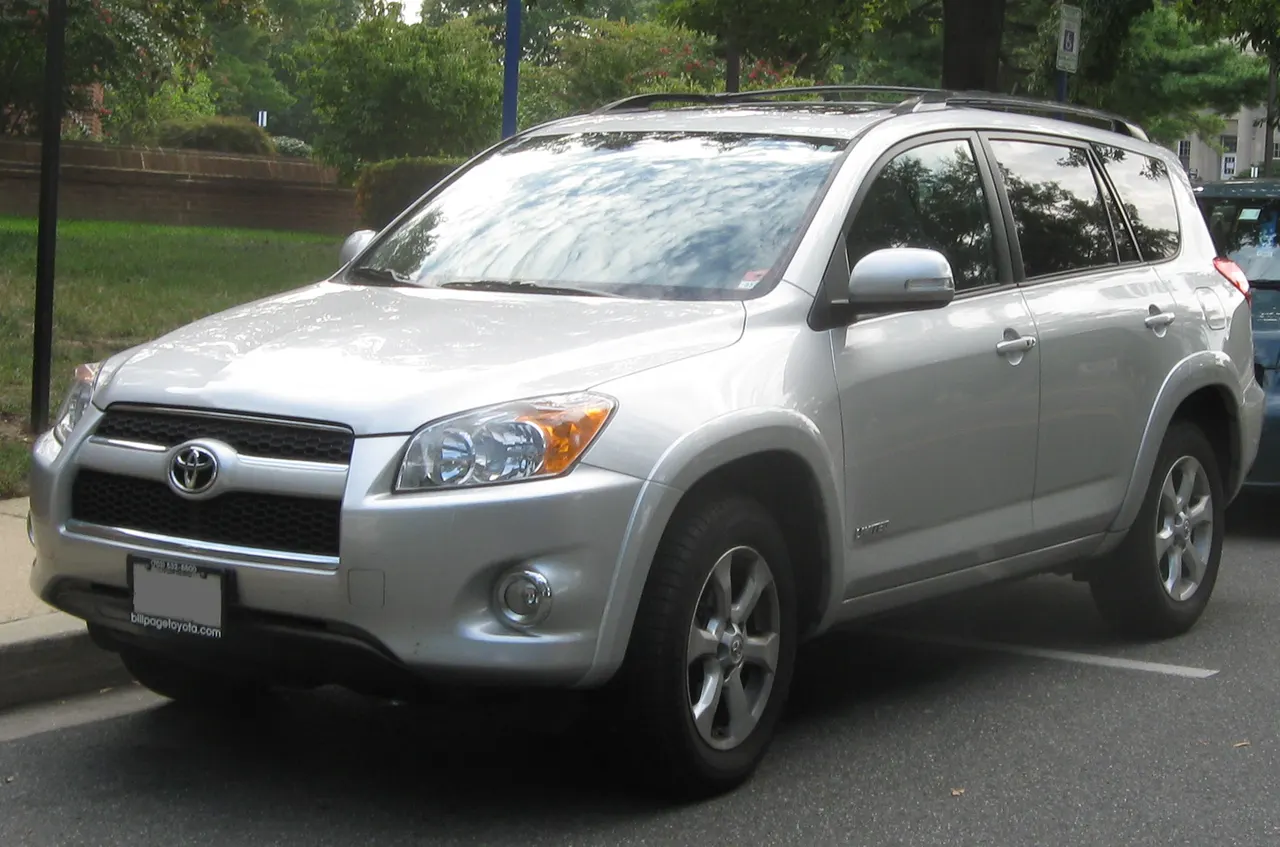
NHTSA 16V596000August 2016337,449 vehicles
Suspension: rear
Toyota Motor Engineering & Manufacturing (Toyota) is recalling certain model year 2006-2011 Toyota RAV4 vehicles manufactured October 31, 2005, to September 7, 2010, and 2010 Lexus HS250h vehicles manufactured July 6, 2009, to August 26, 2010. The affected vehicles have rear suspension arms (rear tie rods) with adjusting lock nuts that may have been improperly tightened after servicing. As a result of being loose, the arm may have thread damage and may rust, possibly leading to the failure of the arm and an abrupt change in the vehicle's alignment.
Risk: Failure of the rear tie rod could cause a loss of vehicle control, increasing the risk of a crash.
Fix: Toyota will notify owners and dealers will replace both rear suspension arms and encapsulate the locknuts, free of charge.
NHTSA 16V396000June 20167,749 vehicles
Seats: front assembly: seat heater/cooler
Southeast Toyota Distributors, LLC (SET) is recalling certain 2005-2011 4Runner, Highlander, Sequoia, and Sienna, 2005-2010 Avalon and Tundra, 2006-2008 Camry Solara, 2006-2010 Highlander hybrid, 2006-2011 Rav4 and Tacoma, 2007-2010 FJ Cruiser, 2007-2011 Camry hybrid, 2009-2010 Venza, 2010-2012 Prius, 1988-1990 and 2005-2010 Camry, and 1989 and 2009-2010 Corolla vehicles equipped with aftermarket accessory seat heaters with a copper strand heating element. The electrical wiring in the seat heaters may be damaged when the seat cushion is compressed.
Risk: If damaged, the copper strand heating element may short circuit, increasing the risk of a fire.
Fix: SET will notify owners, and dealers will disconnect the seat heaters, free of charge, and refund the purchase price of the seat heater accessory.
NHTSA 16V096000February 20161,123,752 vehicles
Seat belts: rear/other
Toyota Motor Engineering & Manufacturing (Toyota) is recalling certain model year 2006-2012 RAV4 vehicles manufactured July 28, 2005, to December 19, 2012, and 2012-2014 RAV4 EV vehicles manufactured July 24, 2012, to August 29, 2014. In the event of a frontal collision, the rear seat belts for the outboard seats may be cut by the seat cushion frame.
Risk: A cut seat belt may not properly restrain the seat occupant, increasing their risk of injury in a crash.
Fix: Toyota will notify owners, and dealers will install a protector over both rear seat cushion frames, free of charge.
NHTSA 15V689000October 20151,814,284 vehicles
Visibility: power window devices and controls
Toyota Motor Company (Toyota) is recalling certain model year 2009-2011 Tundra, Sequoia, Corolla, Corolla Matrix and Scion xB, 2008-2011 Highlander and Highlander Hybrid, 2007 Camry and Camry Hybrid, 2009 Camry and Camry Hybrid, 2006-2011 RAV4, 2006-2010 Yaris, and 2009-2010 Scion xD and Pontiac Vibe vehicles. During the manufacturing of the Power Window Master Switch (PWMS), grease lubricant may have been inconsistently applied to the sliding electrical contacts.
Risk: If the sliding electrical contacts are not protected by lubricant, debris and moisture that get into the switch may cause a short circuit and the switch assembly may overheat and melt, increasing the risk of a fire.
Fix: Toyota will notify owners, and dealers will inspect the switch, applying a lubricant if no abnormality is found.
NHTSA 15V577000September 2015423,456 vehicles
Visibility/wiper
Toyota Motor Engineering & Manufacturing (Toyota) is recalling certain model year 2009-2012 RAV4 vehicles manufactured October 27, 2008, to December 19, 2012 and 2012-2014 RAV4 EV vehicles manufactured July 24, 2012, to August 29, 2014. In the affected vehicles, water may drip onto the joint that connects the wiper linkage to the wiper motor.
Risk: Over time, the dripping water may cause corrosion and wear at the joint, potentially resulting in the separation of the wiper linkage. Once this occurs, the wipers would not function, reducing driver visibility and increasing the risk of a crash.
Fix: Toyota will notify owners, and dealers will replace the water diverter channel.
NHTSA 14V743000November 20143,233 vehicles
Seats: front assembly: seat heater/cooler
Southeast Toyota Distributors, LLC (SET) is recalling certain model year 2010-2011 Prius and Corolla, 2009-2011 Venza, 2006-2010 Avalon, 2007-2010 FJ Cruiser, 2005-2011 Sienna and Sequoia, 2006-2011 Tacoma 4x2 and 4x4, Camry, Highlander, Tundra 4x2 and 4x4, and 2007-2011 Rav4 and 4Runner. The affected vehicles may experience compression of the seat cushion which may damage the seat heater wiring.
Risk: Damage to the seat heater wiring could cause the wires to short, increasing the risk of the seat burning and causing personal injury to the occupant.
Fix: SET will notify owners, and dealers will disconnect the heaters with copper strand heating elements and refund the purchase price of the seat heater accessory, free of charge.
NHTSA 13V383000August 2013780,584 vehicles
Suspension: rear
Toyota is recalling certain model year 2006 through 2011 RAV4 and 2010 Lexus HS250h passenger vehicles manufactured from October 2005 through September 2010. If the nuts for adjusting the rear wheel alignment are improperly tightened during service, the rear suspension arm (rear tie rod) may develop unwanted movement and rust leading to thread damage and eventual failure. Failure of the rear tie rod will cause an abrupt change in the vehicle's alignment.
Risk: Failure of the rear tie rod could cause a loss of vehicle control, increasing the risk of a crash.
Fix: Toyota will notify owners, and dealers will inspect the tie rods and replace any that have rust or corrosion on the alignment adjustment threads.
NHTSA 13V014000January 20133,235 vehicles
Seats · Air bags: frontal: sensor/control module-inactive
Southeast Toyota Distributors, LLC (SET) is recalling certain models interspersed through model years 2009 through 2013 as follows: model year 2009-2012 Tacoma, 4Runner, Camry, Camry Hybrid, Prius, and RAV4; model year 2009-2010 Avalon, FJ Cruiser, and Highlander Hybrid; model year 2010-2013 model year Corolla, Sienna and Tundra; model year 2009-2013 Highlander and Venza; model year 2012 Prius V; and model year 2010-2012 Sequoia. During modification by SET to include accessories such as leather seat covers, seat heaters or headrest DVD systems, these vehicles may not have had the passenger seat occupant sensing system calibration tested. Without passing the calibration test, the occupant sensing system may not operate as designed.
Risk: If the front passenger seat occupant sensing system is out of calibration, the front passenger airbags may not deploy or they may deploy inappropriately for the passenger's size and position. This could increase the risk of personal injury during the event of a vehicle crash necessitating airbag deployment.
Fix: Southeast Toyota will notify owners, and dealers will test the sensitivity of the occupant detection sensors, and recalibrate them as necessary.
NHTSA 12V491000October 20122,519,424 vehicles
Visibility: power window devices and controls
Toyota is recalling certain model year 2007-2009 Camry, Camry Hybrid, RAV4, Corolla, Corolla Matrix, Tundra, Sequoia, Highlander, Highlander Hybrid, Yaris, Scion xB, Scion xD and Pontiac Vibe vehicles. The power window master switch assemblies in some of these vehicles were built using a less precise process for lubricating the internal components of the switch assemblies. Irregularities in this lubrication process may cause the power window master switch assemblies to malfunction and overheat.
Risk: If the switch overheats, it may melt, possibly resulting in a fire.
Fix: Toyota will notify its owners, and dealers will inspect the switch and apply a special grease that inhibits heat build up or replace any switch damaged by the defect, free of charge.
NHTSA 12V373000August 2012780,584 vehicles
Suspension: rear
Toyota is recalling certain model year 2006 through 2011 RAV4 and 2010 Lexus HS250h passenger vehicles manufactured from October 2005 through September 2010. If the nuts for adjusting the rear wheel alignment are improperly tightened during service, the rear suspension arm (rear tie rod) may develop unwanted movement and rust, leading to thread damage and eventual failure. Failure of the rear tie rod will cause an abrupt change in the vehicle's alignment.
Risk: Failure of the rear tie rod could cause a loss of vehicle control, increasing the risk of a crash.
Fix: Toyota will notify owners, and dealers will inspect the rear tie-rod nut for looseness and replace any suspect tie-rod found loose.
NHTSA 11V113000February 20111,363,244 vehicles
Vehicle speed control: accelerator pedal
Toyota is recalling certain model year 2008 through 2011 lexus lx570, 2003 through 2009 toyota 4runner, and 2006 through 2010 rav4 vehicles. The accelerator pedal can get stuck in the wide open position due to its being trapped by an unsecured or incompatible driver's floor mat.
Risk: A stuck open accelerator pedal may result in very high vehicle speeds and make it difficult to stop the vehicle, which could cause a crash, serious injury or death.
Fix: The remedy is now available.
NHTSA 10V035000February 2010271,417 vehicles
Equipment: other: labels
Gulf states toyota is recalling certain model year 2005-2010 vehicles for failing to comply with the requirements of federal motor vehicle safety standard no. 110, "tire selection and rims." these vehicles were sold between september 1, 2005 and june 2, 2008 without the requisite load carrying capacity modification labels.
Risk: This does not meet the standard requirements.
Fix: Dealers will mail to consumers the corrected label or the customer will have the option for dealers to install the label free of charge.
NHTSA 10V036000February 2010153,418 vehicles
Equipment: other: labels
Southeast toyota is recalling certain model year 2005-2011 passenger vehicles for failing to comply with the requirements of federal motor vehicle safety standard no. 110, "tire selection and rims." these vehicles were sold without the requisite load carrying capacity modification labels.
Risk: A driver may overload a vehicle which may increase the risk of a crash.
Fix: Dealers will mail to consumers the corrected label or the customer will have the option for dealers to install the label free of charge.
NHTSA 10V017000January 20102,230,661 vehicles
Vehicle speed control: accelerator pedal
Toyota is recalling certain model year 2005-2010 avalon, model year 2007-2010 camry, model year 2009-2010 corolla, corolla matrix, rav4, model year 2010 highlander, model year 2008-2010 sequoia, and model year 2007-2010 tundra vehicles. Due to the manner in which the friction lever interacts with the sliding surface of the accelerator pedal inside the pedal sensor assembly, the sliding surface of the lever may become smooth during vehicle operation. In this condition, if condensation occurs on the surface, as may occur from heater operation (without a/c) when the pedal assembly is cold, the friction when the accelerator pedal is operated may increase, which may result in the accelerator pedal becoming harder to depress, slower to return, or, in the worst case, mechanically stuck in a partially depressed position.
Risk: The accelerator pedal may become hard to depress, slow to return to idle, or, in the worst case, mechanically stuck in a partially depressed position, increasing the risk of a crash.
Fix: Dealers will install a reinforcement bar in the accelerator pedal which will allow the pedal to operate smoothly.
NHTSA 09V223000June 200927,080 vehicles
Equipment: other: labels
Toyota is recalling 27,080 model year 2005 through 2010 passenger cars built from september 1, 2005 to may 4, 2009. These vehicles were not equipped with load carrying capacity modification labels which fails to conform with the requirements of federal motor vehicle safety standard no. 110, "tire selection and rims."
Risk: Incorrect load carrying capacity modification labels could result in the vehicle being overloaded, increasing the risk of a crash.
Fix: Toyota will notify owners and provide them with a new, accurate label to be installed over the inaccurate label free of charge.
A recall only helps if the repair was done. Enter the vehicle's 17-character VIN on NHTSA's official recall lookup before you buy.