2020 Toyota RAV4: Solid

Owners filed 505 complaints with NHTSA about the 2020 Toyota RAV4 in its first five years on the road, about 116 for every 100,000 sold: 1.0× the rate of a typical RAV4 year. That's close to a typical year.

The biggest problem area, counting serious complaints more, is the engine (30% of complaints, median 10,000 miles).

Complaint index
1.0×
per vehicle sold, vs. a typical RAV4 year
Rank
8th of 14
1st = fewest complaints
Complaints
505
first five years; 116 per 100,000 sold
Recalls
6
campaigns
5th generation, 2019–2025 · Updated September 24, 2026 · How we rate
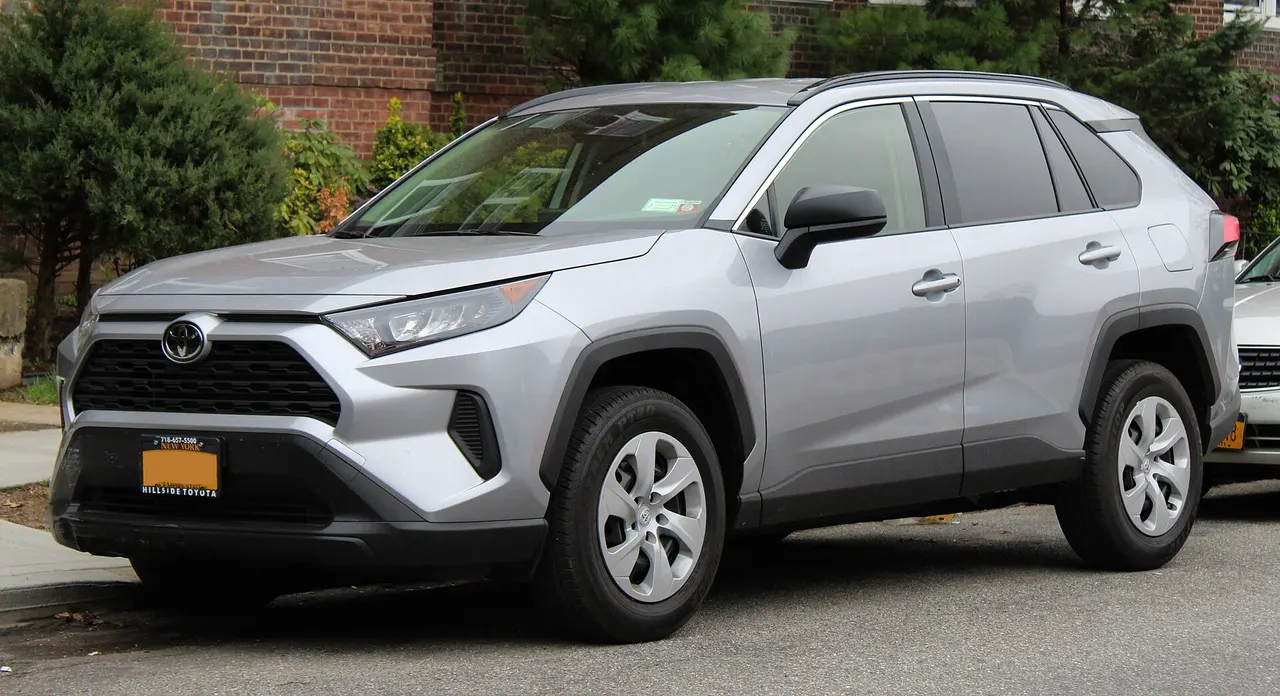
2019 Toyota RAV4 LE

Photo: 2019 Toyota RAV4 LE · Kevauto, CC BY-SA 4.0, via Wikimedia Commons

Problem areas

Ranked by severity-weighted complaints · share · median miles
  1. Engine30% · 150 complaints · median 10,000 miles
  2. Electrical20% · 100 complaints · median 3,000 miles
  3. Fuel and propulsion18% · 91 complaints · median 1,000 miles
  4. Air bags6% · 30 complaints · median 34,000 miles
  5. Body and structure8% · 38 complaints · median 7,000 miles
  6. Powertrain6% · 28 complaints · median 0 miles
  7. Brakes3% · 15 complaints · median 3,000 miles
  8. Steering4% · 19 complaints · median 4,000 miles
  9. Speed control2% · 12 complaints · median 5,000 miles
  10. Visibility3% · 17 complaints · median 9,000 miles

Bars rank problem areas by complaints weighted for severity (crashes, fires, injuries and deaths count more). A complaint can name more than one area. Mileage is reported on about half of complaints.

What owners describe

Electrical

Many 2020 RAV4 owners describe waking up to a car that won't start because the battery has drained overnight or after a few days of not driving, even with no lights or accessories left on. Dealers often can't find a cause, sometimes replace the battery or update software, but the problem frequently comes back.

Warning signs:
Many describe dashboard messages like "battery charging," flickering display lights, dead door locks, or a completely unresponsive vehicle before the failure.
What shops did:
Dealers often replace the battery, run a firmware or software update on the data control module, or report finding no fault at all, and the problem frequently returns.
Mileage:
most between 0 and 10,000 miles, among 51 complaints that give it

“Battery dies when not started for a few days, with no doors left open or lights left on, etc.”

“While driving, I would get a message that read, "battery charging.”

Engine

Many 2020 RAV4 owners report a coolant bypass valve failure that triggers a persistent maintenance warning and often requires paying several hundred dollars for replacement. A few describe more serious outcomes like coolant leaks, engine replacement, or unexplained battery drain, with mixed dealer responses.

Warning signs:
Owners note a persistent "Engine Maintenance Required" or check engine message, sometimes with a coolant valve fault code, occasional overheating, shuddering, or coolant leaks; many say no warning appeared beforehand.
What shops did:
Dealers most often diagnosed a faulty coolant bypass valve and replaced it, often at owner expense; some report parts backordered, repeated valve failures, or the issue not repaired at all.
Mileage:
most between 5,000 and 40,000 miles, among 24 complaints that give it

“When this happens an "Engine Maintenance Required" see your dealer message comes up in the heads up display and won't go away.”

“Engine code was P268115 for an engine coolant bypass valve circuit short to battery or open. Found Coolant valve intermittently sticking.”

Fuel and propulsion

Most owners of this 2020 RAV4 Hybrid say the fuel tank won't fill anywhere near its rated 14.5 gallons, cutting driving range well below what's advertised. Dealers often acknowledge the issue but frequently say there's no permanent fix, leaving owners to refuel more often than expected.

Warning signs:
Many notice the low-fuel or empty light illuminating far sooner than expected, distance-to-empty readings dropping quickly, and the fuel gauge showing full or 3/4 full despite the pump shutting off early.
What shops did:
Some report dealers replaced the fuel tank, reset software, or told them there was no fix, while a few had fuel pumps, coolant bypass valves, or other components replaced with mixed results.
Mileage:
most between 0 and 0 miles, among 58 complaints that give it

“When this light illuminates I am only able to fill the car with 9-10 gallons of fuel.”

“After adding 9.5 gallons to an empty tank, the fuel gauge shows full.”

Summaries are written with AI from the owner complaints shown on NHTSA's site and checked against them; quotes are word for word.

  • NHTSA 23V865000December 2023999,901 vehicles

    Air bags: sensor: occupant classification

    Toyota Motor Engineering & Manufacturing (Toyota) is recalling certain 2020-2021 Avalon, Avalon Hybrid, Corolla, Highlander, Highlander Hybrid, RAV4, RAV4 Hybrid, Lexus ES350, Lexus RX350, Lexus RX450H, 2021 Sienna Hybrid, Lexus ES250, 2020-2022 Camry, Camry Hybrid, and ES300H vehicles. A short circuit may develop in the Occupant Classification System (OCS) sensor, preventing the front passenger air bag from deploying.

    Risk: An air bag that does not deploy during a crash increases the risk of injury.

    Fix: Dealers will inspect and replace the sensor as necessary, free of charge.

  • NHTSA 20V734000November 2020161 vehicles

    Steering: column · Air bags: frontal

    Toyota Motor Engineering & Manufacturing (Toyota) is recalling certain 2020-2021 Toyota Avalon and 2020 Avalon Hybrid, RAV4, and RAV4 Hybrid vehicles. Breakaway pins within the steering column, designed to absorb energy and reduce injury during a crash, could have been damaged during production, possibly affecting the performance of the driver's air bag in the event of a crash. As such, these vehicles fail to comply with the requirements of Federal Motor Vehicle Safety Standard number 208, "Occupant Crash Protection."

    Risk: In the event of a crash, an air bag that does not perform as designed can increase the risk of injury.

    Fix: Toyota will notify owners, and dealers will replace the steering column, free of charge.

  • NHTSA 20V682000November 20201,525,742 vehicles

    Fuel system, gasoline: delivery: fuel pump

    Toyota Motor Engineering & Manufacturing (Toyota) is recalling certain 2018-2019 4Runner, 2019-2020 Avalon, 2019 Corolla Hatchback, 2017-2019 Highlander, 2018-2020 Camry, 2020 Corolla, 2018-2019 Land Cruiser, 2017-2020 Tacoma, 2019-2020 RAV4, 2019-2020 Sequoia, 2017-2020 Sienna, 2019-2020 Tundra, 2018-2020 Lexus ES350, 2017 Lexus GS200t, 2017-2019 Lexus GS350, 2019 Lexus GS300, 2018-2020 Lexus LC500h, 2019-2020 Lexus LS500, 2018-2019 Lexus GX460, 2017 Lexus IS200t, 2019 Lexus IS300, 2019 Lexus IS350, 2018-2020 Lexus LC500, 2018 Lexus LS500, 2019 Lexus LS500h, 2018-2019 Lexus LX570, 2017 Lexus RC200t, 2019 Lexus RC300, RC350, 2017 and 2019-2020 Lexus RX350, 2018-2020 RX350L, 2019 Lexus UX200, 2018-2019 Lexus NX300 vehicles. The low-pressure fuel pump inside the fuel tank may fail.

    Risk: If the fuel pump fails, the engine can stall while driving, increasing the risk of a crash.

    Fix: Toyota will notify owners, and dealers will replace the fuel pump assembly with an improved one, free of charge.

  • NHTSA 20V373000June 202046 vehicles

    Steering: electric power assist system

    Toyota Motor Engineering & Manufacturing (Toyota) is recalling certain 2019-2020 RAV4 and 2020 RAV4 Hybrid vehicles equipped with electric power steering (EPS). Water may enter through the steering gear box cover and cause a loss of electric power steering assist.

    Risk: A loss of power steering assist could increase steering effort at low vehicle speeds, increasing the risk of a crash.

    Fix: Toyota will notify owners, and dealers will replace the power steering gear box, free of charge.

  • NHTSA 20V286000May 20209,502 vehicles

    Suspension: front: control arm: lower arm

    Toyota Motor Engineering & Manufacturing (Toyota) is recalling certain 2019-2020 RAV4 and RAV4 Hybrid vehicles. The front lower suspension arms may have cracks, which may result in the suspension arm separating from the front wheel assembly.

    Risk: If a suspension control arm breaks, it can result in a loss of vehicle control, increasing the risk of a crash.

    Fix: Toyota will notify owners, and dealers will replace both front lower suspension arms, free of charge.

  • NHTSA 20V064000February 202044,191 vehicles

    Engine and engine cooling

    Toyota Motor Engineering & Manufacturing (Toyota) is recalling certain 2020 Toyota Avalon Hybrid, Camry, Camry Hybrid and Lexus ES300h and 2019-2020 RAV4 and RAV4 Hybrid vehicles equipped with 2.5L 4-Cylinder engines. Porosity in the engine castings may result in cracks than can allow coolant to leak internally and/or externally.

    Risk: A coolant leak can cause the engine to overheat and cause a vehicle stall in conventional gasoline vehicles, increasing the risk of a crash. Additionally, for all involved vehicles, the engine may get damaged mechanically, possibly resulting in an engine oil leak, increasing the risk of a fire.

    Fix: Toyota will notify owners, and dealers will inspect and replace the engine including the engine block, as necessary, free of charge.

A recall only helps if the repair was done. Enter the vehicle's 17-character VIN on NHTSA's official recall lookup before you buy.
Service bulletins

Toyota sent NHTSA 347 service bulletins and other notices to dealers covering the 2020 RAV4. These are repair instructions, not recalls. Warranty extensions and bulletins about its top problem areas:

  • 24TE04 · August 2026 · Warranty extensionAlthough the flow shut-off valve is covered by Toyota’s New Vehicle Limited Warranty for 36 months or 36,000 miles (whichever comes first), we at Toyota care about the customers’ ownership experience.
  • 22TE09 · May 2026 · Warranty extensionAlthough the HV Floor Under Wire Harness and Rear Traction Motor Cable is covered by Toyota’s New Vehicle Limited Warranty for 3 years or 36,000 miles (whichever comes first), we at Toyota care about…
  • T-SB-0051-26 · August 2026This bulletin includes basic procedures for performing a rescue charge at battery on high voltage (HV) Ni-MH and Li-ion batteries.
  • T-SB-0110-20 Rev2 · August 2026OBSOLETE NOTICE August 20, 2026: This bulletin is now obsolete.
  • T-SB-0104-21 Rev2 · February 2026OBSOLETE NOTICE February 27, 2026: This bulletin is no longer applicable and is now obsolete.
  • T-SB-0106-22 Rev2 · January 2026OBSOLETE NOTICE January 30, 2026: This bulletin is now obsolete.
  • T-SB-0001-26 · January 2026Some 2018 – 2024 model year Toyota vehicles equipped with a Premium Audio with Dynamic Navigation System require a Special Service Tool (SST) USB flash drive to update the map, points of interest,…
  • T-TT-0797-26 · January 2026Some RAV4 vehicles power seat where the automatic seat adjustment by the memory function does not work.

All 2020 RAV4 bulletins on NHTSA ›

Questions owners ask

Is the 2020 Toyota RAV4 reliable?
Owners filed 505 complaints with NHTSA about the 2020 Toyota RAV4 in its first five years on the road, about 116 for every 100,000 sold: 1.0× the rate of a typical RAV4 year. That's close to a typical year. Ratings compare RAV4 years with each other using complaints filed with NHTSA; they don't measure every problem owners have.
What are the most common 2020 RAV4 problems?
Owners' complaints most often involve the engine (30%), the electrical system (20%) and the fuel or propulsion system (18%). A complaint can name more than one area.
Has the 2020 Toyota RAV4 been recalled?
Yes. NHTSA lists 6 recall campaigns for the 2020 Toyota RAV4, the most recent in December 2023 (air bags). Enter the vehicle's VIN on NHTSA's recall lookup to see whether the repairs were done.

Sources

Owner complaints, recalls and manufacturer communications from NHTSA's public data files, as of September 24, 2026. Complaints are counted once each, over the model year's first 60 months on the road. UsedScore is not affiliated with NHTSA or Toyota. The 2020 Toyota RAV4 on NHTSA.gov · How we rate