2009 Ford Escape: Use caution

Owners filed 503 complaints with NHTSA about the 2009 Ford Escape in its first five years on the road, about 298 for every 100,000 sold: 1.3× the rate of a typical Escape year. That's above average, so use caution.

The biggest problem area, counting serious complaints more, is the powertrain (transmission and drivetrain) (38% of complaints, median 58,000 miles).

Complaint index
1.3×
per vehicle sold, vs. a typical Escape year
Rank
11th of 14
1st = fewest complaints
Complaints
503
first five years; 298 per 100,000 sold
Recalls
1
campaign
2nd generation, 2008–2012 · Updated September 24, 2026 · How we rate
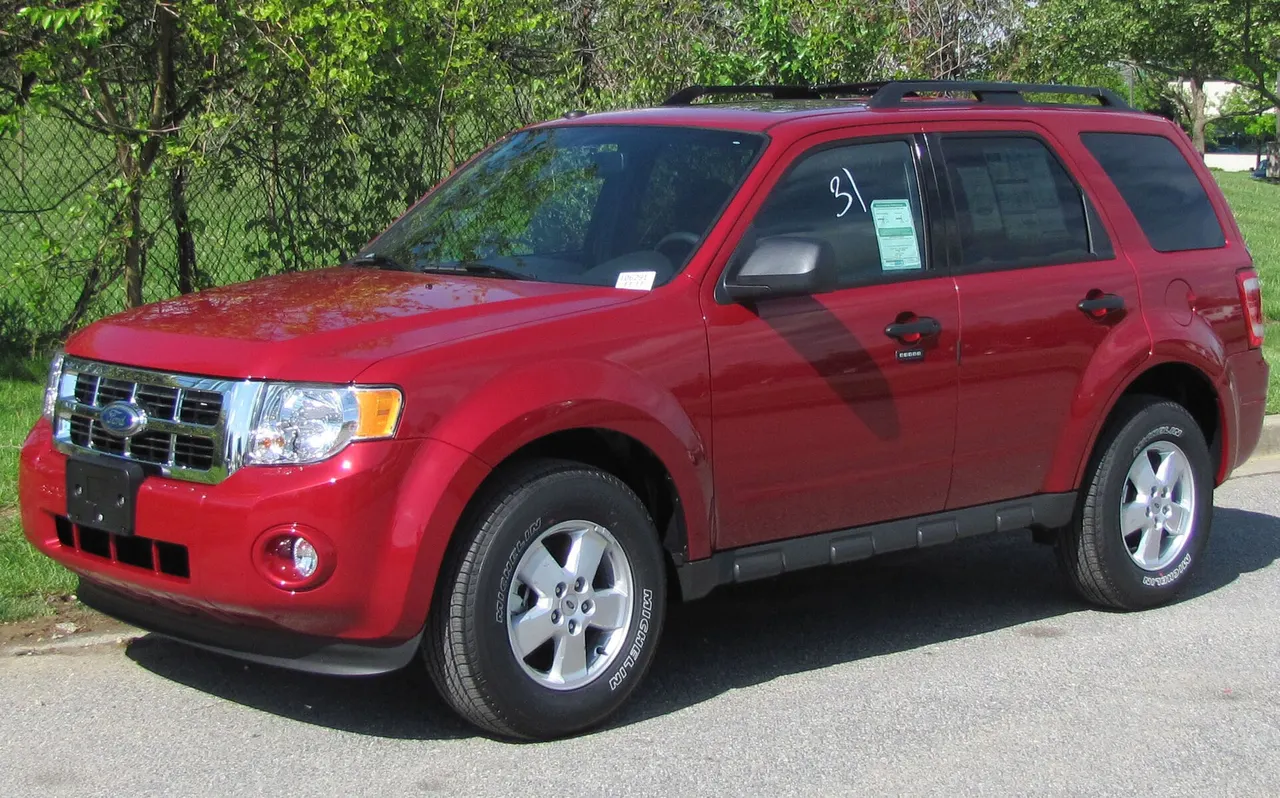
2010 Ford Escape XLT

Photo: 2010 Ford Escape XLT · IFCAR, public domain, via Wikimedia Commons

Problem areas

Ranked by severity-weighted complaints · share · median miles
  1. Powertrain38% · 193 complaints · median 58,000 miles
  2. Speed control37% · 184 complaints · median 65,000 miles
  3. Engine33% · 165 complaints · median 60,000 miles
  4. Fuel and propulsion22% · 112 complaints · median 65,000 miles
  5. Electrical8% · 40 complaints · median 59,000 miles
  6. Steering7% · 35 complaints · median 65,000 miles
  7. Brakes4% · 20 complaints · median 34,000 miles
  8. Air bags1% · 6 complaints · median 12,000 miles
  9. Seats and belts1% · 6 complaints · median 32,000 miles
  10. Visibility2% · 9 complaints · median 41,000 miles

Bars rank problem areas by complaints weighted for severity (crashes, fires, injuries and deaths count more). A complaint can name more than one area. Mileage is reported on about half of complaints.

What owners describe

Engine

Owners describe the engine suddenly losing power or stalling, often with a wrench-shaped warning light, sometimes while driving at highway speed. Many say the problem recurred repeatedly and dealers traced it to the throttle body, though parts availability and diagnosis were sometimes difficult.

Warning signs:
Many report a dashboard wrench or check-engine light, rough idling, jerking, surging, or sudden loss of power before the vehicle stalled or entered a reduced-power "limp" mode.
What shops did:
Dealers often diagnosed a faulty throttle body and replaced it, though some parts were on backorder; some dealers could not duplicate or find the issue at all.
Mileage:
most between 50,000 and 95,000 miles, among 296 complaints that give it

“The engine stopped responding to the accelerator and began decelerating. The throttle/power-train warning light was activated.”

“Applied pressure to the accelerator and it just sat there while oncoming traffic closed in on me.”

Powertrain

Owners of this Ford Escape commonly report transmission slipping or sudden loss of acceleration, often tied to a warning light, sometimes while towing or on the highway. Many describe repeat dealer visits and repairs, including transmission and throttle body replacements, that did not always resolve the issue.

Warning signs:
Many report the wrench or check-engine light illuminating along with sudden loss of power, RPM surges, jerking, hesitation, or slipping into neutral, sometimes fixed by turning the car off and restarting.
What shops did:
Dealers replaced or reprogrammed transmissions, valve bodies, or throttle bodies, though some owners say the problem could not be duplicated or recurred after repair.
Mileage:
most between 45,000 and 85,000 miles, among 292 complaints that give it

“While travelling at highway speed, transmission slips to neutral (or low gear) and rpms shoot up to near 6000.”

“The accelerator pedal suddenly stopped responding and the wrench and check engine lights came on.”

Speed control

Owners describe their Escape suddenly losing power or stalling on the road, often with a wrench or check-engine light coming on first. Many say dealers traced it to the throttle body, though repeat failures, backordered parts, and unresolved diagnostics were common frustrations.

Warning signs:
Many report a wrench or check-engine warning light, rough idle, hesitation, jerking, or surging before the throttle stopped responding.
What shops did:
Dealers typically diagnosed a faulty throttle body and replaced it, though some owners say the part was backordered or the problem could not be duplicated.
Mileage:
most between 55,000 and 90,000 miles, among 286 complaints that give it

“The vehicle engaged into a rough idle and stalled. The contact mentioned that the check engine warning light and the wrench warning light illuminated”

“The engine continued to run but would not accelerate. Was able to pull over to the side of the road and engine continued running”

Summaries are written with AI from the owner complaints shown on NHTSA's site and checked against them; quotes are word for word.

  • NHTSA 14V284000May 2014740,878 vehicles

    Steering: electric power assist system

    Ford Motor Company (Ford) is recalling certain model year 2008-2011 Ford Escape and Mercury Mariner vehicles manufactured August 18, 2006, through September 11, 2010. The affected vehicles have a steering torque sensor that may not be able to properly detect driver steering input. As a result, the system could remove the Electric Power Steering (EPS) assist.

    Risk: If power steering assist is lost, greater driver effort would be required to steer the vehicle at low speeds, increasing the risk of a crash.

    Fix: Ford will notify owners, and dealers will update the software for the power steering control module (PSCM) and the instrument cluster module, free of charge.

A recall only helps if the repair was done. Enter the vehicle's 17-character VIN on NHTSA's official recall lookup before you buy.

Service bulletins

Ford sent NHTSA 46 service bulletins and other notices to dealers covering the 2009 Escape. These are repair instructions, not recalls. Warranty extensions and bulletins about its top problem areas:

  • SSM 46085 · September 2016The Powertrain Control/Emissions Diagnosis (PC/ED) manual has been revised for diagnosing electronic throttle bodies (ETBs).
  • 16-0043 · March 20166F35 TRANSMISSION - FLUID LEAK AT LEFT SIDE HALFSHAFT SEAL BUILT ON OR BEFORE 10/14/2013 ISSUE Some 2009-2014 Escape, 2009-2011 Mariner, 2010-2014 Fusion, 2010-2011 Milan, 2012-2014 Edge/Explorer,…
  • 15-0079 · May 2015Ford 2009-2014 escape, 2010-2014 fusion, 2012-2014 edge, explorer, 2013-2014 taurus: lincoln 2013-2014 mkt,mkz: mercury 2009- 2011 mariner, 2010-2011 milan.
  • ASI-44707 · September 2014Ford: after powertrain control module reprogramming, the malfunction indicator lamp (mil) is on with several diagnostic trouble codes (dtc) p06b8, p068a, p2610, if key not left for 30 seconds in off…
  • TSB-14-0056 · March 2014Mercury/ford: on some vehicles, there is a fluid leakage, coming from left hand (lh) halfshaft seal of the automatic transmission and a service kit is available now, for repair.
  • ASI-32332 · November 2013Ford: due to an intermittent loss of RPM or lack of acceleration, in some vehicles, with illuminated wrench light, diagnostic trouble codes (dtcs) p2111, p2112 may or may not be stored in powertrain…
  • SB-44300 · November 2013Ford: on the left hand half shaft seal, there is a fluid leak from the transmission because of wear on case bushing.
  • TSB160043 · October 20136F35 Transmission - Fluid leak at left side halfshaft seal - built on or before 10/14/2013

All 2009 Escape bulletins on NHTSA ›

Questions owners ask

Is the 2009 Ford Escape reliable?
Owners filed 503 complaints with NHTSA about the 2009 Ford Escape in its first five years on the road, about 298 for every 100,000 sold: 1.3× the rate of a typical Escape year. That's above average, so use caution. Ratings compare Escape years with each other using complaints filed with NHTSA; they don't measure every problem owners have.
What are the most common 2009 Escape problems?
Owners' complaints most often involve the powertrain (transmission and drivetrain) (38%), speed control (37%) and the engine (33%). A complaint can name more than one area.
Has the 2009 Ford Escape been recalled?
Yes. NHTSA lists 1 recall campaign for the 2009 Ford Escape, the most recent in May 2014 (steering). Enter the vehicle's VIN on NHTSA's recall lookup to see whether the repairs were done.

Sources

Owner complaints, recalls and manufacturer communications from NHTSA's public data files, as of September 24, 2026. Complaints are counted once each, over the model year's first 60 months on the road. UsedScore is not affiliated with NHTSA or Ford. The 2009 Ford Escape on NHTSA.gov · How we rate