2012 Ford Escape: Best bet

Owners filed 202 complaints with NHTSA about the 2012 Ford Escape in its first five years on the road, about 78 for every 100,000 sold: 0.5× the rate of a typical Escape year. That's among the fewest of any Escape year.

The biggest problem area, counting serious complaints more, is the air bags (9% of complaints, median 43,000 miles).

Complaint index
0.5×
per vehicle sold, vs. a typical Escape year
Rank
4th of 14
1st = fewest complaints
Complaints
202
first five years; 78 per 100,000 sold
Recalls
1
campaign
2nd generation, 2008–2012 · Updated September 24, 2026 · How we rate
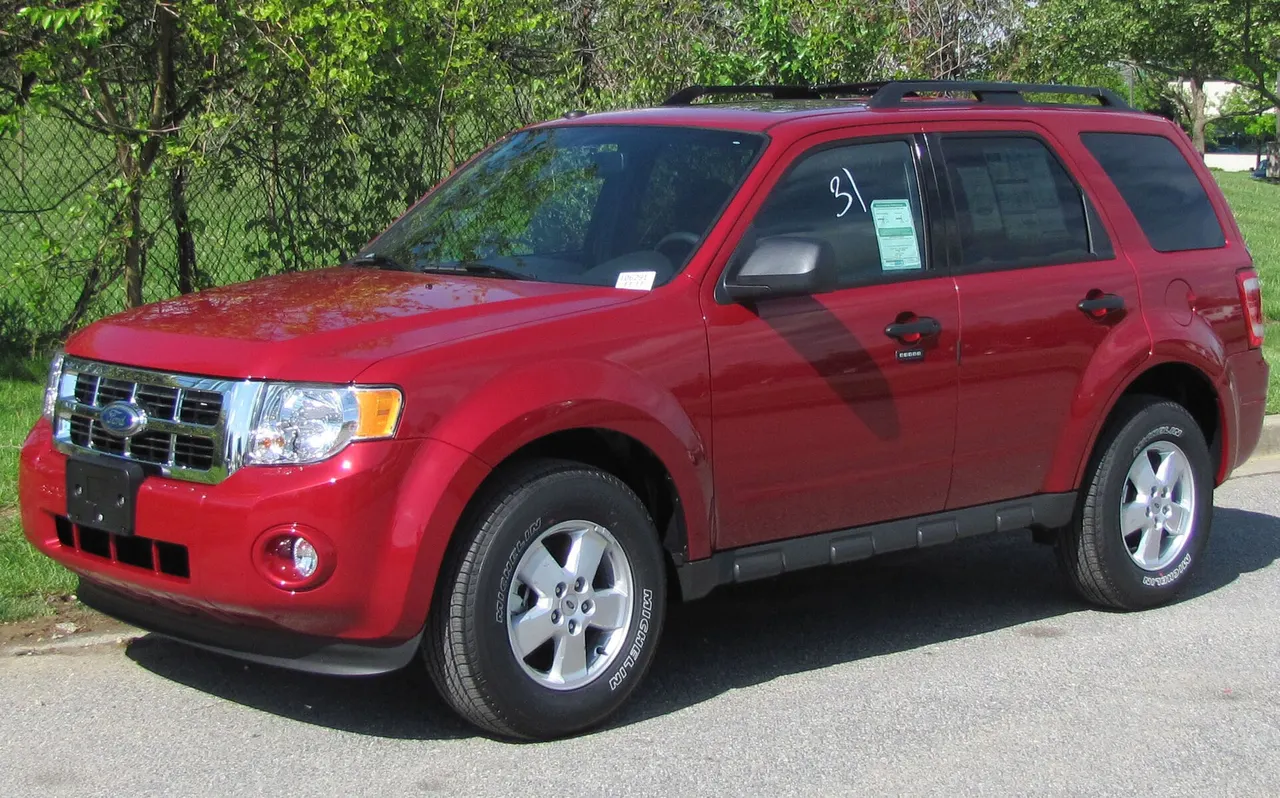
2010 Ford Escape XLT

Photo: 2010 Ford Escape XLT · IFCAR, public domain, via Wikimedia Commons

Problem areas

Ranked by severity-weighted complaints · share · median miles
  1. Air bags9% · 18 complaints · median 43,000 miles
  2. Engine27% · 54 complaints · median 20,000 miles
  3. Speed control25% · 51 complaints · median 39,000 miles
  4. Powertrain23% · 47 complaints · median 33,000 miles
  5. Body and structure12% · 24 complaints · median 43,000 miles
  6. Fuel and propulsion12% · 24 complaints · median 38,000 miles
  7. Steering9% · 19 complaints · median 41,000 miles
  8. Seats and belts4% · 9 complaints · median 23,000 miles
  9. Electrical7% · 15 complaints · median 32,000 miles
  10. Brakes4% · 8 complaints · median 15,000 miles

Bars rank problem areas by complaints weighted for severity (crashes, fires, injuries and deaths count more). A complaint can name more than one area. Mileage is reported on about half of complaints.

What owners describe

Air bags

Many owners report that the air bags did not deploy during collisions, sometimes resulting in injuries such as broken ribs or head trauma. Some also mention a related recall notice, with a few saying replacement parts were unavailable.

Warning signs:
A few owners noticed an air bag warning light illuminated or an air bag off indicator before or after the crash.
What shops did:
Some vehicles were towed or taken to a dealer but not diagnosed or repaired; one owner had a computer module replaced after the failure.
Mileage:
most between 10,000 and 50,000 miles, among 19 complaints that give it

“The auto repair shop was dumbfounded at why it didn't go off”

“On impact, even with his safety belt on, his chest hit the steering wheel causing him to have a broken sternum and several fractured ribs”

Engine

Many owners of this Escape report the engine unexpectedly stalling, hesitating, or losing power while driving, sometimes in traffic or on highways. Dealers frequently could not reproduce or fix the issue, though some owners mention a related recall or extended warranty for the throttle body.

Warning signs:
Owners report warning lights (wrench, battery, oil, or check engine), engine RPM dropping to idle, jerking, lurching, or hesitation before or during the stall.
What shops did:
Dealers often could not duplicate or diagnose the problem; some replaced the throttle body, engine mounts, or other parts, sometimes more than once, without fully resolving the issue.
Mileage:
most between 15,000 and 60,000 miles, among 74 complaints that give it

“While driving down the road at approx. 35-40 MPH, my ford escape just stalled. No warning lights were on prior to or after the incident.”

“I experienced intermittent power loss which resulted in vehicle loafing forward then stalling or entering safety mode low idle maneuverability with wrench light on.”

Speed control

Owners describe their Escapes suddenly losing power, stalling, or surging forward without warning, often at low speeds or in traffic. Many say dealers struggled to find or fix the cause, though some mention throttle body replacement or an extended warranty program.

Warning signs:
Many report a dashboard wrench warning light, rough idle, engine revving or shaking, or a brief delay before the accelerator responds.
What shops did:
Dealers often could not duplicate or diagnose the problem, though some replaced or cleaned the throttle body, throttle actuator, or air flow sensor, sometimes under extended coverage.
Mileage:
most between 25,000 and 55,000 miles, among 59 complaints that give it

“Finally got a code to pop up and the dealership told me it was the throttle body.”

“I switched it to park turned it off and back on and it started up and was fine at accelerating.”

Summaries are written with AI from the owner complaints shown on NHTSA's site and checked against them; quotes are word for word.

  • NHTSA 16V777000October 2016329,265 vehicles

    Fuel system, gasoline: delivery: fuel pump

    Ford Motor Company (Ford) is recalling certain model year 2010-2012 Ford Escape vehicles manufactured February 26, 2009, to April 29, 2012, and 2010-2011 Mercury Mariner vehicles manufactured February 25, 2009, to December 12, 2010. On vehicles with a 3.0L engine, the Fuel Delivery Module (FDM) may crack, causing a fuel leak.

    Risk: A fuel leak in the presence of an ignition source increases the risk of a fire.

    Fix: Ford will notify owners, and dealers will replace the FDM flange with one that has a redesigned fuel supply port, free of charge.

A recall only helps if the repair was done. Enter the vehicle's 17-character VIN on NHTSA's official recall lookup before you buy.

Service bulletins

Ford sent NHTSA 44 service bulletins and other notices to dealers covering the 2012 Escape. These are repair instructions, not recalls. Warranty extensions and bulletins about its top problem areas:

  • DOR-M3J3F-07 · June 2020These SKUs are Exhaust Manifolds with Catalytic Converters.
  • DOR-M9J4S-07 · June 2020These SKUs are Exhaust Manifolds with Catalytic Converters.
  • SSM 46295 · January 2017To help differentiate engine oil leaks from other possible sources, a new white-colored fluorescent engine oil dye is available.
  • SSM 46085 · September 2016The Powertrain Control/Emissions Diagnosis (PC/ED) manual has been revised for diagnosing electronic throttle bodies (ETBs).
  • ASI-44363 · January 2014Ford: within 20 seconds after remote starting vehicle, there is a start stall issue and diagnostic trouble code (dtc) p1594 is set in body control module (bcm).
  • ASI-32332 · November 2013Ford: due to an intermittent loss of RPM or lack of acceleration, in some vehicles, with illuminated wrench light, diagnostic trouble codes (dtcs) p2111, p2112 may or may not be stored in powertrain…
  • SB-32167-70 · April 2013Ford/lincoln/mercury: some vehicles may experience an illuminated mil or safety stop now message, or a no start condition or possible misfire or roughness at idling through 2000rpm or a lack of…
  • ASI-22285 · March 2012Ford/mercury/lincoln: some vehicles exhibit a cold weather phenomenon where fluid has expelled out of vent on rear drive units (rdu) and fluid, on occasion, would burp out.

All 2012 Escape bulletins on NHTSA ›

Questions owners ask

Is the 2012 Ford Escape reliable?
Owners filed 202 complaints with NHTSA about the 2012 Ford Escape in its first five years on the road, about 78 for every 100,000 sold: 0.5× the rate of a typical Escape year. That's among the fewest of any Escape year. Ratings compare Escape years with each other using complaints filed with NHTSA; they don't measure every problem owners have.
What are the most common 2012 Escape problems?
Owners' complaints most often involve the air bags (9%), the engine (27%) and speed control (25%). A complaint can name more than one area.
Has the 2012 Ford Escape been recalled?
Yes. NHTSA lists 1 recall campaign for the 2012 Ford Escape, the most recent in October 2016 (fuel system, gasoline). Enter the vehicle's VIN on NHTSA's recall lookup to see whether the repairs were done.

Sources

Owner complaints, recalls and manufacturer communications from NHTSA's public data files, as of September 24, 2026. Complaints are counted once each, over the model year's first 60 months on the road. UsedScore is not affiliated with NHTSA or Ford. The 2012 Ford Escape on NHTSA.gov · How we rate