2015 Honda Civic: Solid

Owners filed 139 complaints with NHTSA about the 2015 Honda Civic in its first five years on the road, about 42 for every 100,000 sold: 0.9× the rate of a typical Civic year. That's close to a typical year.

The biggest problem area, counting serious complaints more, is the air bags (22% of complaints, median 29,000 miles).

Complaint index
0.9×
per vehicle sold, vs. a typical Civic year
Rank
5th of 14
1st = fewest complaints
Complaints
139
first five years; 42 per 100,000 sold
Recalls
1
campaign
9th generation, 2012–2015 · Updated September 24, 2026 · How we rate
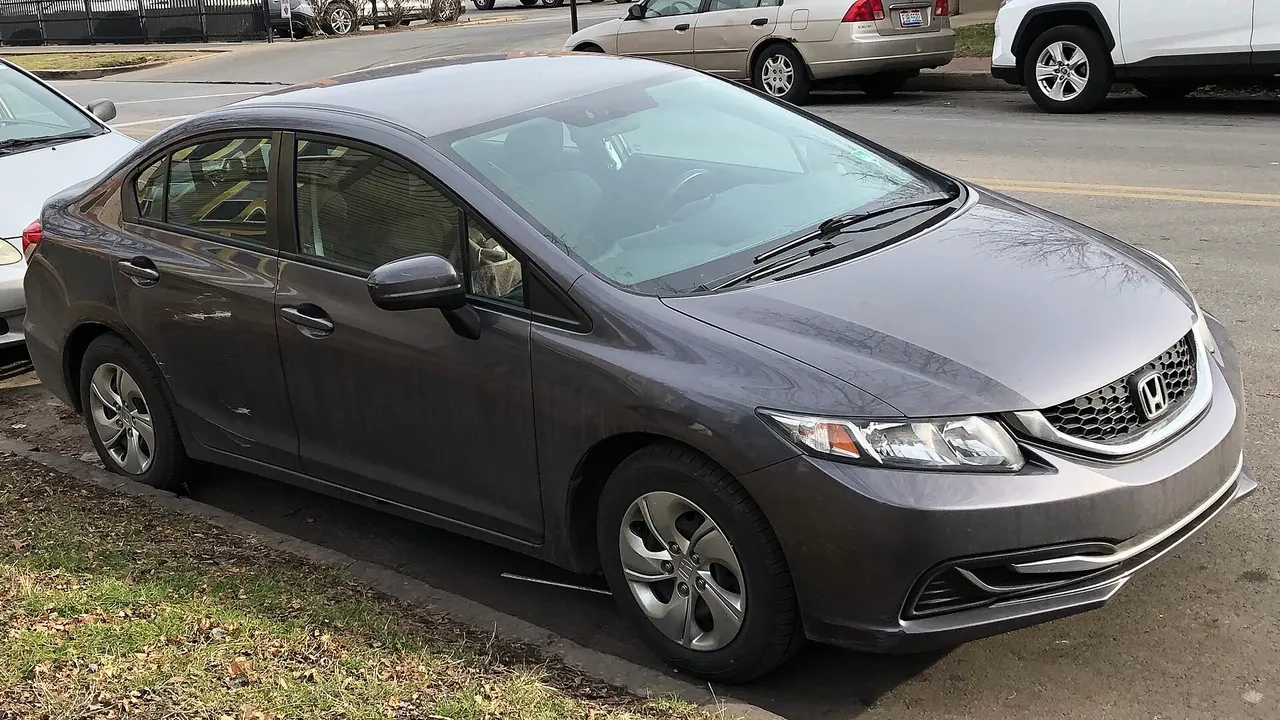
2014 Honda Civic sedan (facelift)

Photo: 2014 Honda Civic sedan (facelift) · Ghostofakina, CC BY-SA 4.0, via Wikimedia Commons

Problem areas

Ranked by severity-weighted complaints · share · median miles
  1. Air bags22% · 30 complaints · median 29,000 miles
  2. Powertrain22% · 30 complaints · median 52,000 miles
  3. Seats and belts7% · 10 complaints · median 19,000 miles
  4. Steering6% · 9 complaints · median 11,000 miles
  5. Engine11% · 15 complaints · median 5,000 miles
  6. Wheels and tires8% · 11 complaints · median 11,000 miles
  7. Body and structure4% · 6 complaints · median 8,000 miles
  8. Speed control6% · 9 complaints · median 14,000 miles
  9. Fuel and propulsion5% · 7 complaints · median 14,000 miles
  10. Brakes6% · 8 complaints · median 5,000 miles

Bars rank problem areas by complaints weighted for severity (crashes, fires, injuries and deaths count more). A complaint can name more than one area. Mileage is reported on about half of complaints.

What owners describe

Air bags

Owners describe two very different airbag problems: bags that stayed dark during real crashes, and warning lights or unwanted deployments unrelated to any collision. Several mention Takata recall confusion and costly out-of-warranty repairs to inflators, clock springs, or SRS units.

Warning signs:
Many report the airbag or SRS warning light illuminating intermittently, on and off while driving or stationary, sometimes with clock spring, steering, or horn problems before the failure.
What shops did:
Some owners had dealers replace the reel cable, airbag inflator, or SRS unit, though several say the light returned or dealers could not find a cause and repairs were not covered under warranty.
Mileage:
most between 20,000 and 60,000 miles, among 42 complaints that give it

“Read an error code of b0001:13, open or increased resistance in the driver's airbag first inflator.”

“The contact was informed that the cable reel was fractured and was interfering with the steering controls of the vehicle.”

Powertrain

Owners describe sudden transmission failures, often with a loud pop or grinding noise followed by loss of acceleration, sometimes while merging or driving on highways. Many say dealers diagnosed a failed transmission needing replacement, but their VIN wasn't included in an existing recall, leaving them to pay out of pocket.

Warning signs:
Many report a pop, click, or grinding noise, shuddering, revving RPMs without acceleration, and dashboard warning lights before the vehicle lost power or stalled.
What shops did:
Dealers and independent mechanics frequently diagnosed transmission failure and recommended full transmission replacement, though many owners say Honda declined to cover the repair since their VIN wasn't included in the recall.
Mileage:
most between 60,000 and 110,000 miles, among 84 complaints that give it

“The car made a loud click sound, at which point I lost all drive. The car began decelerating and I was forced to pull over”

“The engine RPM rapidly increased with no acceleration. The driver was able to cross 4 lanes and get to the shoulder safely”

Seats and belts

Owners describe head restraints that push the head into an uncomfortable, forward-tilted position causing neck and back pain during regular driving. Others describe crashes where airbags did not deploy and seat belts stuck or failed to retract properly.

Warning signs:
Some report ongoing neck and back discomfort from the head restraint angle before any incident; others noticed airbag warning lights or a stuck seat belt after a crash.
What shops did:
A dealer said the head restraint could not be adjusted; other owners do not describe a repair being performed.
Mileage:
most between 10,000 and 30,000 miles, among 7 complaints that give it

“Headrest angle is nonadjustable (only height is) and thus isn't safe for everyone. It pushes the head down and compromises spinal alignment.”

“The front seats were broken due to the impact. No airbags deployed. Not front, not side.”

Summaries are written with AI from the owner complaints shown on NHTSA's site and checked against them; quotes are word for word.

  • NHTSA 15V574000September 2015143,676 vehicles

    Power train: automatic transmission: control module (TCM/PCM/TECM)

    Honda (American Honda Motor Co.) is recalling certain model year 2014-2015 Civic vehicles manufactured January 16, 2014, to November 6, 2014 and 2015 Fit vehicles manufactured March 12, 2014, to May 12, 2015. The software settings that control the transmission operation may result in damage to the transmission drive pulley shaft.

    Risk: If the transmission drive pulley shaft is damaged, it may break, and the vehicle may lose acceleration or the front wheels may lock up while driving, increasing the risk of a crash.

    Fix: Honda will notify owners, and dealers will update the software for the transmission, free of charge.

A recall only helps if the repair was done. Enter the vehicle's 17-character VIN on NHTSA's official recall lookup before you buy.

Service bulletins

Honda sent NHTSA 74 service bulletins and other notices to dealers covering the 2015 Civic. These are repair instructions, not recalls. Warranty extensions and bulletins about its top problem areas:

  • A18-043 · December 2018There is a clicking or grinding noise when making turns.
  • A17-085 · July 20182012 and 2015 Civic Front Passenger Inflator Collection.
  • A18-059 · June 2018This bulletin is a notification of a class action settlement relating to airbag inflators.
  • A18-060 · June 2018This bulletin is a notification of a class action settlement relating to airbag inflators.
  • APaS03022018902 · March 2018Dealer message - American Honda (AHM) is investigating certain 2014-2015 Civic CVTs with a condition of the left axle seal leaking.
  • APaS01302018902 · January 2018Dealer message - American Honda (AHM) is investigating certain 2014-2015 Civic CVTs with a condition of the left axle seal leaking.
  • APaS11012017903 · November 2017Dealer message - American Honda (AHM) is investigating certain 2014-2015 Civic CVTs with a condition of the left axle seal leaking.
  • APaS10132017902 · October 2017Dealer message - American Honda (AHM) is investigating certain 2014-2015 Civic CVTs with a condition of the left axle seal leaking.

All 2015 Civic bulletins on NHTSA ›

Questions owners ask

Is the 2015 Honda Civic reliable?
Owners filed 139 complaints with NHTSA about the 2015 Honda Civic in its first five years on the road, about 42 for every 100,000 sold: 0.9× the rate of a typical Civic year. That's close to a typical year. Ratings compare Civic years with each other using complaints filed with NHTSA; they don't measure every problem owners have.
What are the most common 2015 Civic problems?
Owners' complaints most often involve the air bags (22%), the powertrain (transmission and drivetrain) (22%) and the seats and seat belts (7%). A complaint can name more than one area.
Has the 2015 Honda Civic been recalled?
Yes. NHTSA lists 1 recall campaign for the 2015 Honda Civic, the most recent in September 2015 (power train). Enter the vehicle's VIN on NHTSA's recall lookup to see whether the repairs were done.

Sources

Owner complaints, recalls and manufacturer communications from NHTSA's public data files, as of September 24, 2026. Complaints are counted once each, over the model year's first 60 months on the road. UsedScore is not affiliated with NHTSA or Honda. The 2015 Honda Civic on NHTSA.gov · How we rate