2020 Honda Civic: Solid

Owners filed 142 complaints with NHTSA about the 2020 Honda Civic in its first five years on the road, about 51 for every 100,000 sold: 1.0× the rate of a typical Civic year. That's close to a typical year.

The biggest problem area, counting serious complaints more, is the air bags (13% of complaints).

Complaint index
1.0×
per vehicle sold, vs. a typical Civic year
Rank
7th of 14
1st = fewest complaints
Complaints
142
first five years; 51 per 100,000 sold
Recalls
5
campaigns
10th generation, 2016–2021 · Updated September 24, 2026 · How we rate
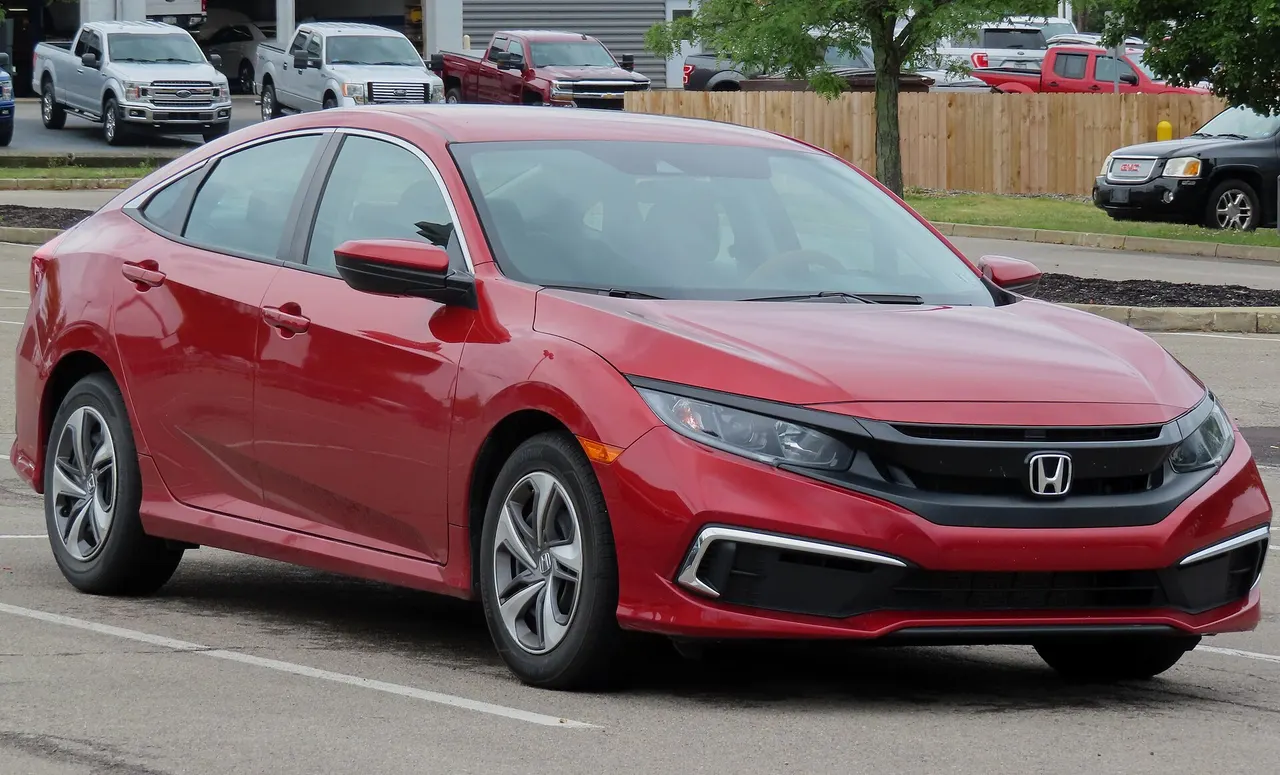
2019 Honda Civic LX sedan (facelift)

Photo: 2019 Honda Civic LX sedan (facelift) · MercurySable99, CC BY-SA 4.0, via Wikimedia Commons

Problem areas

Ranked by severity-weighted complaints · share · median miles
  1. Air bags13% · 18 complaints
  2. Electrical19% · 27 complaints · median 6,000 miles
  3. Brakes11% · 16 complaints · median 20,000 miles
  4. Powertrain16% · 23 complaints · median 8,000 miles
  5. Steering10% · 14 complaints
  6. Driver assistance13% · 18 complaints
  7. Fuel and propulsion13% · 19 complaints · median 41,000 miles
  8. Wheels and tires5% · 7 complaints
  9. Engine6% · 9 complaints
  10. Seats and belts1% · 2 complaints

Bars rank problem areas by complaints weighted for severity (crashes, fires, injuries and deaths count more). A complaint can name more than one area. Mileage is reported on about half of complaints.

What owners describe

Air bags

Many owners of this Civic describe air bags that either deployed without a crash or failed to deploy during a collision, and a number are waiting on a seat sensor recall with no parts available. The experience for owners ranges from unexpected repair costs to frustration over long delays getting the recall fixed.

Warning signs:
Some report the SRS or airbag warning light illuminating, seat belts locking or malfunctioning afterward, or no warning at all before deployment or non-deployment.
What shops did:
Dealers often told owners recall parts were unavailable or backordered, some replaced sensors or airbags at owner expense, and some found no problem on diagnostic checks.

“Driving at roughly 6mph in a parking lot when my passenger side airbag randomly deployed.”

“the airbag never deployed causing my stomach to hit the steering wheel.”

Brakes

Owners describe their parked Civics rolling away despite the parking brake being set, sometimes causing crashes into walls, trees, or ditches. Others report sudden unexplained automatic braking on the highway, brake noise, or a bouncing pedal, with several linking these issues to a master cylinder recall.

Warning signs:
Owners report the car creeping or rolling with no warning sound, grinding or creaking brake noise, a bouncing pedal, or dashboard collision/brake warnings flashing without a vehicle ahead.
What shops did:
Some owners say dealers replaced brake pads, sanded rotors, or towed the vehicle without finding or completing a repair; others were told parts were on back order for a recall.
Mileage:
most between 5,000 and 40,000 miles, among 7 complaints that give it

“the vehicle was in park in the driveway idling and unattended with the emergency brake engaged, the vehicle rolled down the driveway and crashed into a tree”

“I am experiencing braking issues that cause the pedal to bounce while braking and it is getting worse by the day”

Electrical

Owners of this Civic report electrical glitches ranging from windows and doors opening on their own to dashboard and infotainment screens freezing or going dark. Some say body control modules or wiring were blamed, but dealers often could not fully resolve the issue.

Warning signs:
Some report warning lights, screen blackouts, freezing displays, or the ignition turning on by itself before the failures occurred.
What shops did:
Dealers sometimes diagnosed a faulty module or wiring but many owners say the issue was not fixed, parts were on back order, or no remedy was found.
Mileage:
most between 0 and 40,000 miles, among 11 complaints that give it

“the windows on the vehicle independently rolled down while the vehicle was turned off”

“BCM (body mechanical module) became faulty, causing car to turn on ignition by itself”

Summaries are written with AI from the owner complaints shown on NHTSA's site and checked against them; quotes are word for word.

  • NHTSA 26V332000May 202698,892 vehicles

    Air bags: sensor: occupant classification: front passenger

    Honda (American Honda Motor Co.) is recalling certain 2018-2021, 2023 Acura TLX, 2019-2024 RDX, 2017-2020, 2022-2026 MDX, 2017-2021, 2023, 2025 Honda Ridgeline, 2017-2022 Pilot, 2019-2021 Passport, 2018-2026 Odyssey, 2019-2022 Insight, 2019-2021 HR-V, 2018-2020 Fit, 2020-2022 CR-V Hybrid, 2017-2022 CR-V, 2017-2018, 2021 Civic Type R, 2017-2021 Civic hatchback, 2016-2020 Civic coupe, 2016-2022 Civic, 2017-2022 Accord Hybrid, and 2016-2022 Accord vehicles. The front passenger seat weight sensor may crack and short circuit, which can cause the air bags to deploy unintentionally during a crash.

    Risk: Air bags that deploy unintentionally during a crash increase the risk of injury.

    Fix: Dealers will replace the seat weight sensors, free of charge.

  • NHTSA 24V064000February 2024750,114 vehicles

    Air bags: sensor: occupant classification: front passenger

    Honda (American Honda Motor Co.) is recalling certain 2020-2022 Pilot, Accord, Civic sedan, HR-V, Odyssey, 2020 Civic coupe, Fit, 2021-2022 Civic hatchback, 2021 Civic Type R, Insight, 2020-2021 CR-V, CR-V Hybrid, Passport, Ridgeline, Accord Hybrid, 2020 Acura MDX, 2022 Acura MDX, 2020-2022 Acura RDX, and 2020-2021 Acura TLX vehicles. The front passenger seat weight sensor may crack and short circuit, failing to suppress the air bag as intended.

    Risk: An air bag that deploys unintentionally during a crash can increase the risk of injury.

    Fix: Dealers will replace the seat weight sensors, free of charge.

  • NHTSA 23V858000December 20232,490,460 vehicles

    Fuel system, gasoline: delivery: fuel pump

    Honda (American Honda Motor Co.) is recalling certain 2013-2023 Honda Accord, Civic Coupe, Civic Sedan, Civic Hatchback, Civic Type R, CR-V, HR-V, Ridgeline, Odyssey, Acura ILX, MDX, MDX Hybrid, RDX, RLX, TLX, 2019-2022 Honda Insight, Passport, 2020 Honda CR-V Hybrid, 2018-2019 Honda Clarity PHEV, Fit, and 2015-2020 Honda Accord Hybrid, Pilot, Acura NSX vehicles. The fuel pump inside the fuel tank may fail.

    Risk: Fuel pump failure can cause an engine stall while driving, increasing the risk of a crash.

    Fix: Dealers will replace the fuel pump module, free of charge.

  • NHTSA 23V458000June 2023124,077 vehicles

    Service brakes, hydraulic: foundation components: master cylinder

    Honda (American Honda Motor Co.) is recalling certain 2020-2021 Civic, 2020-2023 Ridgeline, 2021-2023 Passport, 2021-2022 Pilot, and 2020 Acura MDX vehicles. The tie rod fastener that connects the brake booster and the brake master cylinder may have been improperly assembled during manufacturing, which can cause the brake master cylinder to separate from the booster assembly.

    Risk: Brake master cylinder separation can cause a loss of brake function and increase the risk of a crash.

    Fix: Dealers will inspect and repair the brake booster assembly as necessary, free of charge.

  • NHTSA 21V215000March 2021624,552 vehicles

    Fuel system, gasoline: delivery: fuel pump

    Honda (American Honda Motor Co.) is recalling certain 2019-2020 Acura MDX, MDX Sport Hybrid, RDX, TLX, Honda Accord, Civic Hatchback, Insight, 2019 Acura ILX, Honda Accord Hybrid, Civic Coupe, Civic Coupe Si, Civic Sedan, Civic Sedan Si, Civic Type R, Fit, HR-V, Odyssey, Passport, Pilot and Ridgeline, and 2018-2019 CR-V vehicles. The low-pressure fuel pump inside the fuel tank may fail.

    Risk: Fuel pump failure can cause an engine stall while driving, increasing the risk of a crash.

    Fix: Honda will notify owners, and dealers will replace the fuel pump assembly, free of charge.

A recall only helps if the repair was done. Enter the vehicle's 17-character VIN on NHTSA's official recall lookup before you buy.
Service bulletins

Honda sent NHTSA 179 service bulletins and other notices to dealers covering the 2020 Civic. These are repair instructions, not recalls. Warranty extensions and bulletins about its top problem areas:

  • ATI&09122024904 · September 2024Dealer Message - American Honda Motor Co., Inc.
  • ATI&08072024901 · August 2024Dealer Message - American Honda Motor Co., Inc.
  • ATI&07232024904 · July 2024Dealer Message - American Honda Motor Co., Inc.
  • ATI&07082024906 · July 2024Dealer Message - American Honda Motor Co., Inc.
  • ATI&05312024902 · May 2024Dealer Message - American Honda Motor Co., Inc.
  • ATI&05172024908 · May 2024Dealer Message - American Honda Motor Co., Inc.
  • ATI&05032024906 · May 2024Dealer Message - American Honda Motor Co., Inc.
  • ATI&04152024904 · April 2024Dealer Message - American Honda Motor Co., Inc.

All 2020 Civic bulletins on NHTSA ›

Questions owners ask

Is the 2020 Honda Civic reliable?
Owners filed 142 complaints with NHTSA about the 2020 Honda Civic in its first five years on the road, about 51 for every 100,000 sold: 1.0× the rate of a typical Civic year. That's close to a typical year. Ratings compare Civic years with each other using complaints filed with NHTSA; they don't measure every problem owners have.
What are the most common 2020 Civic problems?
Owners' complaints most often involve the air bags (13%), the electrical system (19%) and the brakes (11%). A complaint can name more than one area.
Has the 2020 Honda Civic been recalled?
Yes. NHTSA lists 5 recall campaigns for the 2020 Honda Civic, the most recent in May 2026 (air bags). Enter the vehicle's VIN on NHTSA's recall lookup to see whether the repairs were done.

Sources

Owner complaints, recalls and manufacturer communications from NHTSA's public data files, as of September 24, 2026. Complaints are counted once each, over the model year's first 60 months on the road. UsedScore is not affiliated with NHTSA or Honda. The 2020 Honda Civic on NHTSA.gov · How we rate