2020 Toyota Camry: Solid

Owners filed 165 complaints with NHTSA about the 2020 Toyota Camry in its first five years on the road, about 54 for every 100,000 sold: 0.7× the rate of a typical Camry year. That's close to a typical year.

The biggest problem area, counting serious complaints more, is the engine (26% of complaints, median 5,000 miles).

Complaint index
0.7×
per vehicle sold, vs. a typical Camry year
Rank
5th of 14
1st = fewest complaints
Complaints
165
first five years; 54 per 100,000 sold
Recalls
3
campaigns
8th generation, 2018–2024 · Updated September 24, 2026 · How we rate
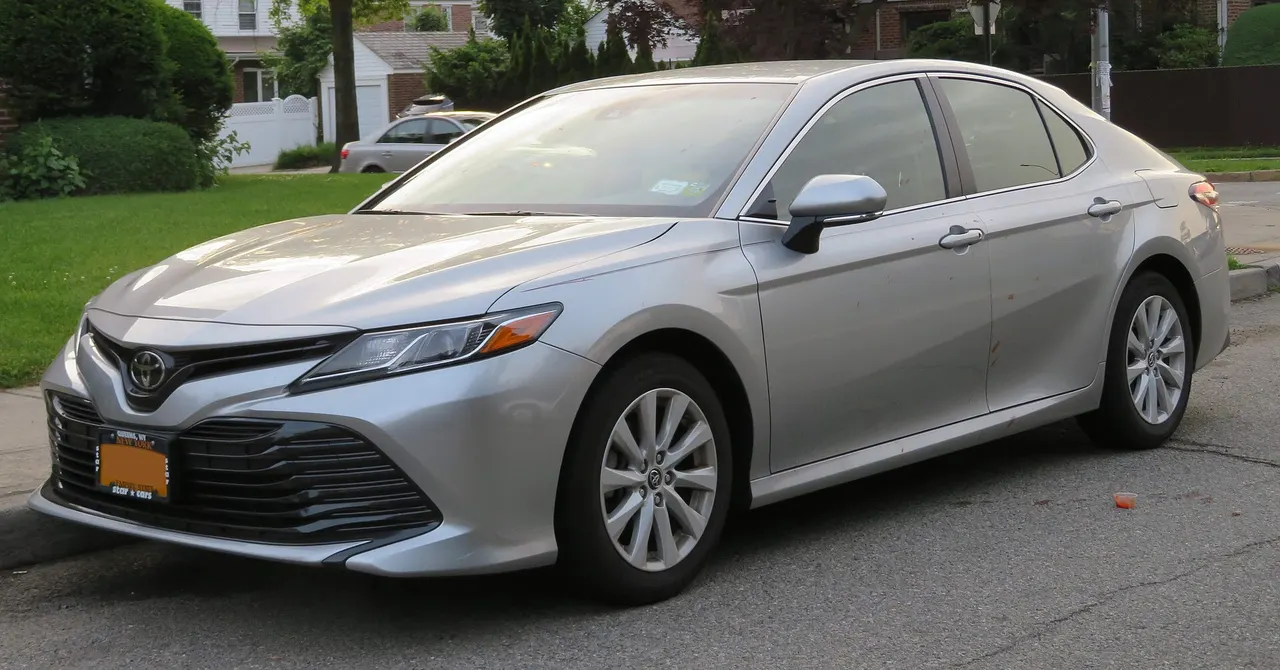
2018 Toyota Camry LE

Photo: 2018 Toyota Camry LE · Kevauto, CC BY-SA 4.0, via Wikimedia Commons

Problem areas

Ranked by severity-weighted complaints · share · median miles
  1. Engine26% · 43 complaints · median 5,000 miles
  2. Electrical30% · 50 complaints · median 3,000 miles
  3. Air bags8% · 14 complaints
  4. Fuel and propulsion16% · 26 complaints · median 11,000 miles
  5. Powertrain6% · 10 complaints
  6. Driver assistance7% · 11 complaints
  7. Brakes5% · 9 complaints · median 1,000 miles
  8. Seats and belts3% · 5 complaints
  9. Visibility5% · 8 complaints · median 36,000 miles
  10. Body and structure3% · 5 complaints

Bars rank problem areas by complaints weighted for severity (crashes, fires, injuries and deaths count more). A complaint can name more than one area. Mileage is reported on about half of complaints.

What owners describe

Air bags

Owners of this Camry report that air bags sometimes did not deploy in collisions, and many separately describe a recall notice about a passenger seat sensor that could prevent proper air bag deployment. Most say dealers have told them no repair parts are available yet, leaving the recall unresolved for an extended time.

Warning signs:
Several owners mention a dashboard warning reading "SRS airbag system malfunction" or a seat belt chime that would not turn off before the failure.
What shops did:
Many owners say the dealer confirmed recall repair parts were not yet available and the vehicle was not diagnosed or repaired; in one case the manufacturer said deployment criteria were not met.
Mileage:
most between 10,000 and 65,000 miles, among 6 complaints that give it

“SRS airbag system malfunction”

“Air bag malfunction report to dealer waring on dash”

Electrical

Owners describe a 2020 Camry that can be difficult or impossible to start after sitting for a day or two, often due to a battery that drains without explanation. Dealers frequently replace batteries or apply software updates, but many owners say the problem returns.

Warning signs:
Many report flickering dashboard lights, clicking or no-crank sounds, key fob or smart-key malfunction messages, warning lights (brake, pre-collision, check engine), or doors failing to lock/unlock before the vehicle wouldn't start.
What shops did:
Dealers often tested or replaced the battery, performed data control module or firmware/software updates, or told owners to drive more or use a trickle charger, with some unable to duplicate or resolve the problem.
Mileage:
most between 0 and 20,000 miles, among 28 complaints that give it

“Unexpectedly, my car's 12v battery discharged completely under conditions of regular use and moderate temperatures, while parked in my garage overnight.”

“Upon entering and pressing the start button, the mid was flickering with error messages such as (a) key fob not detected (b) epb disengaged.”

Engine

Owners of this Camry describe engines that stall or lose power unexpectedly, sometimes with a coolant smell or check-engine light beforehand. Repairs commonly involve the coolant bypass valve or fuel pump, but several owners say the issue returned or dealers couldn't recreate it.

Warning signs:
Many report a lingering coolant smell, check-engine or brake/collision warning lights, rough or delayed acceleration, clicking noises, or difficulty starting before the failure occurred.
What shops did:
Dealers often replaced the coolant bypass valve, fuel pump, battery, or ECM, though some owners say the problem could not be duplicated or recurred after repair.
Mileage:
most between 0 and 30,000 miles, among 19 complaints that give it

“Constant "ENGINE MAINTENANCE REQUIRED" warning. Dealer identified the engine coolant bypass valve as the source of the problem. Replacing the part resolved the issue.”

“Engine dies and/or surges under load at cruise speeds, sometimes dies at idle. Engine shuts down merging onto highway.”

Summaries are written with AI from the owner complaints shown on NHTSA's site and checked against them; quotes are word for word.

  • NHTSA 23V865000December 2023999,901 vehicles

    Air bags: sensor: occupant classification

    Toyota Motor Engineering & Manufacturing (Toyota) is recalling certain 2020-2021 Avalon, Avalon Hybrid, Corolla, Highlander, Highlander Hybrid, RAV4, RAV4 Hybrid, Lexus ES350, Lexus RX350, Lexus RX450H, 2021 Sienna Hybrid, Lexus ES250, 2020-2022 Camry, Camry Hybrid, and ES300H vehicles. A short circuit may develop in the Occupant Classification System (OCS) sensor, preventing the front passenger air bag from deploying.

    Risk: An air bag that does not deploy during a crash increases the risk of injury.

    Fix: Dealers will inspect and replace the sensor as necessary, free of charge.

  • NHTSA 20V682000November 20201,525,742 vehicles

    Fuel system, gasoline: delivery: fuel pump

    Toyota Motor Engineering & Manufacturing (Toyota) is recalling certain 2018-2019 4Runner, 2019-2020 Avalon, 2019 Corolla Hatchback, 2017-2019 Highlander, 2018-2020 Camry, 2020 Corolla, 2018-2019 Land Cruiser, 2017-2020 Tacoma, 2019-2020 RAV4, 2019-2020 Sequoia, 2017-2020 Sienna, 2019-2020 Tundra, 2018-2020 Lexus ES350, 2017 Lexus GS200t, 2017-2019 Lexus GS350, 2019 Lexus GS300, 2018-2020 Lexus LC500h, 2019-2020 Lexus LS500, 2018-2019 Lexus GX460, 2017 Lexus IS200t, 2019 Lexus IS300, 2019 Lexus IS350, 2018-2020 Lexus LC500, 2018 Lexus LS500, 2019 Lexus LS500h, 2018-2019 Lexus LX570, 2017 Lexus RC200t, 2019 Lexus RC300, RC350, 2017 and 2019-2020 Lexus RX350, 2018-2020 RX350L, 2019 Lexus UX200, 2018-2019 Lexus NX300 vehicles. The low-pressure fuel pump inside the fuel tank may fail.

    Risk: If the fuel pump fails, the engine can stall while driving, increasing the risk of a crash.

    Fix: Toyota will notify owners, and dealers will replace the fuel pump assembly with an improved one, free of charge.

  • NHTSA 20V064000February 202044,191 vehicles

    Engine and engine cooling

    Toyota Motor Engineering & Manufacturing (Toyota) is recalling certain 2020 Toyota Avalon Hybrid, Camry, Camry Hybrid and Lexus ES300h and 2019-2020 RAV4 and RAV4 Hybrid vehicles equipped with 2.5L 4-Cylinder engines. Porosity in the engine castings may result in cracks than can allow coolant to leak internally and/or externally.

    Risk: A coolant leak can cause the engine to overheat and cause a vehicle stall in conventional gasoline vehicles, increasing the risk of a crash. Additionally, for all involved vehicles, the engine may get damaged mechanically, possibly resulting in an engine oil leak, increasing the risk of a fire.

    Fix: Toyota will notify owners, and dealers will inspect and replace the engine including the engine block, as necessary, free of charge.

A recall only helps if the repair was done. Enter the vehicle's 17-character VIN on NHTSA's official recall lookup before you buy.
Service bulletins

Toyota sent NHTSA 277 service bulletins and other notices to dealers covering the 2020 Camry. These are repair instructions, not recalls. Warranty extensions and bulletins about its top problem areas:

  • 24TE04 · August 2026 · Warranty extensionAlthough the flow shut-off valve is covered by Toyota’s New Vehicle Limited Warranty for 36 months or 36,000 miles (whichever comes first), we at Toyota care about the customers’ ownership experience.
  • T-SB-0051-26 · August 2026This bulletin includes basic procedures for performing a rescue charge at battery on high voltage (HV) Ni-MH and Li-ion batteries.
  • T-SB-0110-20 Rev2 · August 2026OBSOLETE NOTICE August 20, 2026: This bulletin is now obsolete.
  • T-SB-0104-21 Rev2 · February 2026OBSOLETE NOTICE February 27, 2026: This bulletin is no longer applicable and is now obsolete.
  • T-SB-0106-22 Rev2 · January 2026OBSOLETE NOTICE January 30, 2026: This bulletin is now obsolete.
  • T-SB-0001-26 · January 2026Some 2018 – 2024 model year Toyota vehicles equipped with a Premium Audio with Dynamic Navigation System require a Special Service Tool (SST) USB flash drive to update the map, points of interest,…
  • T-SB-0010-24 Rev2 · June 2025Some 2021 – 2022 model year Avalon, 2018 – 2024 Camry, 2019 – 2025 model year Corolla, 2022 – 2025 model year Corolla Cross, and 2019 – 2025 model year RAV4 vehicles with A25A-FKS and M20A-FKS…
  • T-SB-0112-24 Rev2 · June 2025Some 2018 – 2021 model year Toyota vehicles equipped with an A25A-FKS, A25A-FXS, or M20A-FKS engine may exhibit a condition in which an “Engine Maintenance Required” message is displayed in the…

All 2020 Camry bulletins on NHTSA ›

Questions owners ask

Is the 2020 Toyota Camry reliable?
Owners filed 165 complaints with NHTSA about the 2020 Toyota Camry in its first five years on the road, about 54 for every 100,000 sold: 0.7× the rate of a typical Camry year. That's close to a typical year. Ratings compare Camry years with each other using complaints filed with NHTSA; they don't measure every problem owners have.
What are the most common 2020 Camry problems?
Owners' complaints most often involve the engine (26%), the electrical system (30%) and the air bags (8%). A complaint can name more than one area.
Has the 2020 Toyota Camry been recalled?
Yes. NHTSA lists 3 recall campaigns for the 2020 Toyota Camry, the most recent in December 2023 (air bags). Enter the vehicle's VIN on NHTSA's recall lookup to see whether the repairs were done.

Sources

Owner complaints, recalls and manufacturer communications from NHTSA's public data files, as of September 24, 2026. Complaints are counted once each, over the model year's first 60 months on the road. UsedScore is not affiliated with NHTSA or Toyota. The 2020 Toyota Camry on NHTSA.gov · How we rate