2017 Toyota Highlander: Solid

Owners filed 134 complaints with NHTSA about the 2017 Toyota Highlander in its first five years on the road, about 64 for every 100,000 sold: 1.0× the rate of a typical Highlander year. That's close to a typical year.

The biggest problem area, counting serious complaints more, is the brakes (15% of complaints, median 15,000 miles).

Complaint index
1.0×
per vehicle sold, vs. a typical Highlander year
Rank
5th of 14
1st = fewest complaints
Complaints
134
first five years; 64 per 100,000 sold
Recalls
3
campaigns
3rd generation, 2014–2019 · Updated September 24, 2026 · How we rate
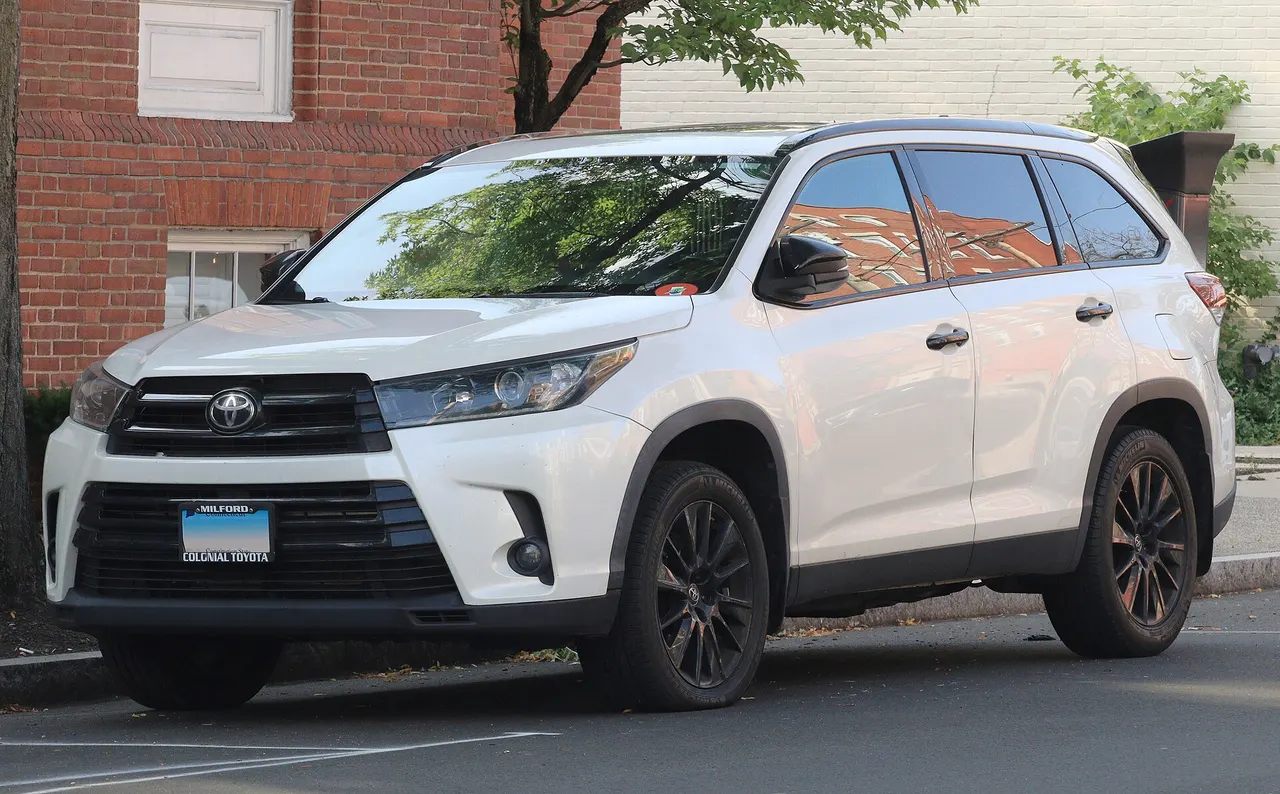
2019 Toyota Highlander SE

Photo: 2019 Toyota Highlander SE · Cutlass, CC0, via Wikimedia Commons

Problem areas

Ranked by severity-weighted complaints · share · median miles
  1. Brakes15% · 20 complaints · median 15,000 miles
  2. Powertrain20% · 27 complaints · median 20,000 miles
  3. Engine19% · 26 complaints · median 17,000 miles
  4. Electrical16% · 21 complaints · median 31,000 miles
  5. Fuel and propulsion13% · 18 complaints · median 10,000 miles
  6. Air bags4% · 5 complaints · median 15,000 miles
  7. Speed control7% · 10 complaints · median 15,000 miles
  8. Seats and belts4% · 5 complaints
  9. Visibility8% · 11 complaints · median 6,000 miles
  10. Body and structure4% · 6 complaints

Bars rank problem areas by complaints weighted for severity (crashes, fires, injuries and deaths count more). A complaint can name more than one area. Mileage is reported on about half of complaints.

What owners describe

Brakes

Owners of this model describe a recurring "Brake Power Low" warning that sometimes keeps the vehicle from starting, and in some cases they report the brakes failing to stop the car. Fixes ranged from battery or brake booster replacement to dealers being unable to find the cause.

Warning signs:
Owners describe dashboard warnings such as ABS, traction control, AWD system and brake power low lights, along with clicking noises when trying to start the vehicle.
What shops did:
Some owners had the battery replaced or the vacuum pump and brake booster replaced, while others say dealers or shops could not duplicate or diagnose the issue.
Mileage:
most between 10,000 and 40,000 miles, among 17 complaints that give it

“Braking power low, Stop in a Safe Place, See owners manual”

“i have been advised to replace the vacuum pump and power booster at cost of aprox. 4 thousand dollars”

Engine

Owners of this Highlander report sudden loss of power, stalling, or warning lights tied to the engine, AWD system, or transmission, sometimes while driving at highway speed. Repairs are frequently inconclusive, with dealers unable to replicate the issue or citing costly fixes like transmission or engine replacement.

Warning signs:
Many describe warning lights (check engine, check AWD, master warning), dashboard messages to visit the dealer, rough shifting, RPM fluctuation, knocking or whining noises, or coolant/oil leaks before failures.
What shops did:
Dealers often could not duplicate or find the cause, sometimes reprogrammed the ECM or replaced parts like water pumps, spark plugs, or ignition coils, and some repairs required replacing the transmission or engine.
Mileage:
most between 15,000 and 55,000 miles, among 27 complaints that give it

“The car suddenly slowed without any warning to under 20 MPH. The check engine light turned on”

“the engine was leaking due to a timing chain failure. The contact was advised that the engine needed to be taken apart to repair the vehicle.”

Powertrain

Many owners of this Highlander describe transmission whining, rough or delayed shifting, and sudden loss of power that sometimes left them stranded or unable to move in traffic. Dealers frequently confirmed transmission failure and replaced the unit, though several owners say a related support program did not cover their vehicle.

Warning signs:
Many report a high-pitched whining or grinding noise during acceleration or deceleration, along with hard/delayed shifting, jerking, hesitation, and warning lights such as check engine, AWD, or traction control.
What shops did:
Dealers most often diagnosed the transmission as failed and replaced or recommended replacing it, though many owners report long parts backorders, high out-of-pocket costs, and denial of coverage under a customer support program despite matching symptoms.
Mileage:
most between 10,000 and 35,000 miles, among 25 complaints that give it

“The mechanic at the dealership determined the transmission needed to be replaced due to an internal clip that becomes unseated.”

“About two weeks prior to the transmission failing, I started hearing a high-pitched whining coming from the transmission, difficulty shifting, and lurching forward when engaging the gear.”

Summaries are written with AI from the owner complaints shown on NHTSA's site and checked against them; quotes are word for word.

  • NHTSA 20V682000November 20201,525,742 vehicles

    Fuel system, gasoline: delivery: fuel pump

    Toyota Motor Engineering & Manufacturing (Toyota) is recalling certain 2018-2019 4Runner, 2019-2020 Avalon, 2019 Corolla Hatchback, 2017-2019 Highlander, 2018-2020 Camry, 2020 Corolla, 2018-2019 Land Cruiser, 2017-2020 Tacoma, 2019-2020 RAV4, 2019-2020 Sequoia, 2017-2020 Sienna, 2019-2020 Tundra, 2018-2020 Lexus ES350, 2017 Lexus GS200t, 2017-2019 Lexus GS350, 2019 Lexus GS300, 2018-2020 Lexus LC500h, 2019-2020 Lexus LS500, 2018-2019 Lexus GX460, 2017 Lexus IS200t, 2019 Lexus IS300, 2019 Lexus IS350, 2018-2020 Lexus LC500, 2018 Lexus LS500, 2019 Lexus LS500h, 2018-2019 Lexus LX570, 2017 Lexus RC200t, 2019 Lexus RC300, RC350, 2017 and 2019-2020 Lexus RX350, 2018-2020 RX350L, 2019 Lexus UX200, 2018-2019 Lexus NX300 vehicles. The low-pressure fuel pump inside the fuel tank may fail.

    Risk: If the fuel pump fails, the engine can stall while driving, increasing the risk of a crash.

    Fix: Toyota will notify owners, and dealers will replace the fuel pump assembly with an improved one, free of charge.

  • NHTSA 17V520000August 20171,121 vehicles

    Equipment

    Gulf States Toyota, Inc. (GST) is recalling certain 2017 Toyota Highlander and Highlander Hybrid vehicles equipped with accessory roof rail cross bars. The fasteners for the roof rails may not be torqued properly.

    Risk: The roof rails may loosen and possibly detach from the vehicle, becoming a road hazard and increasing the risk of a crash.

    Fix: GST will notify owners, and dealers will inspect and properly torque the fasteners, free of charge.

  • NHTSA 17V295000May 2017409 vehicles

    Tires: temporary/emergency spare tire

    Gulf States Toyota, Inc. (Gulf States) is recalling certain 2017 4Runner , 86, Avalon, Camry, Camry Hybrid, Corolla, Corolla iM, Highlander, Highlander Hybrid, Prius, Prius C, RAV4, RAV4 Hybrid, Sienna and Yaris vehicles. The spare tire air pressure was not adjusted to the proper pressure as stated on the Tire Pressure Label.

    Risk: A spare tire that is not inflated to the proper value may not perform as intended, increasing the risk of a crash.

    Fix: Gulf States will notify owners, and dealers will inspect the spare tires, adjusting their pressure as necessary, free of charge.
A recall only helps if the repair was done. Enter the vehicle's 17-character VIN on NHTSA's official recall lookup before you buy.

Service bulletins

Toyota sent NHTSA 282 service bulletins and other notices to dealers covering the 2017 Highlander. These are repair instructions, not recalls. Warranty extensions and bulletins about its top problem areas:

  • 24TE05 · January 2025 · Warranty extensionAlthough the Brake Booster and Brake Booster Pump Assemblies are covered by Toyota’s New Vehicle Limited Warranty for 3 years or 36,000 miles (whichever comes first), we at Toyota care about the…
  • T-SB-0119-15 Rev2 · February 2026OBSOLETE NOTICE February 13, 2026: This bulletin is now obsolete.
  • T-SB-0009-26 · February 2026This bulletin includes basic procedures for performing a rescue charge on Ni-MH high voltage (HV) batteries.
  • T-SB-0014-25 · January 2025Some 2017 – 2019 model year Highlander Hybrid vehicles may exhibit a condition in which the brake, ABS, and/or TRAC warning lights are on and/or a Check VSC message displays.
  • T-SB-0103-20 Rev1 · June 2024This Service Bulletin provides updated non-electric water pump leak inspection and diagnostic tips for some 2008 – 2025 model year Toyota vehicles.
  • T-PANT-2024-004- · March 2024This is to advise of various price adjustments that will affect Toyota Genuine Motor Oil and Long Life Coolant, effective March 1, 2024.
  • TSB000923 · February 2023TSB: Some 2014 ?
  • 23TE04 · February 2023DL: On December 20, 2022, a settlement of claims for certain low pressure fuel pumps was approved by the federal court.

All 2017 Highlander bulletins on NHTSA ›

Questions owners ask

Is the 2017 Toyota Highlander reliable?
Owners filed 134 complaints with NHTSA about the 2017 Toyota Highlander in its first five years on the road, about 64 for every 100,000 sold: 1.0× the rate of a typical Highlander year. That's close to a typical year. Ratings compare Highlander years with each other using complaints filed with NHTSA; they don't measure every problem owners have.
What are the most common 2017 Highlander problems?
Owners' complaints most often involve the brakes (15%), the powertrain (transmission and drivetrain) (20%) and the engine (19%). A complaint can name more than one area.
Has the 2017 Toyota Highlander been recalled?
Yes. NHTSA lists 3 recall campaigns for the 2017 Toyota Highlander, the most recent in November 2020 (fuel system, gasoline). Enter the vehicle's VIN on NHTSA's recall lookup to see whether the repairs were done.

Sources

Owner complaints, recalls and manufacturer communications from NHTSA's public data files, as of September 24, 2026. Complaints are counted once each, over the model year's first 60 months on the road. UsedScore is not affiliated with NHTSA or Toyota. The 2017 Toyota Highlander on NHTSA.gov · How we rate