2014 Honda CR-V: Use caution

Owners filed 332 complaints with NHTSA about the 2014 Honda CR-V in its first five years on the road, about 102 for every 100,000 sold: 1.3× the rate of a typical CR-V year. That's above average, so use caution.

The biggest problem area, counting serious complaints more, is the engine (27% of complaints, median 16,000 miles).

Complaint index
1.3×
per vehicle sold, vs. a typical CR-V year
Rank
10th of 14
1st = fewest complaints
Complaints
332
first five years; 102 per 100,000 sold
Recalls
1
campaign
4th generation, 2012–2016 · Updated September 24, 2026 · How we rate
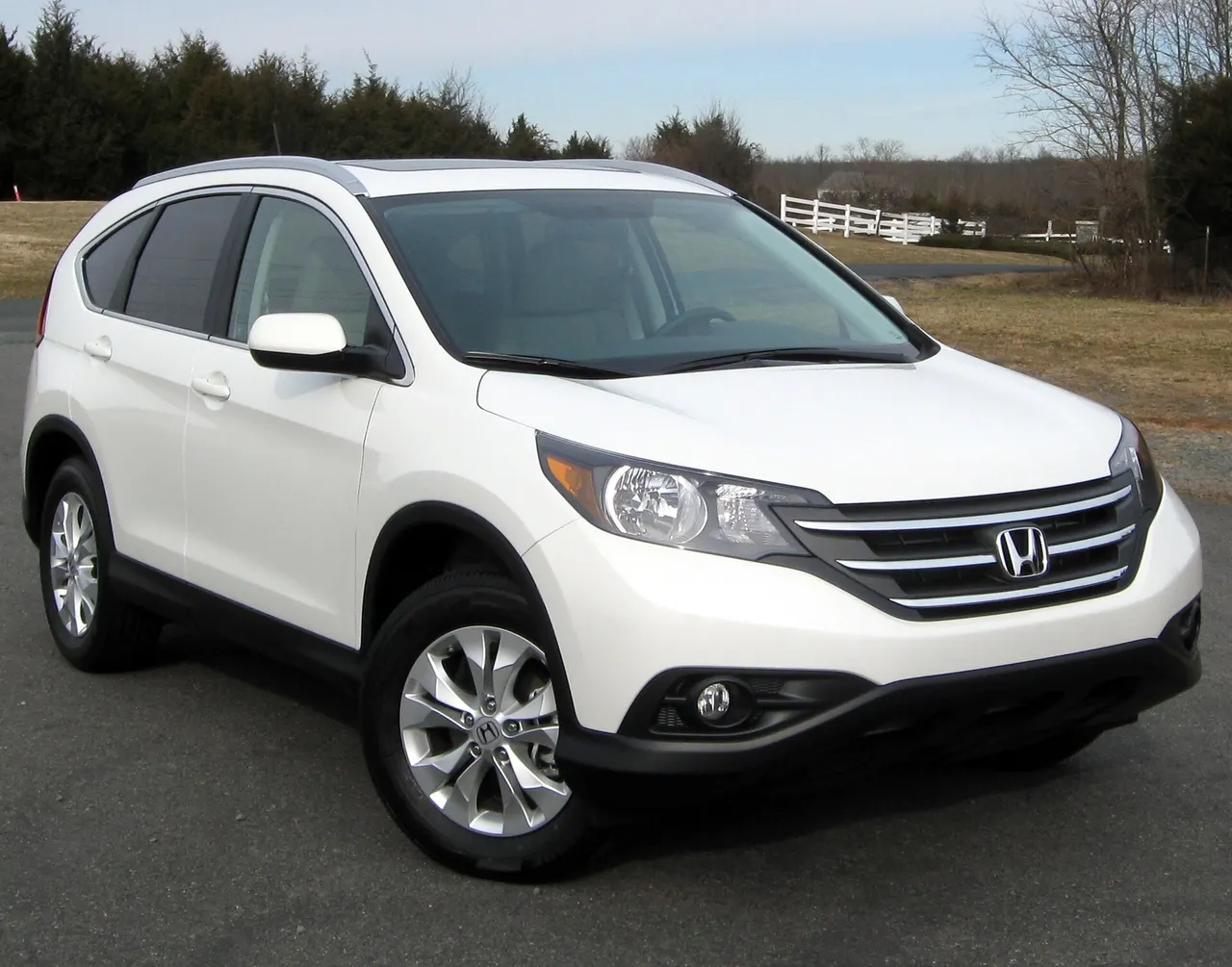
2012 Honda CR-V EX-L

Photo: 2012 Honda CR-V EX-L · IFCAR, public domain, via Wikimedia Commons

Problem areas

Ranked by severity-weighted complaints · share · median miles
  1. Engine27% · 90 complaints · median 16,000 miles
  2. Air bags6% · 19 complaints · median 19,000 miles
  3. Wheels and tires23% · 76 complaints · median 1,000 miles
  4. Electrical17% · 56 complaints · median 5,000 miles
  5. Speed control8% · 27 complaints · median 7,000 miles
  6. Brakes7% · 23 complaints · median 17,000 miles
  7. Seats and belts4% · 14 complaints · median 20,000 miles
  8. Powertrain8% · 26 complaints · median 16,000 miles
  9. Fuel and propulsion4% · 14 complaints · median 3,000 miles
  10. Body and structure3% · 11 complaints · median 22,000 miles

Bars rank problem areas by complaints weighted for severity (crashes, fires, injuries and deaths count more). A complaint can name more than one area. Mileage is reported on about half of complaints.

What owners describe

Air bags

Owners describe crashes in which front, side, or driver air bags did not deploy, sometimes resulting in injuries, along with a few reports of air bags deploying unexpectedly or warning lights staying on. Several also mention waiting on Takata recall parts for their inflators.

Warning signs:
Some owners report the passenger, side, or driver air bag warning light illuminating intermittently or staying on before or after incidents.
What shops did:
Some dealers diagnosed a damaged sensor or wiring harness but did not repair it; others advised waiting for Takata recall replacement parts.
Mileage:
most between 10,000 and 55,000 miles, among 22 complaints that give it

“the driver’s side sensor had been damaged and the wiring harness needed to be replaced. The vehicle was not repaired.”

“Tire pressure warning light kept coming on. Shortly after, passenger airbag off light intermittently lit.”

Engine

Many owners of this CR-V report a grinding or rattling noise at cold engine start-up that dealers often can't fix and sometimes dismiss as normal. For some owners this progressed to timing chain damage, oil consumption, or stalling, with repairs frequently costing money once the warranty expired.

Warning signs:
Owners notice a metal-on-metal grinding or rattling sound lasting a few seconds on cold morning starts, sometimes with check engine, oil, or dashboard warning lights.
What shops did:
Dealers often could not duplicate or fix the noise, told owners it was normal, replaced the VTC actuator (sometimes repeatedly), or later replaced the timing chain, often at owner expense out of warranty.
Mileage:
most between 15,000 and 55,000 miles, among 130 complaints that give it

“I get a harsh grinding 'metal-on-metal' sound from the cam/timing chain, top of the engine when temps below 40 degrees”

“When starting the vehicle, the vtc actuator makes a loud grinding noise, which is the sound of the timing chain being stretched”

Wheels and tires

Owners of the 2014 CR-V frequently describe a tire pressure warning light that comes on even when tires are properly inflated, often returning despite dealer resets, software updates, or tire changes. A few also mention steering vibration, wheel balance problems, or tire wear issues.

Warning signs:
Owners say the low-tire-pressure warning light comes on during driving even though tires check out at normal pressure, sometimes with steering vibration or grinding noise.
What shops did:
Dealers commonly checked and reset or recalibrated the system, sometimes rebalancing wheels or replacing tires, but many owners report the light returned; some received software or firmware updates that owners say did not resolve it.
Mileage:
most between 0 and 10,000 miles, among 66 complaints that give it

“Took car to dealer who checked tires and did not find a problem. Dealer reset/recalibrated TPMS by pressing button.”

“The light illuminates randomly when my tire pressure is fine. It sometimes does not illuminate when my tire pressure is not fine.”

Summaries are written with AI from the owner complaints shown on NHTSA's site and checked against them; quotes are word for word.

  • NHTSA 23V858000December 20232,490,460 vehicles

    Fuel system, gasoline: delivery: fuel pump

    Honda (American Honda Motor Co.) is recalling certain 2013-2023 Honda Accord, Civic Coupe, Civic Sedan, Civic Hatchback, Civic Type R, CR-V, HR-V, Ridgeline, Odyssey, Acura ILX, MDX, MDX Hybrid, RDX, RLX, TLX, 2019-2022 Honda Insight, Passport, 2020 Honda CR-V Hybrid, 2018-2019 Honda Clarity PHEV, Fit, and 2015-2020 Honda Accord Hybrid, Pilot, Acura NSX vehicles. The fuel pump inside the fuel tank may fail.

    Risk: Fuel pump failure can cause an engine stall while driving, increasing the risk of a crash.

    Fix: Dealers will replace the fuel pump module, free of charge.

A recall only helps if the repair was done. Enter the vehicle's 17-character VIN on NHTSA's official recall lookup before you buy.

Service bulletins

Honda sent NHTSA 108 service bulletins and other notices to dealers covering the 2014 CR-V. These are repair instructions, not recalls. Warranty extensions and bulletins about its top problem areas:

  • A18030D · September 2018Servicenews Article - If the Low Tire Pressure/TPMS indicator is on after a recent tire replacement, the issue could be a mismatched tire.
  • A18-057 · June 2018This bulletin is a notification of a class action settlement relating to airbag inflators.
  • ATS180201 · February 2018Tech line summary article - If you get any vehicles coming in because the Low Tire Pressure/TPMS indicator is on after a recent tire replacement, the issue could be a mismatched tire.
  • A17-063 · September 2017The water pump seized or the drive belt shredded.
  • A16-012 · February 2017at cold start-up, the engine rattles loudly for about 2 seconds.
  • A-HNS-03252016-3 · March 2016"dealer message - honda has updated the dealer q&a to provide you with the latest information regarding stop sale/ safety recall: honda 2007-2015 multi-model driver’s airbag inflator (service…
  • A-HNS-03182016-3 · March 2016"dealer message - honda has updated the dealer q&a to provide you with the latest information regarding stop sale/ safety recall: honda 2007-2015 multi-model driver’s airbag inflator (service…
  • A-HNS-02262016-3 · February 2016Dealer message - updated questions and answers for the honda 2007-2015 multi-model driver's airbag inflator safety recall.

All 2014 CR-V bulletins on NHTSA ›

Questions owners ask

Is the 2014 Honda CR-V reliable?
Owners filed 332 complaints with NHTSA about the 2014 Honda CR-V in its first five years on the road, about 102 for every 100,000 sold: 1.3× the rate of a typical CR-V year. That's above average, so use caution. Ratings compare CR-V years with each other using complaints filed with NHTSA; they don't measure every problem owners have.
What are the most common 2014 CR-V problems?
Owners' complaints most often involve the engine (27%), the air bags (6%) and the wheels and tires (23%). A complaint can name more than one area.
Has the 2014 Honda CR-V been recalled?
Yes. NHTSA lists 1 recall campaign for the 2014 Honda CR-V, the most recent in December 2023 (fuel system, gasoline). Enter the vehicle's VIN on NHTSA's recall lookup to see whether the repairs were done.

Sources

Owner complaints, recalls and manufacturer communications from NHTSA's public data files, as of September 24, 2026. Complaints are counted once each, over the model year's first 60 months on the road. UsedScore is not affiliated with NHTSA or Honda. The 2014 Honda CR-V on NHTSA.gov · How we rate