2020 Honda CR-V: Solid

Owners filed 253 complaints with NHTSA about the 2020 Honda CR-V in its first five years on the road, about 73 for every 100,000 sold: 1.0× the rate of a typical CR-V year. That's close to a typical year.

The biggest problem area, counting serious complaints more, is the air bags (11% of complaints, median 27,000 miles).

Complaint index
1.0×
per vehicle sold, vs. a typical CR-V year
Rank
7th of 14
1st = fewest complaints
Complaints
253
first five years; 73 per 100,000 sold
Recalls
9
campaigns
5th generation, 2017–2022 · Updated September 24, 2026 · How we rate
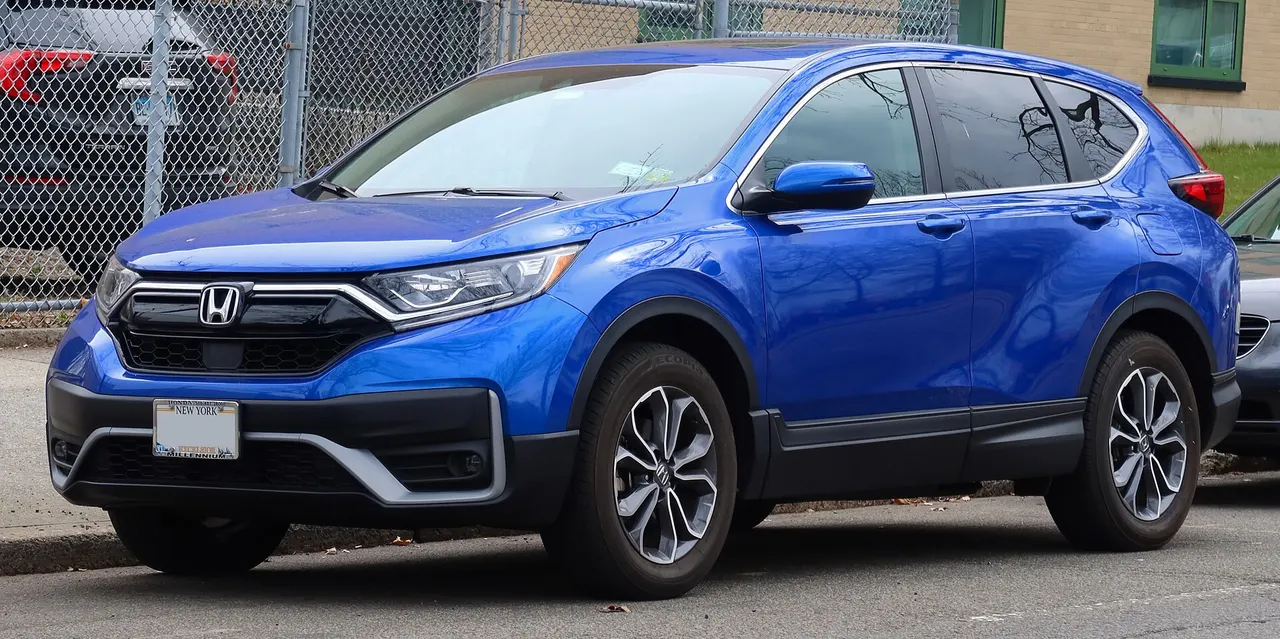
2021 Honda CR-V EX (facelift)

Photo: 2021 Honda CR-V EX (facelift) · Kevauto, CC BY-SA 4.0, via Wikimedia Commons

Problem areas

Ranked by severity-weighted complaints · share · median miles
  1. Air bags11% · 27 complaints · median 27,000 miles
  2. Driver assistance26% · 66 complaints · median 22,000 miles
  3. Brakes11% · 28 complaints · median 2,000 miles
  4. Electrical14% · 36 complaints · median 3,000 miles
  5. Fuel and propulsion11% · 29 complaints · median 19,000 miles
  6. Powertrain5% · 13 complaints · median 7,000 miles
  7. Engine8% · 19 complaints · median 4,000 miles
  8. Steering5% · 12 complaints
  9. Speed control2% · 6 complaints
  10. Seats and belts4% · 9 complaints

Bars rank problem areas by complaints weighted for severity (crashes, fires, injuries and deaths count more). A complaint can name more than one area. Mileage is reported on about half of complaints.

What owners describe

Air bags

Owners of this CR-V report SRS or airbag warning lights coming on, sometimes tied to sensor or inflator faults, and a number describe crashes where airbags failed to deploy or deployed unexpectedly. Many say a recall repair exists but dealers lack the parts to fix it, leaving them waiting.

Warning signs:
Many owners noticed the SRS or airbag warning light illuminate, sometimes with a passenger airbag off indicator or loud noise before the light appeared.
What shops did:
Dealers often said recall repair parts were unavailable, with some diagnosing faulty inflators or sensors, while a few replaced sensors without resolving the issue.
Mileage:
most between 10,000 and 40,000 miles, among 10 complaints that give it

“Dealership confirmed airbag inflator on driver side was faulty and airbags would not deploy if driver was in an accident.”

“internal failure of srs system also said found to be communication issue with the seat sensor which is made onto the frame”

Brakes

Owners describe intermittent brake warning lights, stiff or unresponsive pedals, and sudden automatic braking with no obstacle present. Several needed costly repairs to an electric servo brake or pedal simulator, and some say the trouble came back after repairs.

Warning signs:
Many report dashboard warnings such as "Brake System Problem," "Electric Parking Brake Problem," or VSA alerts, along with a stiff, hard, or unresponsive brake pedal before failures occurred.
What shops did:
Dealers often diagnosed a faulty electric servo brake or brake pedal simulator unit and replaced it, though some owners say the problem recurred or could not be duplicated during testing.
Mileage:
most between 0 and 40,000 miles, among 17 complaints that give it

“the brakes became very hard to stop. It was like standard braking without power assist and required great effort to stop the vehicle.”

“This 2020 Honda CR-V has experienced 5 uncommanded automatic braking events so far. All 5 events were in wet conditions, with no apparent obstacle in front of the vehicle.”

Driver assistance

Many CR-V owners describe the car's automatic braking or adaptive cruise control kicking in unexpectedly on highways and city streets when nothing was in front of them, sometimes leading to near misses or rear-end collisions. Dealers often could not reproduce the problem, leaving owners uncertain whether or when it might happen again.

Warning signs:
Many report a flashing "BRAKE" warning and audible alert just before the vehicle suddenly decelerates or stops, sometimes with no warning at all.
What shops did:
Dealers frequently could not duplicate or diagnose the issue, sometimes suggesting sensitivity adjustments, camera cleaning, sensor recalibration, or turning the system off; a few describe separate electric brake booster or servo component replacements.
Mileage:
most between 10,000 and 35,000 miles, among 11 complaints that give it

“The CR-V warning system would flash "BRAKE" and then stop suddenly, there was nothing in front of me, nothing to either side of me.”

“I've been driving down the road, and the emergency braking system has engaged with no car near me.”

Summaries are written with AI from the owner complaints shown on NHTSA's site and checked against them; quotes are word for word.

  • NHTSA 26V332000May 202698,892 vehicles

    Air bags: sensor: occupant classification: front passenger

    Honda (American Honda Motor Co.) is recalling certain 2018-2021, 2023 Acura TLX, 2019-2024 RDX, 2017-2020, 2022-2026 MDX, 2017-2021, 2023, 2025 Honda Ridgeline, 2017-2022 Pilot, 2019-2021 Passport, 2018-2026 Odyssey, 2019-2022 Insight, 2019-2021 HR-V, 2018-2020 Fit, 2020-2022 CR-V Hybrid, 2017-2022 CR-V, 2017-2018, 2021 Civic Type R, 2017-2021 Civic hatchback, 2016-2020 Civic coupe, 2016-2022 Civic, 2017-2022 Accord Hybrid, and 2016-2022 Accord vehicles. The front passenger seat weight sensor may crack and short circuit, which can cause the air bags to deploy unintentionally during a crash.

    Risk: Air bags that deploy unintentionally during a crash increase the risk of injury.

    Fix: Dealers will replace the seat weight sensors, free of charge.

  • NHTSA 24V064000February 2024750,114 vehicles

    Air bags: sensor: occupant classification: front passenger

    Honda (American Honda Motor Co.) is recalling certain 2020-2022 Pilot, Accord, Civic sedan, HR-V, Odyssey, 2020 Civic coupe, Fit, 2021-2022 Civic hatchback, 2021 Civic Type R, Insight, 2020-2021 CR-V, CR-V Hybrid, Passport, Ridgeline, Accord Hybrid, 2020 Acura MDX, 2022 Acura MDX, 2020-2022 Acura RDX, and 2020-2021 Acura TLX vehicles. The front passenger seat weight sensor may crack and short circuit, failing to suppress the air bag as intended.

    Risk: An air bag that deploys unintentionally during a crash can increase the risk of injury.

    Fix: Dealers will replace the seat weight sensors, free of charge.

  • NHTSA 23V858000December 20232,490,460 vehicles

    Fuel system, gasoline: delivery: fuel pump

    Honda (American Honda Motor Co.) is recalling certain 2013-2023 Honda Accord, Civic Coupe, Civic Sedan, Civic Hatchback, Civic Type R, CR-V, HR-V, Ridgeline, Odyssey, Acura ILX, MDX, MDX Hybrid, RDX, RLX, TLX, 2019-2022 Honda Insight, Passport, 2020 Honda CR-V Hybrid, 2018-2019 Honda Clarity PHEV, Fit, and 2015-2020 Honda Accord Hybrid, Pilot, Acura NSX vehicles. The fuel pump inside the fuel tank may fail.

    Risk: Fuel pump failure can cause an engine stall while driving, increasing the risk of a crash.

    Fix: Dealers will replace the fuel pump module, free of charge.

  • NHTSA 23V844000December 2023106,030 vehicles

    Electrical system: 12v/24v/48v battery: cables

    Honda (American Honda Motor Co.) is recalling certain 2020-2022 CR-V Hybrid vehicles. The 12-Volt battery cable routed outside of the body frame is missing a fuse on the power circuit, which can allow the battery cable to short circuit or overheat during a crash.

    Risk: An overheated battery cable or short circuit can increase the risk of a fire or injury in a crash.

    Fix: Dealers will replace the battery cable, free of charge.

  • NHTSA 23V524000July 20235 vehicles

    Equipment: other: labels

    Honda (American Honda Motor Co.) is recalling certain 2017, 2020, and 2022 CR-V vehicles. The certification label on the driver's side door states incorrect Gross Vehicle Weight Rating (GVWR), Gross Axle Weight Rating (GAWR), and tire size information. As such, these vehicles fail to comply with the requirements of Federal Motor Vehicle Safety Standard number 110, "Tire Selection and Rims."

    Risk: An incorrectly sized tire may cause premature tread wear, or a tire blow out, increasing the risk of a crash.

    Fix: Dealers will install a new corrected label, free of charge.

  • NHTSA 23V158000March 2023448,613 vehicles

    Seat belts: front: buckle assembly

    Honda (American Honda Motor Co.) is recalling certain 2017-2020 CR-V, 2018-2019 Accord and Accord Hybrid, 2018-2020 Odyssey, 2019 Insight, and 2019-2020 Acura RDX vehicles. A manufacturing issue with the front seat belts may cause the seat belt buckle channel to interfere with the release button, preventing the seat belt buckle from latching.

    Risk: An unlatched seat belt cannot properly restrain the seat occupant during a crash, increasing their risk of injury.

    Fix: Dealers will replace the driver and front passenger seat belt buckle release buttons or the buckle assemblies as necessary, free of charge.

  • NHTSA 22V380000May 2022212 vehicles

    Fuel system, gasoline: storage: tank assembly

    Honda (American Honda Motor Co.) is recalling certain 2020 CR-V vehicles. The clip for the absorber inside the fuel tank was not secured properly and may detach, which can cause an inaccurate fuel gauge reading.

    Risk: An inaccurate fuel gauge may result in the vehicle unexpectedly running out of fuel and stalling, increasing the risk of a crash.

    Fix: Dealers will replace the fuel tank, free of charge.

  • NHTSA 20V798000December 202027,838 vehicles

    Electrical system: propulsion system: charging: module: software · Electrical system: propulsion system: dc/dc converter · Electrical system: 12v/24v/48v battery

    Honda (American Honda Motor Co.) is recalling certain 2020 CR-V Hybrid, Accord Hybrid, and 2020-2021 Insight vehicles. The DC-DC converter may shut down and prevent the 12-volt battery from recharging, possibly resulting in a loss of drive power.

    Risk: A loss of drive power can increase the risk of a crash.

    Fix: Honda will notify owners, and dealers will update the power converter unit (PCU) software, free of charge.

  • NHTSA 19V865000December 2019358 vehicles

    Structure: frame and members

    Honda (American Honda Motor Co.) is recalling certain 2019-2020 CR-V vehicles. The rear subframe bolts were improperly manufactured and may loosen, allowing the rear subframe to separate.

    Risk: A separated rear subframe reduces vehicle handling and can suddenly disable the vehicle, increasing the risk of a crash.

    Fix: Honda will notify owners, and dealers will inspect the rear subframe bolts and retorque them or replace them, as necessary, free of charge.

A recall only helps if the repair was done. Enter the vehicle's 17-character VIN on NHTSA's official recall lookup before you buy.
Service bulletins

Honda sent NHTSA 227 service bulletins and other notices to dealers covering the 2020 CR-V. These are repair instructions, not recalls. Warranty extensions and bulletins about its top problem areas:

  • ATI&03272023904 · March 2023Dealer Message - American Honda Motor Co., Inc.
  • ATI&03102023904 · March 2023Dealer Message - American Honda Motor Co., Inc.
  • ATI&02232023903 · February 2023Dealer Message - American Honda Motor Co., Inc.
  • ATI&02072023904 · February 2023Dealer Message - American Honda Motor Co., Inc.
  • ATI&01182023903 · January 2023Dealer Message - American Honda Motor Co., Inc.
  • ATI&01032023902 · January 2023Dealer Message - American Honda Motor Co., Inc.
  • ATI&12132022901 · December 2022Dealer Message - American Honda Motor Co., Inc.
  • ATI&11282022907 · November 2022Dealer Message - American Honda Motor Co., Inc.

All 2020 CR-V bulletins on NHTSA ›

Questions owners ask

Is the 2020 Honda CR-V reliable?
Owners filed 253 complaints with NHTSA about the 2020 Honda CR-V in its first five years on the road, about 73 for every 100,000 sold: 1.0× the rate of a typical CR-V year. That's close to a typical year. Ratings compare CR-V years with each other using complaints filed with NHTSA; they don't measure every problem owners have.
What are the most common 2020 CR-V problems?
Owners' complaints most often involve the air bags (11%), driver-assistance features and cameras (26%) and the brakes (11%). A complaint can name more than one area.
Has the 2020 Honda CR-V been recalled?
Yes. NHTSA lists 9 recall campaigns for the 2020 Honda CR-V, the most recent in May 2026 (air bags). Enter the vehicle's VIN on NHTSA's recall lookup to see whether the repairs were done.

Sources

Owner complaints, recalls and manufacturer communications from NHTSA's public data files, as of September 24, 2026. Complaints are counted once each, over the model year's first 60 months on the road. UsedScore is not affiliated with NHTSA or Honda. The 2020 Honda CR-V on NHTSA.gov · How we rate