2018 Honda CR-V: Avoid

Owners filed 1,006 complaints with NHTSA about the 2018 Honda CR-V in its first five years on the road, about 266 for every 100,000 sold: 3.2× the rate of a typical CR-V year. That's more than twice a typical year, across more than one problem area.

The biggest problem area, counting serious complaints more, is the engine (40% of complaints, median 5,000 miles).

Complaint index
3.2×
per vehicle sold, vs. a typical CR-V year
Rank
13th of 14
1st = fewest complaints
Complaints
1,006
first five years; 266 per 100,000 sold
Recalls
5
campaigns
5th generation, 2017–2022 · Updated September 24, 2026 · How we rate
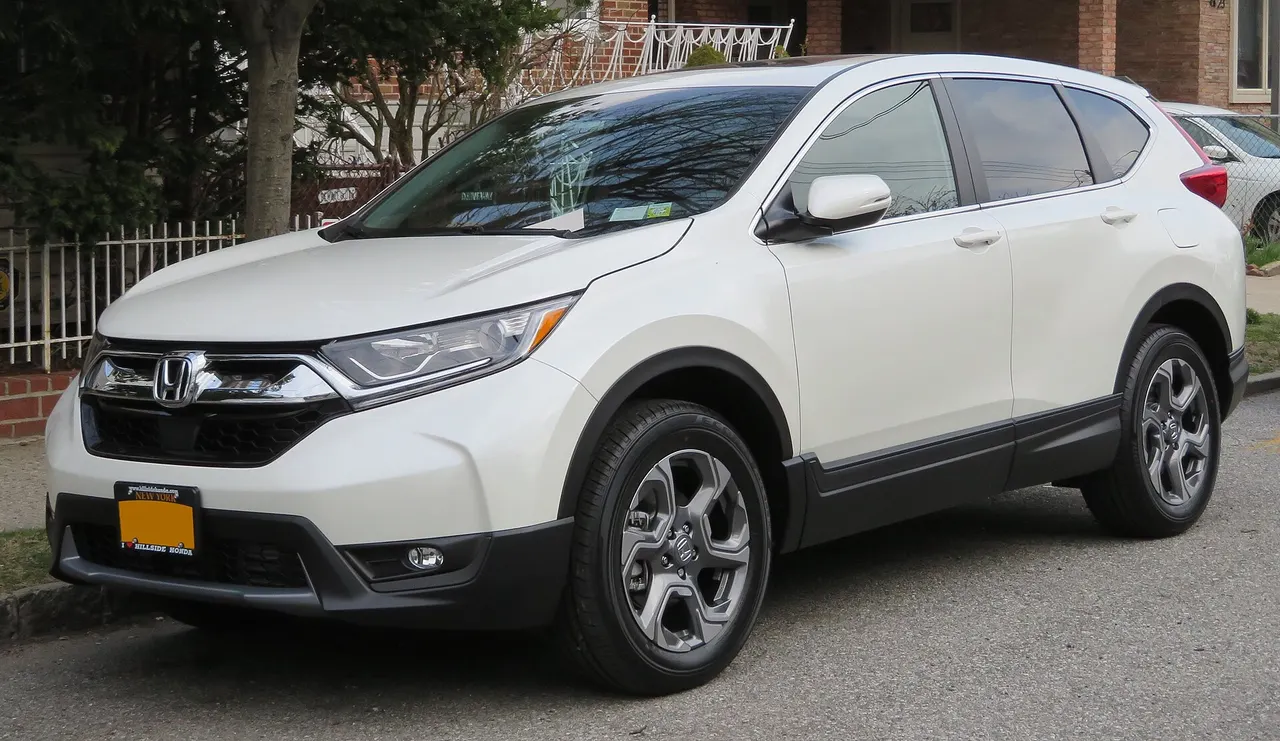
2017 Honda CR-V

Photo: 2017 Honda CR-V · Kevauto, CC BY-SA 4.0, via Wikimedia Commons

Problem areas

Ranked by severity-weighted complaints · share · median miles
  1. Engine40% · 403 complaints · median 5,000 miles
  2. Fuel and propulsion21% · 216 complaints · median 4,000 miles
  3. Brakes16% · 158 complaints · median 14,000 miles
  4. Electrical15% · 152 complaints · median 11,000 miles
  5. Driver assistance15% · 153 complaints · median 23,000 miles
  6. Steering4% · 45 complaints · median 25,000 miles
  7. Air bags1% · 11 complaints · median 20,000 miles
  8. Powertrain4% · 36 complaints · median 7,000 miles
  9. Speed control4% · 38 complaints · median 12,000 miles
  10. Seats and belts2% · 18 complaints · median 1,000 miles

Bars rank problem areas by complaints weighted for severity (crashes, fires, injuries and deaths count more). A complaint can name more than one area. Mileage is reported on about half of complaints.

What owners describe

Brakes

Owners describe their CR-V's automatic braking system slamming on the brakes unexpectedly, even with clear roads and no obstacles ahead, sometimes at highway speed. Dealers frequently can't reproduce or fully resolve the issue, leaving many owners uneasy about when it might happen again.

Warning signs:
Many describe a dashboard message or beeping saying "BRAKE," illuminated brake or ABS warning lights, or sudden jerking/lunging just before the unexpected stop.
What shops did:
Dealers often ran diagnostics but could not duplicate the problem or find stored codes, sometimes resetting systems, cleaning sensors, or updating software, with the issue frequently recurring.
Mileage:
most between 5,000 and 30,000 miles, among 126 complaints that give it

“The screen starts flashing brake brake brake and then proceeds to stop the vehicle, even on the middle of the freeway”

“the car has unexpectedly and without any reason, braked to a virtual stop, as though there were a vehicle directly in front of me”

Engine

Many 2018 CR-V owners describe gasoline getting into their engine oil, producing a strong fuel smell and an overfilled dipstick, sometimes with a fuel odor in the cabin. Dealers frequently changed the oil as a temporary measure and said Honda was still working on a lasting fix, with some mentioning a later software update.

Warning signs:
Many report a strong gasoline smell from the oil dipstick or inside the cabin, an oil level reading above full, dark or thin oil, and some note occasional stalling, hesitation, or rough running.
What shops did:
Dealers most often just changed the oil and filter, told owners to take longer trips or check the oil frequently, and many said no permanent fix was yet available; some later mentioned a software update.
Mileage:
most between 5,000 and 15,000 miles, among 366 complaints that give it

“Checked oil level with engine completely cold. Level on dip stick was half again as high as the "high" level mark. Fluid on dip stick smelled strongly of gasoline.”

“I noted a gasoline odor on the oil dipstick, and the oil level was slowly increasing above the full mark.”

Fuel and propulsion

Many 2018 CR-V owners describe gasoline mixing into their engine oil, causing a strong fuel smell in the cabin and on the dipstick, especially in cold weather. Dealers often changed the oil repeatedly or performed software updates, but owners frequently say a lasting fix wasn't available.

Warning signs:
Owners report a strong gasoline smell from the oil dipstick and inside the cabin, especially on cold starts, along with occasional rough running, sputtering, or near-stalling.
What shops did:
Dealers most often changed the oil and filter, sometimes performed a software or system update, and in many cases said there was no permanent fix available yet.
Mileage:
most between 5,000 and 45,000 miles, among 247 complaints that give it

“While driving in town and on freeway, noticed very strong fuel smell in cabin of car, enough to make kids complain in the back seat.”

“They checked and verified that the oil level had increased by 1/2" and said they would contact honda tech support.”

Summaries are written with AI from the owner complaints shown on NHTSA's site and checked against them; quotes are word for word.

  • NHTSA 26V332000May 202698,892 vehicles

    Air bags: sensor: occupant classification: front passenger

    Honda (American Honda Motor Co.) is recalling certain 2018-2021, 2023 Acura TLX, 2019-2024 RDX, 2017-2020, 2022-2026 MDX, 2017-2021, 2023, 2025 Honda Ridgeline, 2017-2022 Pilot, 2019-2021 Passport, 2018-2026 Odyssey, 2019-2022 Insight, 2019-2021 HR-V, 2018-2020 Fit, 2020-2022 CR-V Hybrid, 2017-2022 CR-V, 2017-2018, 2021 Civic Type R, 2017-2021 Civic hatchback, 2016-2020 Civic coupe, 2016-2022 Civic, 2017-2022 Accord Hybrid, and 2016-2022 Accord vehicles. The front passenger seat weight sensor may crack and short circuit, which can cause the air bags to deploy unintentionally during a crash.

    Risk: Air bags that deploy unintentionally during a crash increase the risk of injury.

    Fix: Dealers will replace the seat weight sensors, free of charge.

  • NHTSA 23V858000December 20232,490,460 vehicles

    Fuel system, gasoline: delivery: fuel pump

    Honda (American Honda Motor Co.) is recalling certain 2013-2023 Honda Accord, Civic Coupe, Civic Sedan, Civic Hatchback, Civic Type R, CR-V, HR-V, Ridgeline, Odyssey, Acura ILX, MDX, MDX Hybrid, RDX, RLX, TLX, 2019-2022 Honda Insight, Passport, 2020 Honda CR-V Hybrid, 2018-2019 Honda Clarity PHEV, Fit, and 2015-2020 Honda Accord Hybrid, Pilot, Acura NSX vehicles. The fuel pump inside the fuel tank may fail.

    Risk: Fuel pump failure can cause an engine stall while driving, increasing the risk of a crash.

    Fix: Dealers will replace the fuel pump module, free of charge.

  • NHTSA 23V158000March 2023448,613 vehicles

    Seat belts: front: buckle assembly

    Honda (American Honda Motor Co.) is recalling certain 2017-2020 CR-V, 2018-2019 Accord and Accord Hybrid, 2018-2020 Odyssey, 2019 Insight, and 2019-2020 Acura RDX vehicles. A manufacturing issue with the front seat belts may cause the seat belt buckle channel to interfere with the release button, preventing the seat belt buckle from latching.

    Risk: An unlatched seat belt cannot properly restrain the seat occupant during a crash, increasing their risk of injury.

    Fix: Dealers will replace the driver and front passenger seat belt buckle release buttons or the buckle assemblies as necessary, free of charge.

  • NHTSA 21V215000March 2021624,552 vehicles

    Fuel system, gasoline: delivery: fuel pump

    Honda (American Honda Motor Co.) is recalling certain 2019-2020 Acura MDX, MDX Sport Hybrid, RDX, TLX, Honda Accord, Civic Hatchback, Insight, 2019 Acura ILX, Honda Accord Hybrid, Civic Coupe, Civic Coupe Si, Civic Sedan, Civic Sedan Si, Civic Type R, Fit, HR-V, Odyssey, Passport, Pilot and Ridgeline, and 2018-2019 CR-V vehicles. The low-pressure fuel pump inside the fuel tank may fail.

    Risk: Fuel pump failure can cause an engine stall while driving, increasing the risk of a crash.

    Fix: Honda will notify owners, and dealers will replace the fuel pump assembly, free of charge.

  • NHTSA 18V663000September 201854 vehicles

    Steering: electric power assist system

    Honda (American Honda Motor Co.) is recalling certain 2017-2018 Honda Civic and CR-V vehicles. The magnet that controls the torque sensor output signal for the electronic power steering system may not be properly secured, allowing the magnet to become dislodged. During a full lock turn, the dislodged magnet may cause steering assist to be applied in the opposite direction.

    Risk: The unintended steering input reduces vehicle maneuverability and increases the risk of a crash.

    Fix: Honda will notify owners, and dealers will replace the steering gearbox assembly, free of charge.

A recall only helps if the repair was done. Enter the vehicle's 17-character VIN on NHTSA's official recall lookup before you buy.
Service bulletins

Honda sent NHTSA 268 service bulletins and other notices to dealers covering the 2018 CR-V. These are repair instructions, not recalls. Warranty extensions and bulletins about its top problem areas:

  • A26-016 · August 2026Under certain conditions, the cylinder head gasket effectiveness may be reduced which may cause vehicles to experience overheating, coolant loss, misfire and/or DTCs P0300 thru P0304 stored.
  • AEBM08262026901 · August 2026Dealer Message - Under certain conditions, the cylinder head gasket effectiveness may be reduced which may cause vehicles to experience overheating, coolant loss, misfire, and/or DTCs P0300 through…
  • A25-077 · July 2025Oil leak at timing chain tensioner inspection cover due to possible insufficient sealant adhesion on inspection cover.
  • ATI&10112024901 · October 2024Dealer Message - American Honda Motor Co., Inc.
  • ATI&09202024901 · September 2024Dealer Message - American Honda Motor Co., Inc.
  • ATI&09112024907 · September 2024Dealer Message - American Honda Motor Co., Inc.
  • ATI&08262024902 · August 2024Dealer Message - American Honda Motor Co., Inc.
  • ATI&08232024901 · August 2024Dealer Message - American Honda Motor Co., Inc.

All 2018 CR-V bulletins on NHTSA ›

Questions owners ask

Is the 2018 Honda CR-V reliable?
Owners filed 1,006 complaints with NHTSA about the 2018 Honda CR-V in its first five years on the road, about 266 for every 100,000 sold: 3.2× the rate of a typical CR-V year. That's more than twice a typical year, across more than one problem area. Ratings compare CR-V years with each other using complaints filed with NHTSA; they don't measure every problem owners have.
What are the most common 2018 CR-V problems?
Owners' complaints most often involve the engine (40%), the fuel or propulsion system (21%) and the brakes (16%). A complaint can name more than one area.
Has the 2018 Honda CR-V been recalled?
Yes. NHTSA lists 5 recall campaigns for the 2018 Honda CR-V, the most recent in May 2026 (air bags). Enter the vehicle's VIN on NHTSA's recall lookup to see whether the repairs were done.

Sources

Owner complaints, recalls and manufacturer communications from NHTSA's public data files, as of September 24, 2026. Complaints are counted once each, over the model year's first 60 months on the road. UsedScore is not affiliated with NHTSA or Honda. The 2018 Honda CR-V on NHTSA.gov · How we rate