2016 Honda CR-V: Solid

Owners filed 232 complaints with NHTSA about the 2016 Honda CR-V in its first five years on the road, about 66 for every 100,000 sold: 1.0× the rate of a typical CR-V year. That's close to a typical year.

The biggest problem area, counting serious complaints more, is the engine (23% of complaints, median 20,000 miles).

Complaint index
1.0×
per vehicle sold, vs. a typical CR-V year
Rank
6th of 14
1st = fewest complaints
Complaints
232
first five years; 66 per 100,000 sold
Recalls
3
campaigns
4th generation, 2012–2016 · Updated September 24, 2026 · How we rate
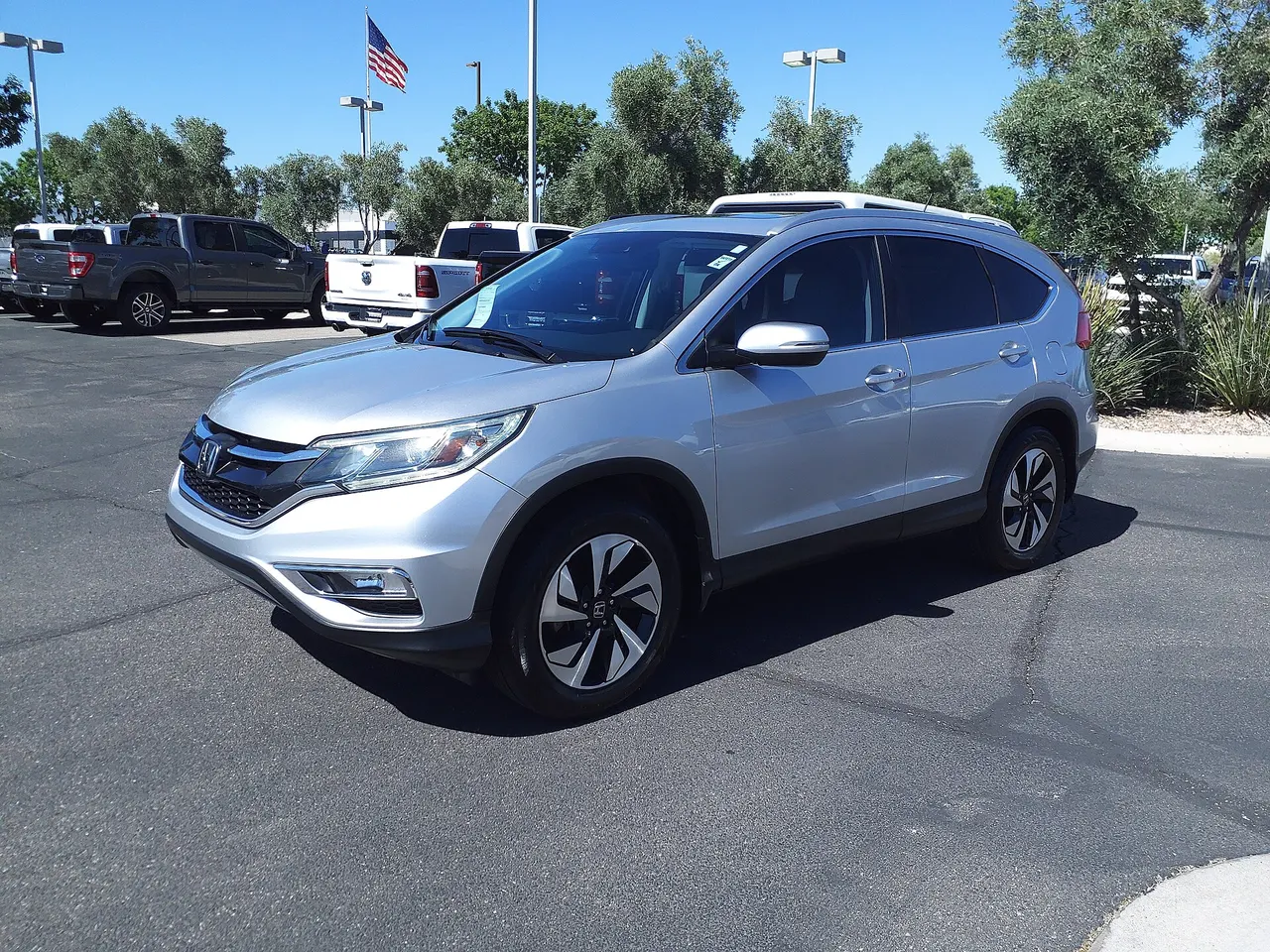
2016 Honda CR-V Touring (facelift)

Photo: 2016 Honda CR-V Touring (facelift) · HJUdall, CC0, via Wikimedia Commons

Problem areas

Ranked by severity-weighted complaints · share · median miles
  1. Engine23% · 54 complaints · median 20,000 miles
  2. Air bags7% · 17 complaints · median 19,000 miles
  3. Fuel and propulsion16% · 37 complaints · median 7,000 miles
  4. Electrical14% · 32 complaints · median 21,000 miles
  5. Speed control8% · 19 complaints · median 8,000 miles
  6. Powertrain11% · 25 complaints · median 18,000 miles
  7. Brakes5% · 12 complaints · median 2,000 miles
  8. Body and structure4% · 9 complaints · median 20,000 miles
  9. Seats and belts5% · 12 complaints · median 8,000 miles
  10. Wheels and tires6% · 14 complaints · median 11,000 miles

Bars rank problem areas by complaints weighted for severity (crashes, fires, injuries and deaths count more). A complaint can name more than one area. Mileage is reported on about half of complaints.

What owners describe

Air bags

Owners report air bags that don't deploy in crashes, deploy unexpectedly with no collision, or trigger persistent warning lights tied to a passenger seat sensor. Several mention a Takata-related recall, and some say dealers couldn't resolve the warning light issue.

Warning signs:
Some owners noticed a passenger-side air bag warning light flickering or staying on, unusual noises, or erratic vehicle handling before deployment.
What shops did:
Some dealers replaced or diagnosed a faulty passenger seat sensor, while others could not find a problem or told owners the vehicle wasn't covered under recall.
Mileage:
most between 15,000 and 55,000 miles, among 19 complaints that give it

“The passenger's side seat sensor was faulty and needed to be replaced. The vehicle was not repaired. The failure recurred.”

“Turned I hard turned the wheel and all left side window and driver seat airbags deployed. No warning or messages problem was seen prior to accident.”

Engine

Owners of the 2016 CR-V describe a mix of engine issues: gasoline smell in the cabin, vibration at idle, stalling, and water pump or oil consumption failures. Many say dealers struggled to diagnose or permanently fix these problems, even after repeated visits.

Warning signs:
Many note a strong gasoline smell in the cabin, shaking or vibration at idle in gear, engine warning lights, or sudden loss of acceleration before failures occurred.
What shops did:
Dealers often could not duplicate or diagnose the issue; some replaced water pumps, motor mounts, throttle sensors, or performed oil consumption tests without resolving the concern.
Mileage:
most between 10,000 and 45,000 miles, among 58 complaints that give it

“There is a distinct gasoline smell in the cabin while driving and also sometimes while parked in the garage.”

“the vehicle stalled without warning. The contact stated that that he noticed white smoke coming from under the hood of the vehicle.”

Fuel and propulsion

Owners describe strong gasoline fumes filling the cabin, sometimes causing headaches or nausea, along with separate reports of fuel pump or fuel line failures that lead to stalling or sudden loss of power. Many say dealers couldn't find a fix for the smell, while others had fuel pumps replaced, sometimes more than once.

Warning signs:
Owners notice a persistent raw-gas smell in the cabin or garage, headaches, nausea, engine hesitation, jerking, stalling, dashboard warning lights, or reduced acceleration before the vehicle loses power.
What shops did:
Dealers often could not duplicate or diagnose the odor and offered no repair; others replaced fuel pumps, fuel lines, or a charcoal canister, sometimes with the problem recurring or the vehicle later stalling again.
Mileage:
most between 0 and 40,000 miles, among 42 complaints that give it

“Cr-v cabin intermittently fills with gasoline fumes, stong gasoline ordor causes extreme respiratory distress, including burning, coughing, and choking.”

“the vehicle hesitated and jerked while depressing the accelerator pedal. The vehicle was taken to the dealer and was diagnosed with a defective high-pressure fuel pump.”

Summaries are written with AI from the owner complaints shown on NHTSA's site and checked against them; quotes are word for word.

  • NHTSA 23V858000December 20232,490,460 vehicles

    Fuel system, gasoline: delivery: fuel pump

    Honda (American Honda Motor Co.) is recalling certain 2013-2023 Honda Accord, Civic Coupe, Civic Sedan, Civic Hatchback, Civic Type R, CR-V, HR-V, Ridgeline, Odyssey, Acura ILX, MDX, MDX Hybrid, RDX, RLX, TLX, 2019-2022 Honda Insight, Passport, 2020 Honda CR-V Hybrid, 2018-2019 Honda Clarity PHEV, Fit, and 2015-2020 Honda Accord Hybrid, Pilot, Acura NSX vehicles. The fuel pump inside the fuel tank may fail.

    Risk: Fuel pump failure can cause an engine stall while driving, increasing the risk of a crash.

    Fix: Dealers will replace the fuel pump module, free of charge.

  • NHTSA 17V305000May 201716 vehicles

    Engine

    Honda (American Honda Motor Co.) is recalling certain 2015-2016 Honda CR-V vehicles that recently received a replacement engine. The replacement engine may have been built with the wrong pistons, potentially affecting the engine's performance.

    Risk: The reduced performance may result in an engine stall, increasing the risk of a crash.

    Fix: Honda will notify owners, and dealers will inspect the engines and replace the incorrect components, as necessary, free of charge.

  • NHTSA 15V714000October 2015515 vehicles

    Air bags: frontal: driver side: inflator module

    American Honda Motor Company, Inc. (Honda) is recalling certain model year 2016 CR-V vehicles manufactured October 12, 2015, to October 19, 2015. The metal housing surrounding the driver's air bag inflator in these vehicles may have been manufactured incorrectly.

    Risk: In the event of a crash necessitating deployment of the driver's frontal air bag, the inflator could rupture with metal fragments striking the driver or other occupants resulting in serious injury or death.

    Fix: Honda will notify owners, and dealers will replace the driver side frontal air bag module, free of charge.

A recall only helps if the repair was done. Enter the vehicle's 17-character VIN on NHTSA's official recall lookup before you buy.

Service bulletins

Honda sent NHTSA 85 service bulletins and other notices to dealers covering the 2016 CR-V. These are repair instructions, not recalls. Warranty extensions and bulletins about its top problem areas:

  • APaS01242020902 · January 2020Dealer Message - American Honda Motor Co., Inc.
  • APaS01072020908 · January 2020Dealer Message - American Honda Motor Co., Inc.
  • APaS12022019902 · December 2019Dealer Message - American Honda Motor Co., Inc.
  • APaS11142019903 · November 2019Dealer Message - American Honda Motor Co., Inc.
  • APaS10282019903 · October 2019Dealer Message - American Honda Motor Co., Inc.
  • A18-072 · October 2019When cold-starting the engine and shifting to Reverse, the engine stalls in the first 10 to 14 seconds.
  • APaS10092019903 · October 2019Dealer Message - American Honda Motor Co., Inc.
  • APaS09252019904 · September 2019Dealer Message - American Honda Motor Co., Inc.

All 2016 CR-V bulletins on NHTSA ›

Questions owners ask

Is the 2016 Honda CR-V reliable?
Owners filed 232 complaints with NHTSA about the 2016 Honda CR-V in its first five years on the road, about 66 for every 100,000 sold: 1.0× the rate of a typical CR-V year. That's close to a typical year. Ratings compare CR-V years with each other using complaints filed with NHTSA; they don't measure every problem owners have.
What are the most common 2016 CR-V problems?
Owners' complaints most often involve the engine (23%), the air bags (7%) and the fuel or propulsion system (16%). A complaint can name more than one area.
Has the 2016 Honda CR-V been recalled?
Yes. NHTSA lists 3 recall campaigns for the 2016 Honda CR-V, the most recent in December 2023 (fuel system, gasoline). Enter the vehicle's VIN on NHTSA's recall lookup to see whether the repairs were done.

Sources

Owner complaints, recalls and manufacturer communications from NHTSA's public data files, as of September 24, 2026. Complaints are counted once each, over the model year's first 60 months on the road. UsedScore is not affiliated with NHTSA or Honda. The 2016 Honda CR-V on NHTSA.gov · How we rate