2010 Ford Explorer: Best bet

Owners filed 60 complaints with NHTSA about the 2010 Ford Explorer in its first five years on the road, about 103 for every 100,000 sold: 0.6× the rate of a typical Explorer year. That's among the fewest of any Explorer year.

The biggest problem area, counting serious complaints more, is speed control (22% of complaints, median 8,000 miles).

Complaint index
0.6×
per vehicle sold, vs. a typical Explorer year
Rank
5th of 14
1st = fewest complaints
Complaints
60
first five years; 103 per 100,000 sold
Recalls
1
campaign
4th generation, 2006–2010 · Updated September 24, 2026 · How we rate
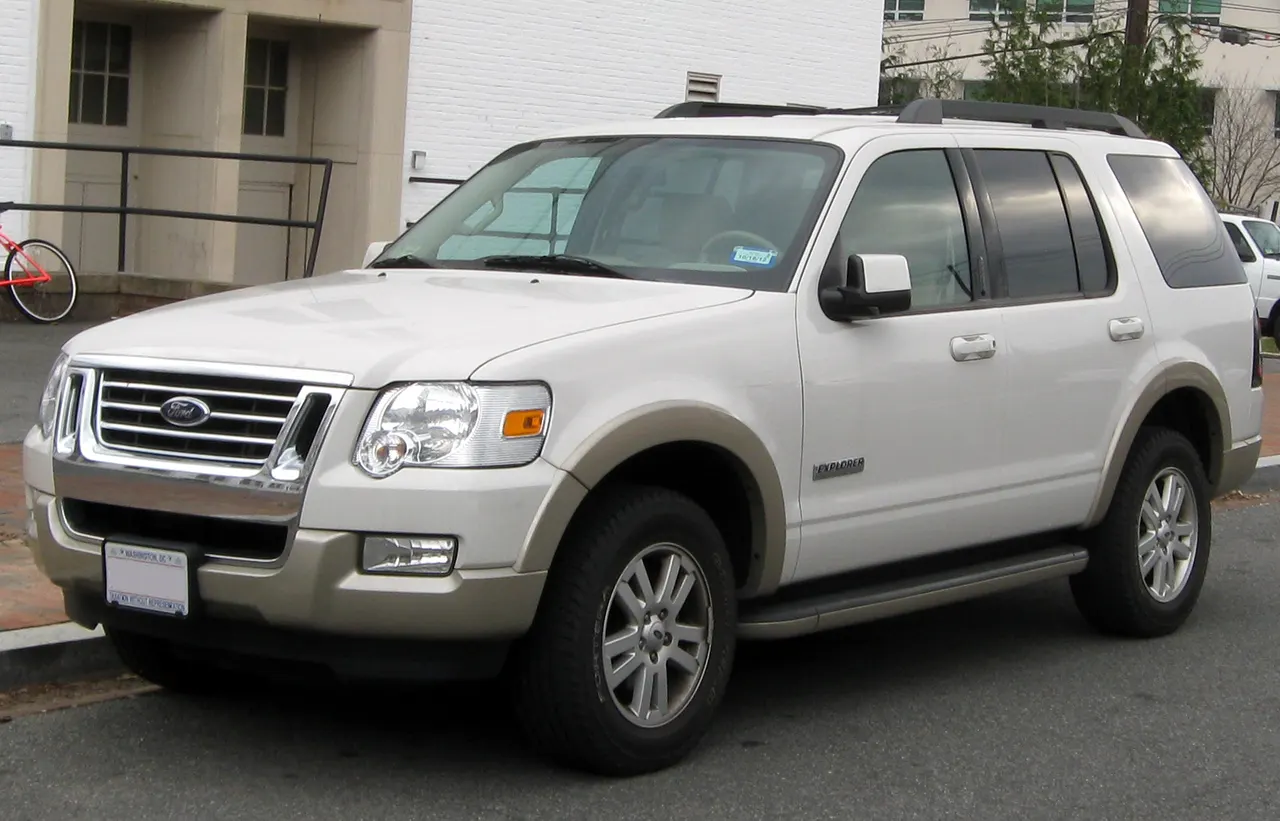
2006–2010 Ford Explorer Eddie Bauer

Photo: 2006–2010 Ford Explorer Eddie Bauer · IFCAR, public domain, via Wikimedia Commons

Problem areas

Ranked by severity-weighted complaints · share · median miles
  1. Speed control22% · 13 complaints · median 8,000 miles
  2. Brakes15% · 9 complaints · median 7,000 miles
  3. Seats and belts32% · 19 complaints · median 1,000 miles
  4. Powertrain12% · 7 complaints · median 60,000 miles
  5. Engine10% · 6 complaints · median 34,000 miles
  6. Steering5% · 3 complaints
  7. Electrical5% · 3 complaints
  8. Air bags3% · 2 complaints
  9. Fuel and propulsion3% · 2 complaints
  10. Wheels and tires3% · 2 complaints

Bars rank problem areas by complaints weighted for severity (crashes, fires, injuries and deaths count more). A complaint can name more than one area. Mileage is reported on about half of complaints.

What owners describe

Brakes

Owners describe unpredictable braking problems, ranging from a soft pedal that needed full-force pressing to stop, to the vehicle seeming to accelerate or fail to slow down when the brake was applied. Several report warning lights coming on beforehand and dealers being unable to find or fix the issue.

Warning signs:
Some owners noticed a soft or spongy brake pedal, dashboard warning lights (ABS, traction control, RSC), or a surge/acceleration feeling when braking before the failure.
What shops did:
Some owners took the vehicle to a dealer, but technicians were often unable to duplicate or diagnose the problem; a few describe an unknown repair that did not resolve it.
Mileage:
most between 5,000 and 95,000 miles, among 13 complaints that give it

“The brake pedal becomes soft and the truck will not stop. Only after depressing the pedal at full force will the truck fully stop.”

“The ABS light, the traction control light and the wrench lit up on the dashboard. He immediately pulled over and shut off the truck.”

Seats and belts

Owners describe the front headrests tilting far forward, pressing the head and neck uncomfortably forward even in a normal seating position. Many say dealers could offer no fix beyond turning, removing, or reclining around the headrest, leaving ongoing discomfort on longer drives.

Warning signs:
Owners report neck and back discomfort, headaches, and stiffness, especially on longer drives, with no way to sit comfortably upright.
What shops did:
Dealers generally told owners nothing could be done, sometimes suggesting rotating or removing the headrest, or searching for a replacement without success.
Mileage:
most between 0 and 10,000 miles, among 14 complaints that give it

“The front passenger seat headrests are pitched excessively forward causing extreme head and neck discomfort”

Speed control

Owners describe their Explorer surging or accelerating unexpectedly while braking, especially at low speeds, sometimes leading to minor collisions. Dealers frequently could not reproduce or fix the issue, leaving owners uncertain about the cause.

Warning signs:
Many report the engine revving or racing, the vehicle lunging or jumping forward, and increased stopping distance while braking.
What shops did:
Dealers often could not duplicate the problem or find anything wrong, and in some cases the vehicle was left unrepaired.
Mileage:
most between 5,000 and 25,000 miles, among 12 complaints that give it

“The vehicle suddenly accelerated on its own. He had to quickly depress the brake pedal and shift into neutral gear in order to gain control”

“While attempting to stop, there was an increase in the engine rpms and the vehicle lunged forward”

Summaries are written with AI from the owner complaints shown on NHTSA's site and checked against them; quotes are word for word.

  • NHTSA 10V161000April 201033,256 vehicles

    Seats: front assembly: recliner

    Ford is recalling certain model year 2010 fusion, explorer, explorer sport trac, and mercury milan and mountaineer vehicles manufactured between december 15, 2009 through february 3, 2010 equipped with front seat manual recliners. These vehicles fail to comply with the requirements of federal motor vehicle safety standard no. 202, "head restraint." the recliner gear plate teeth may be out of dimension specification which could result in limited pawl to gear plate tooth engagement.

    Risk: In the event of a crash, the seatback and head restraint may move rearward, increasing the risk of injury.

    Fix: Dealers will replace the manual recliners for both power and manual seats free of charge.

A recall only helps if the repair was done. Enter the vehicle's 17-character VIN on NHTSA's official recall lookup before you buy.

Service bulletins

Ford sent NHTSA 25 service bulletins and other notices to dealers covering the 2010 Explorer. These are repair instructions, not recalls. Warranty extensions and bulletins about its top problem areas:

  • SSM 46132 · October 2016Some 2008-2017 ford/mercury/lincoln vehicles equipped with sync may generate a vhr that identifies a concern with the brakes and suspension category indicating service is required due to a brake…
  • ASI-44429 · March 2014Ford/mercury: to prevent harness damage, on some vehicles, resulting in contact with tire or suspension components, proper routing of wiring harness for wheel speed sensor is key.
  • AS-21769 · March 2011Ford: if there is an intermittent lack of power, surge, or hesitation while driving the brakes will override acceleration.
  • SSM 54601 · February 2026Ford and Lincoln vehicles equipped with wired keyless entry keypad systems and accessory wireless keyless entry keypad systems may or may not come with a wallet card containing the master code.
  • SSM 52476 · April 2024All accessory stick-on keyless entry keypads come with a wallet card containing the master code.
  • SSM 48130 · August 2019Some 2010-2020 vehicles may exhibit distorted glass with a subtle orange peel pattern or streaking etched into the surface.
  • SSM 47976 · May 2019On vehicles equipped with an automatic transmission it is imperative that the converter pilot hub be greased with Motorcraft Multi-Purpose Grease Spray XL-5-A even if grease was not applied from the…
  • TSB 19-2026 · February 2019Some 2000 and newer Ford, Lincoln and Mercury vehicles equipped with aluminum body panels may exhibit corrosion concerns appearing as bubbled and/or peeling paint with or without accompanying white…

All 2010 Explorer bulletins on NHTSA ›

Questions owners ask

Is the 2010 Ford Explorer reliable?
Owners filed 60 complaints with NHTSA about the 2010 Ford Explorer in its first five years on the road, about 103 for every 100,000 sold: 0.6× the rate of a typical Explorer year. That's among the fewest of any Explorer year. Ratings compare Explorer years with each other using complaints filed with NHTSA; they don't measure every problem owners have.
What are the most common 2010 Explorer problems?
Owners' complaints most often involve speed control (22%), the brakes (15%) and the seats and seat belts (32%). A complaint can name more than one area.
Has the 2010 Ford Explorer been recalled?
Yes. NHTSA lists 1 recall campaign for the 2010 Ford Explorer, the most recent in April 2010 (seats). Enter the vehicle's VIN on NHTSA's recall lookup to see whether the repairs were done.

Sources

Owner complaints, recalls and manufacturer communications from NHTSA's public data files, as of September 24, 2026. Complaints are counted once each, over the model year's first 60 months on the road. UsedScore is not affiliated with NHTSA or Ford. The 2010 Ford Explorer on NHTSA.gov · How we rate