2014 Ford Explorer: Use caution

Owners filed 580 complaints with NHTSA about the 2014 Ford Explorer in its first five years on the road, about 282 for every 100,000 sold: 1.5× the rate of a typical Explorer year. That's above average, so use caution.

The biggest problem area, counting serious complaints more, is the engine (28% of complaints, median 26,000 miles).

Complaint index
1.5×
per vehicle sold, vs. a typical Explorer year
Rank
9th of 14
1st = fewest complaints
Complaints
580
first five years; 282 per 100,000 sold
Recalls
6
campaigns
5th generation, 2011–2019 · Updated September 24, 2026 · How we rate
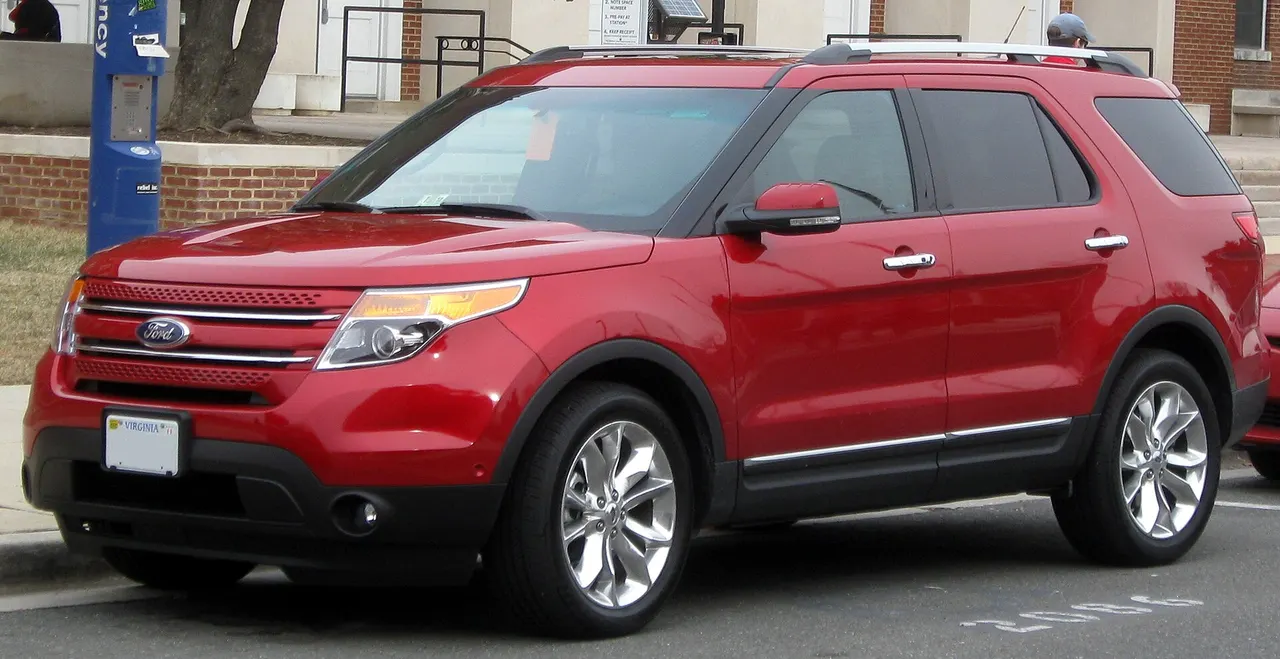
2011 Ford Explorer Limited

Photo: 2011 Ford Explorer Limited · IFCAR, public domain, via Wikimedia Commons

Problem areas

Ranked by severity-weighted complaints · share · median miles
  1. Engine28% · 162 complaints · median 26,000 miles
  2. Steering12% · 69 complaints · median 53,000 miles
  3. Fuel and propulsion10% · 58 complaints · median 18,000 miles
  4. Suspension8% · 47 complaints · median 29,000 miles
  5. Air bags3% · 16 complaints · median 48,000 miles
  6. Electrical6% · 35 complaints · median 41,000 miles
  7. Body and structure6% · 36 complaints · median 36,000 miles
  8. Powertrain5% · 29 complaints · median 40,000 miles
  9. Speed control4% · 21 complaints · median 5,000 miles
  10. Brakes3% · 20 complaints · median 46,000 miles

Bars rank problem areas by complaints weighted for severity (crashes, fires, injuries and deaths count more). A complaint can name more than one area. Mileage is reported on about half of complaints.

What owners describe

Engine

Many owners describe exhaust or sulfur-smelling fumes entering the cabin during acceleration, often causing headaches, nausea or dizziness, with dealers frequently unable to permanently fix it despite repeated visits and TSB repairs. A smaller number report separate engine stalling, throttle body failures, or transmission hesitation.

Warning signs:
Owners report a sulfur or rotten-egg smell during hard acceleration or climbing grades, sometimes with headaches, nausea, dizziness, or watery eyes.
What shops did:
Dealers often could not reproduce or fully resolve the odor despite performing TSB repairs, sealing or replacing exhaust parts, adjusting vents, or replacing cabin filters; some throttle body or muffler replacements were also reported.
Mileage:
most between 5,000 and 80,000 miles, among 195 complaints that give it

“My transmission would not shift gears. This is the fourth time this has happened.”

“There is a strong exhaust odor coming inside the vehicle with all of its windows up every time after a heavy acceleration”

Fuel and propulsion

Many owners of the 2014 Explorer describe strong exhaust or fuel odors seeping into the cabin during acceleration or hill climbs, sometimes causing headaches or nausea. Dealer repairs frequently failed to fully resolve the smell, leaving some owners still dealing with the odor after multiple visits.

Warning signs:
Owners report a strong exhaust, gasoline, sulfur, or propane-like smell entering the cabin during acceleration, merging, or hill climbing, sometimes with headaches, nausea, dizziness, or coughing.
What shops did:
Dealers often could not detect or replicate the odor, performed patch repairs or installed seal kits that many owners say only partly helped or made things worse, and some vehicles were never repaired.
Mileage:
most between 0 and 60,000 miles, among 54 complaints that give it

“Nasty exhaust smell entering the cabin when merging on the interstate, driving up a long hill, or passing vehicles”

“The smell was most noticeable after coming to a stop with the car at full operating temperature”

Steering

Owners describe losing power steering assist suddenly, sometimes while driving, with warning lights and difficulty turning the wheel. Dealers typically diagnose a failed steering gear or rack, requiring costly out-of-warranty repairs, and many note this mirrors recalled issues on earlier Explorer model years.

Warning signs:
Many report warning messages like "steering assist fault" or "power steering failed," along with grinding, whining, or squeaking noises, and a stiff or jerking steering wheel before failure.
What shops did:
Dealers most often replaced the steering gear assembly, rack and pinion, or power steering rack, sometimes after multiple visits or diagnostic delays, and some repairs recurred.
Mileage:
most between 65,000 and 120,000 miles, among 310 complaints that give it

“No power steering at all while driving. Can not turn left or right, have to pull over to be safe.”

“Steering first became intermittently sluggish turning at slow speed. Eventually, scraping type noise started coming from what seems like inside steering column when steering.”

Summaries are written with AI from the owner complaints shown on NHTSA's site and checked against them; quotes are word for word.

  • NHTSA 24V031000January 20241,889,110 vehicles

    Structure: body: roof and pillars

    Ford Motor Company (Ford) is recalling certain 2011-2019 Explorer vehicles. The A-pillar trim retention clips may not be properly engaged, allowing the trim to detach.

    Risk: A detached trim piece can fall off the vehicle, becoming a road hazard and increasing the risk of a crash.

    Fix: Dealers will inspect and replace the A-pillar trim as necessary, free of charge.

  • NHTSA 21V537000July 2021631,176 vehicles

    Suspension: rear

    Ford Motor Company (Ford) is recalling certain 2013-2017 Explorer vehicles originally sold, or ever registered, in Connecticut, Delaware, Illinois, Indiana, Iowa, Kentucky, Maine, Maryland, Massachusetts, Michigan, Minnesota, Missouri, New Hampshire, New Jersey, New York, Ohio, Pennsylvania, Rhode Island, Vermont, Virginia, West Virginia, Wisconsin, and the District of Columbia. Exposure to road salt can cause the cross-axis ball joint to corrode and seize, resulting in a fracture of the outboard section of the rear suspension toe link.

    Risk: A rear toe-link fracture can result in a loss of steering control, increasing the risk of a crash.

    Fix: Dealers will inspect and replace as necessary, the cross-axis ball joint (CABJ) knuckle, and replace the rear suspension toe links, free of charge.

  • NHTSA 20V675000March 2021454,941 vehicles

    Suspension: rear

    Ford Motor Company (Ford) is recalling certain 2013-2017 Explorer vehicles originally sold, or currently registered in Connecticut, Delaware, the District of Columbia, Illinois, Indiana, Iowa, Kentucky, Maine, Maryland, Massachusetts, Michigan, Minnesota, Missouri, New Hampshire, New Jersey, New York, Ohio, Pennsylvania, Rhode Island, Vermont, Virginia, West Virginia, and Wisconsin that were previously repaired under a prior recall numbers 16V-245 or 19V-435. The outboard section of a rear suspension toe link may fracture.

    Risk: A rear toe link fracture can result in a loss of steering control, increasing the risk of a crash.

    Fix: Ford will notify owners, and dealers will inspect the cross-axis ball joint (CABJ) knuckle attached to the rear suspension toe link and replace it as necessary, free of charge.

  • NHTSA 20V692000November 202015,587 vehicles

    Power train: axle assembly: axle shaft

    Ford Motor Company (Ford) is recalling certain 2014-2016 Explorer, 2014-2015 Taurus and 2014 Edge vehicles equipped with 2.0L or 2.3L engines and front wheel drive. The support bracket for the front drive axle halfshaft may fail.

    Risk: The failed bracket could result in a loss of park function which can cause unintended vehicle movement, and loss of motive power while driving which increases the risk of a crash.

    Fix: Ford will notify owners, and dealers will replace the link shaft bracket, free of charge.

  • NHTSA 19V435000June 20191,194,173 vehicles

    Suspension: rear

    Ford Motor Company (Ford) is recalling certain 2011-2017 Explorer vehicles. The rear suspension toe links may fracture due to stress on the rear suspension.

    Risk: A fractured rear toe link will cause a sudden change in vehicle handling and increase the risk of a crash.

    Fix: Ford will notify owners, and dealers will replace the rear suspension toe links, and inspect both rear toe link ball joints, replacing the rear wheel knuckle(s), if necessary, free of charge.

  • NHTSA 16V245000April 201675,364 vehicles

    Suspension: rear

    Ford Motor Company (Ford) is recalling certain model year 2014-2015 Ford Explorer vehicles manufactured January 17, 2014 to May 31, 2014. The affected vehicles may have improperly welded rear suspension toe links that may fracture.

    Risk: A fracture of the rear suspension toe link may result in a loss of steering control, increasing the risk of a crash.

    Fix: Ford will notify owners, and dealers will replace the rear suspension toe links, free of charge.

A recall only helps if the repair was done. Enter the vehicle's 17-character VIN on NHTSA's official recall lookup before you buy.
Service bulletins

Ford sent NHTSA 130 service bulletins and other notices to dealers covering the 2014 Explorer. These are repair instructions, not recalls. Warranty extensions and bulletins about its top problem areas:

  • SSM 49210 · September 2020Some 2009-2020 Ford and Lincoln vehicles equipped with turbochargers may exhibit an oil leak from the turbocharger oil supply or return tubes, O-rings or 6.7L pedestal gasket.
  • TSB 19-2389 · December 2019Some 2013-2019 Explorer vehicles equipped with a 3.5L twin independent variable camshaft timing (Ti-VCT) engine may exhibit an illuminated malfunction indicator lamp (MIL) with diagnostic trouble…
  • TSB 19-2244 · August 2019Some 2013-2019 Explorer vehicles equipped with a 3.5L twin independent variable camshaft timing (Ti-VCT) engine may exhibit an illuminated malfunction indicator lamp (MIL) with diagnostic trouble…
  • 19N05 · June 2019Customer Satisfaction Program 19N05: Certain 2011-2017 Model Year Explorer Vehicles - Carbon Monoxide Concern
  • SSM 47948 · April 2019SSM 47948 - 2010-2019 Various Vehicles - Turbocharged Engines - Oil Supply Filter Replacement When Replacing The Turbocharger Or The Turbocharger Oil Supply Tube For 2010-2019 vehicles equipped with…
  • SSM 47797 · February 2019Some 2009-2017 Expedition/Navigator, 2009-2014 F-150/Mustang, 2008-2009 Sable, 2008-2019 Taurus/Flex/MKT, 2013-2019 Police Interceptor Sedan/Utility, and 2011-2019 Explorer vehicles may exhibit…
  • 17N03-S2 · January 2019Certain 2011-2017 Model Year Explorer Vehicles - Carbon Monoxide Concerns
  • SSM 47662 · November 2018For 2010-2019 vehicles equipped with turbocharged engines, when diagnosing and/or replacing turbo related concerns, all steps within the Workshop Manual (WSM) procedure must be followed including…

All 2014 Explorer bulletins on NHTSA ›

Questions owners ask

Is the 2014 Ford Explorer reliable?
Owners filed 580 complaints with NHTSA about the 2014 Ford Explorer in its first five years on the road, about 282 for every 100,000 sold: 1.5× the rate of a typical Explorer year. That's above average, so use caution. Ratings compare Explorer years with each other using complaints filed with NHTSA; they don't measure every problem owners have.
What are the most common 2014 Explorer problems?
Owners' complaints most often involve the engine (28%), the steering (12%) and the fuel or propulsion system (10%). A complaint can name more than one area.
Has the 2014 Ford Explorer been recalled?
Yes. NHTSA lists 6 recall campaigns for the 2014 Ford Explorer, the most recent in January 2024 (structure). Enter the vehicle's VIN on NHTSA's recall lookup to see whether the repairs were done.

Sources

Owner complaints, recalls and manufacturer communications from NHTSA's public data files, as of September 24, 2026. Complaints are counted once each, over the model year's first 60 months on the road. UsedScore is not affiliated with NHTSA or Ford. The 2014 Ford Explorer on NHTSA.gov · How we rate