2018 Ford Explorer: Best bet

Owners filed 191 complaints with NHTSA about the 2018 Ford Explorer in its first five years on the road, about 72 for every 100,000 sold: 0.4× the rate of a typical Explorer year. That's among the fewest of any Explorer year.

The biggest problem area, counting serious complaints more, is the engine (20% of complaints, median 9,000 miles).

Complaint index
0.4×
per vehicle sold, vs. a typical Explorer year
Rank
4th of 14
1st = fewest complaints
Complaints
191
first five years; 72 per 100,000 sold
Recalls
7
campaigns
5th generation, 2011–2019 · Updated September 24, 2026 · How we rate
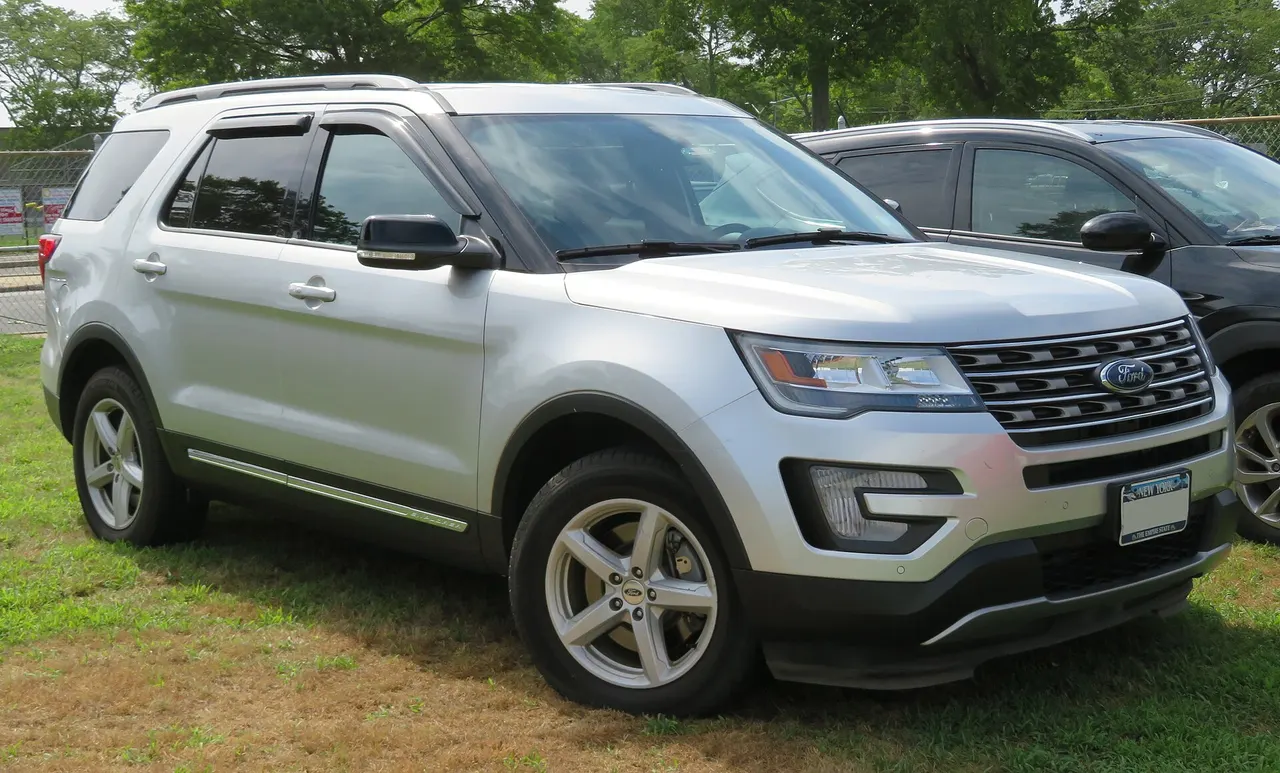
2017 Ford Explorer XLT (facelift)

Photo: 2017 Ford Explorer XLT (facelift) · Kevauto, CC BY-SA 4.0, via Wikimedia Commons

Problem areas

Ranked by severity-weighted complaints · share · median miles
  1. Engine20% · 38 complaints · median 9,000 miles
  2. Body and structure15% · 29 complaints · median 22,000 miles
  3. Fuel and propulsion6% · 11 complaints
  4. Electrical7% · 14 complaints · median 10,000 miles
  5. Air bags3% · 5 complaints
  6. Seats and belts3% · 6 complaints · median 10,000 miles
  7. Steering6% · 11 complaints · median 35,000 miles
  8. Speed control3% · 6 complaints
  9. Wheels and tires8% · 15 complaints · median 20,000 miles
  10. Brakes3% · 6 complaints · median 1,000 miles

Bars rank problem areas by complaints weighted for severity (crashes, fires, injuries and deaths count more). A complaint can name more than one area. Mileage is reported on about half of complaints.

What owners describe

Body and structure

Owners frequently report windshield trim, A-pillar pieces, and roof rails coming loose or flying off at highway speed, sometimes striking other vehicles. Many also mention long waits for recall parts, water leaks, and dashboard peeling that dealers struggled to fully fix.

Warning signs:
Many report hearing abnormal rattling, buzzing, or wind noise before a trim piece was seen flapping or flying off the vehicle.
What shops did:
Dealers often diagnosed the trim or roof rail as needing replacement, but many owners say parts were unavailable or the recall repair did not resolve the issue.
Mileage:
most between 40,000 and 85,000 miles, among 123 complaints that give it

“I have had a rack blow off twice in higher speed situations”

“the unsecured trim was blown into the field of view of the driver, creating a visibility hazard”

Engine

Many owners of this Explorer report exhaust smells entering the cabin during acceleration, causing headaches or nausea, often without a lasting dealer fix. Separately, several describe water pump failures leading to coolant mixing with oil, overheating, and sometimes costly engine replacement.

Warning signs:
Owners report smelling exhaust, sulfur, or burning odors while accelerating, along with headaches, nausea, or dizziness, and separately notice overheating warnings, coolant leaks, or check engine lights before stalling.
What shops did:
Dealers often could not duplicate or fix the odor issue, sometimes performing HVAC or software updates without success, while water pump failures were frequently repaired by replacing the water pump or, in worse cases, the entire engine.
Mileage:
most between 10,000 and 90,000 miles, among 51 complaints that give it

“When accelerating we can smell exhaust in the cabin of our vehicle. This has been an ongoing issue for more than a year.”

“the water pump had failed and needed to be replaced. The certified mechanic explained that coolant had leaked into the engine oil causing the engine to fail.”

Fuel and propulsion

Owners describe a strong gas or exhaust smell entering the cabin during driving, often paired with headaches, nausea, or dizziness, and some report the engine losing power or failing to accelerate. Dealers have made repairs like replacing seals, exhaust parts, or throttle bodies, but a few owners say the smell or stalling issue kept coming back.

Warning signs:
Owners describe headaches, nausea, dizziness, and confusion accompanying the odors, sometimes with no warning lights before sudden acceleration or power loss.
What shops did:
Dealers replaced door seals, exhaust systems, throttle bodies, or purge valves, though several owners report the odor or stalling problem returned or could not be diagnosed.
Mileage:
most between 15,000 and 50,000 miles, among 6 complaints that give it

“Strong smell of exhaust and rotten eggs entered the cabin 5 times during a 4 hour road trip during acceleration and at higher speeds”

“the vehicle failed to accelerate as intended. In addition, the contact stated that the vehicle jerked forward and backward”

Summaries are written with AI from the owner complaints shown on NHTSA's site and checked against them; quotes are word for word.

  • NHTSA 26V448000July 2026288,314 vehicles

    Structure: body

    Ford Motor Company (Ford) is recalling certain 2016-2019 Explorer vehicles. The roof rail covers may come loose and detach from the vehicle.

    Risk: A detached roof rail cover can create a road hazard, increasing the risk of a crash.

    Fix: Dealers will inspect the roof rail covers and as necessary, repair or replace the push-pins, rail clips, or roof rail covers, free of charge.

  • NHTSA 26V101000February 2026412,774 vehicles

    Suspension: rear

    Ford Motor Company (Ford) is recalling certain 2017-2019 Explorer vehicles. The rear suspension toe links may fracture.

    Risk: A rear toe link fracture can result in a loss of steering control, increasing the risk of a crash.

    Fix: Dealers will replace the toe links, free of charge.

  • NHTSA 25V685000October 202559,006 vehicles

    Equipment: electrical: engine block heater

    Ford Motor Company (Ford) is recalling certain 2016-2019 Lincoln MKC, 2016-2023 Explorer, 2019-2020 Fusion, 2019-2024 Ranger, 2020-2022 Lincoln Corsair, Escape, 2021-2024 Bronco, Bronco Sport, and 2022-2024 Maverick vehicles. The engine block heater may crack and develop a coolant leak, causing it to short circuit when the block heater is plugged in.

    Risk: An electrical short circuit can increase the risk of a fire.

    Fix: Owners are advised not to plug in their block heater until the vehicle is remedied.

  • NHTSA 24V031000January 20241,889,110 vehicles

    Structure: body: roof and pillars

    Ford Motor Company (Ford) is recalling certain 2011-2019 Explorer vehicles. The A-pillar trim retention clips may not be properly engaged, allowing the trim to detach.

    Risk: A detached trim piece can fall off the vehicle, becoming a road hazard and increasing the risk of a crash.

    Fix: Dealers will inspect and replace the A-pillar trim as necessary, free of charge.

  • NHTSA 21V316000May 2021616,967 vehicles

    Structure: body

    Ford Motor Company (Ford) is recalling certain 2016-2019 Explorer vehicles. The retention pins could loosen and allow the roof rail covers to detach from the vehicle.

    Risk: A detached roof rail cover can create a road hazard, increasing the risk of a crash.

    Fix: Dealers will install push-pins and replace any damaged rail clips and roof rail covers, as necessary, free of charge.

  • NHTSA 19V633000August 2019639,137 vehicles

    Seats: mid/rear assembly · Seats: front assembly: recliner

    Ford Motor Company (Ford) is recalling certain 2018-2020 F-150 and 2019-2020 F-250, F-350, F-450, and F-550 Super Duty pickup trucks, and 2018-2019 Ford Explorer, 2019-2020 Expedition, and 2020 Escape vehicles equipped with driver and/or passenger's manual front seat back recliner mechanisms. Also included are certain 2020 Ford Explorer and Lincoln Aviator vehicles equipped with rear outboard seats and manual seat back recliner mechanisms. The recliner mechanisms may be missing the third pawl required for seat back strength, resulting in a loose seat back. As such, these vehicles fail to comply with the requirements of Federal Motor Vehicle Safety Standard (FMVSS) numbers 202, "Head Restraints" and 207, "Seating Systems."

    Risk: A seat back with an improperly assembled recliner mechanism may have reduced strength and may not adequately restrain an occupant in a crash, increasing the risk of injury.

    Fix: Ford will notify owners, and Ford and Lincoln dealers will inspect the seat structure and replace them, as necessary, free of charge.

  • NHTSA 18V807000November 2018144 vehicles

    Fuel system, gasoline

    Ford Motor Company (Ford) is recalling certain 2018 Ford Explorer vehicles equipped with 2.3L or 3.5L GTDI engine. Due to an assembly error, the fuel pressure sensor may leak fuel.

    Risk: A fuel leak in the presence of an ignition source can increase the risk of a fire.

    Fix: Ford will notify owners, and dealers will replace the fuel line assembly, free of charge.

A recall only helps if the repair was done. Enter the vehicle's 17-character VIN on NHTSA's official recall lookup before you buy.
Service bulletins

Ford sent NHTSA 190 service bulletins and other notices to dealers covering the 2018 Explorer. These are repair instructions, not recalls. Warranty extensions and bulletins about its top problem areas:

  • 25B51 · May 2026Certain 2021-2024 Model Year Bronco, 2021-2024 Model Year Bronco Sport, 2020-2022 Model Year Corsair and Escape, 2016-2024 Model Year Explorer, 2019-2020 Model Year Fusion, 2016-2018 Model Year Focus…
  • SSM 54601 · February 2026Ford and Lincoln vehicles equipped with wired keyless entry keypad systems and accessory wireless keyless entry keypad systems may or may not come with a wallet card containing the master code.
  • SSM 52335 · March 2024For 2015-2024 Ford and Lincoln vehicles equipped with turbocharged engines and customer concern of an engine oil leak, refer to Workshop Manual (WSM), Section 303-00 for oil leak inspection and…
  • SSM 51536 · April 2023For 2000-2024 Ford and Lincoln vehicles, swapping a module from a vehicle for diagnosis purposes is likely to cause errors and is not recommended.
  • 20B27 S1 · September 2022Certain 2015-2019 MKC and 2016-2019 Explorer Vehicles Equipped With the 2.3L Engine and 6F35 Transmission Powertrain Control Module Reprogram Submitting Owner Letters
  • 21N01 · August 2021This program provides a no-cost, one-time repair (if needed) to the high-speed cooling fan relay and respective electrical terminals, if affected, to ten (10) years of service or 150,000 miles from…
  • SSM 49821 · May 2021Some 2015-2021 Ford and Lincoln vehicles may exhibit an illuminated MIL with diagnostic trouble codes (DTC) P0011, P0012, P0014, P0015, P0016, P0017, P0018, P0019, P0021, P0022, P0024 and/or P0025.
  • 20N11-S1 · February 2021A new 3M adhesive is now available, allowing a longer working time, along with mixing nozzles and applicator.

All 2018 Explorer bulletins on NHTSA ›

Questions owners ask

Is the 2018 Ford Explorer reliable?
Owners filed 191 complaints with NHTSA about the 2018 Ford Explorer in its first five years on the road, about 72 for every 100,000 sold: 0.4× the rate of a typical Explorer year. That's among the fewest of any Explorer year. Ratings compare Explorer years with each other using complaints filed with NHTSA; they don't measure every problem owners have.
What are the most common 2018 Explorer problems?
Owners' complaints most often involve the engine (20%), the body and structure (15%) and the fuel or propulsion system (6%). A complaint can name more than one area.
Has the 2018 Ford Explorer been recalled?
Yes. NHTSA lists 7 recall campaigns for the 2018 Ford Explorer, the most recent in July 2026 (structure). Enter the vehicle's VIN on NHTSA's recall lookup to see whether the repairs were done.

Sources

Owner complaints, recalls and manufacturer communications from NHTSA's public data files, as of September 24, 2026. Complaints are counted once each, over the model year's first 60 months on the road. UsedScore is not affiliated with NHTSA or Ford. The 2018 Ford Explorer on NHTSA.gov · How we rate