2017 Ford Explorer: Solid

Owners filed 542 complaints with NHTSA about the 2017 Ford Explorer in its first five years on the road, about 204 for every 100,000 sold: 1.1× the rate of a typical Explorer year. That's close to a typical year.

The biggest problem area, counting serious complaints more, is the engine (22% of complaints, median 14,000 miles).

Complaint index
1.1×
per vehicle sold, vs. a typical Explorer year
Rank
8th of 14
1st = fewest complaints
Complaints
542
first five years; 204 per 100,000 sold
Recalls
13
campaigns
5th generation, 2011–2019 · Updated September 24, 2026 · How we rate
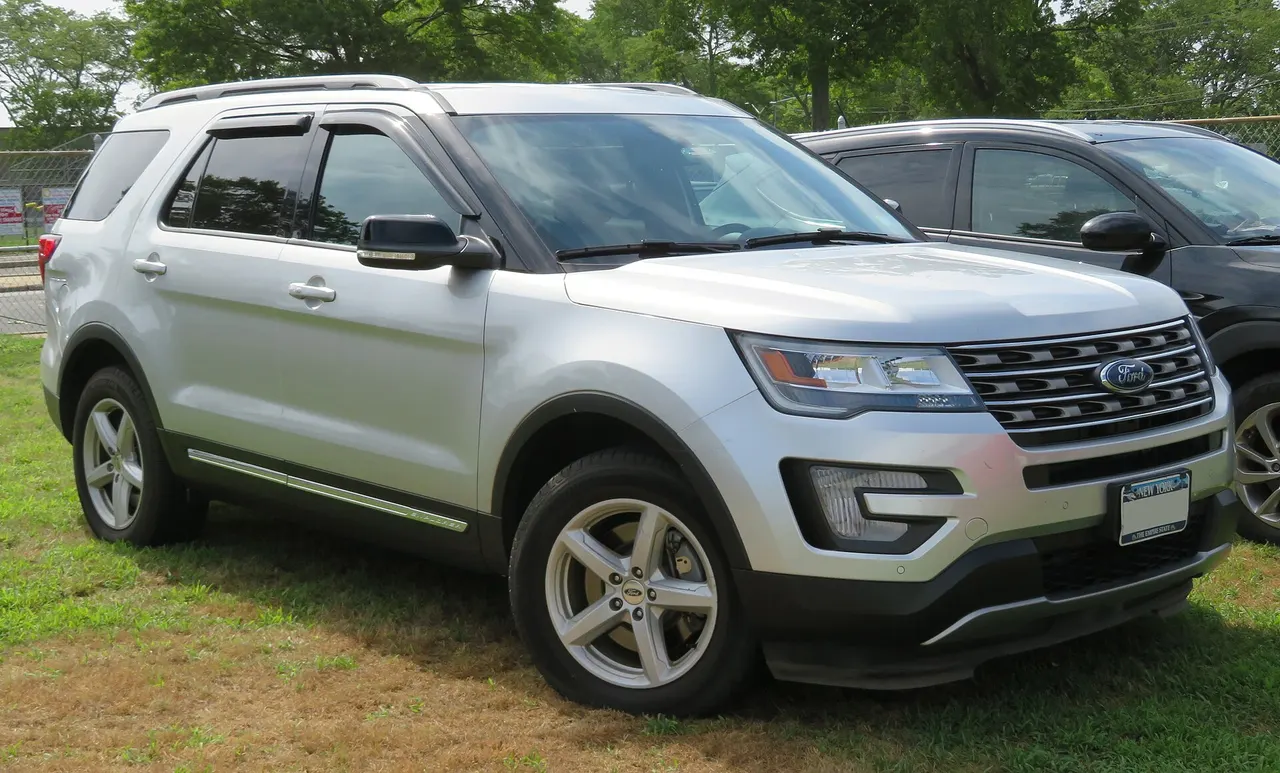
2017 Ford Explorer XLT (facelift)

Photo: 2017 Ford Explorer XLT (facelift) · Kevauto, CC BY-SA 4.0, via Wikimedia Commons

Problem areas

Ranked by severity-weighted complaints · share · median miles
  1. Engine22% · 119 complaints · median 14,000 miles
  2. Body and structure12% · 65 complaints · median 33,000 miles
  3. Wheels and tires12% · 64 complaints · median 20,000 miles
  4. Powertrain7% · 38 complaints · median 30,000 miles
  5. Air bags3% · 15 complaints · median 29,000 miles
  6. Electrical6% · 33 complaints · median 40,000 miles
  7. Steering6% · 34 complaints · median 37,000 miles
  8. Fuel and propulsion5% · 28 complaints · median 17,000 miles
  9. Seats and belts4% · 22 complaints · median 35,000 miles
  10. Brakes3% · 15 complaints · median 29,000 miles

Bars rank problem areas by complaints weighted for severity (crashes, fires, injuries and deaths count more). A complaint can name more than one area. Mileage is reported on about half of complaints.

What owners describe

Body and structure

Many 2017 Explorer owners describe exterior trim, roof rail covers, and door panels loosening or detaching, sometimes while driving at highway speed. Dealers frequently cite recall campaigns for these parts, though owners often say replacement parts were unavailable or repairs didn't hold.

Warning signs:
Owners report flapping, whistling, banging or slapping sounds from the trim or roof area, and loose or vibrating panels before pieces separated.
What shops did:
Dealers often replaced or reattached trim, roof rail assemblies or keyless entry pads, but many say replacement parts were on backorder or the failure recurred afterward.
Mileage:
most between 50,000 and 100,000 miles, among 312 complaints that give it

“Roof rails on both sides have come loose, ejecting from vehicle on roadway. This issue has happened three times.”

“the keypad had detached and was hanging on by the wires. The contact continued to drive, and the keypad detached from the vehicle.”

Engine

Many owners describe exhaust smells and carbon monoxide-like symptoms entering the cabin during acceleration, along with separate water pump and coolant leak failures leading to overheating. Repairs such as resealing, gasket replacement, or software updates often did not fully resolve the issue for these owners.

Warning signs:
Owners describe headaches, dizziness, nausea, blurred vision, and drowsiness, along with a rotten-egg or exhaust smell noticeable during hard acceleration or highway driving.
What shops did:
Dealers often resealed exhaust seams, replaced vents, gaskets, or manifolds, reprogrammed software, or installed carbon monoxide detectors, though many owners report the smell or symptoms returned.
Mileage:
most between 10,000 and 90,000 miles, among 175 complaints that give it

“After testing it was determined that co was coming into the cabin of my vehicle”

“the coolant reservoir was empty and linked the failure to a defective water pump”

Wheels and tires

Many 2017 Explorer owners report their original Hankook tires wearing out, chipping, or shredding tread well before expected mileage, sometimes accompanied by blowouts or air-pressure loss. Dealers and Hankook frequently acknowledged the wear pattern but usually offered only partial reimbursement toward new tires rather than free replacement.

Warning signs:
Owners noticed chunks or flakes of rubber peeling from the tread, low tire pressure warnings, vibration, hydroplaning, and visible cracking or bald spots before failures.
What shops did:
Dealers often inspected the tires and contacted Hankook, who typically offered only a prorated discount (commonly around 50%) toward replacement tires rather than full coverage; some dealers replaced tires while others found no cause.
Mileage:
most between 15,000 and 25,000 miles, among 52 complaints that give it

“I noticed chipping, cracking, & peeling away of the tread on my tires”

“The other 3 tires were in similar condition. You could pick pieces of rubber out of the tire with your bare hands”

Summaries are written with AI from the owner complaints shown on NHTSA's site and checked against them; quotes are word for word.

  • NHTSA 26V448000July 2026288,314 vehicles

    Structure: body

    Ford Motor Company (Ford) is recalling certain 2016-2019 Explorer vehicles. The roof rail covers may come loose and detach from the vehicle.

    Risk: A detached roof rail cover can create a road hazard, increasing the risk of a crash.

    Fix: Dealers will inspect the roof rail covers and as necessary, repair or replace the push-pins, rail clips, or roof rail covers, free of charge.

  • NHTSA 26V101000February 2026412,774 vehicles

    Suspension: rear

    Ford Motor Company (Ford) is recalling certain 2017-2019 Explorer vehicles. The rear suspension toe links may fracture.

    Risk: A rear toe link fracture can result in a loss of steering control, increasing the risk of a crash.

    Fix: Dealers will replace the toe links, free of charge.

  • NHTSA 25V685000October 202559,006 vehicles

    Equipment: electrical: engine block heater

    Ford Motor Company (Ford) is recalling certain 2016-2019 Lincoln MKC, 2016-2023 Explorer, 2019-2020 Fusion, 2019-2024 Ranger, 2020-2022 Lincoln Corsair, Escape, 2021-2024 Bronco, Bronco Sport, and 2022-2024 Maverick vehicles. The engine block heater may crack and develop a coolant leak, causing it to short circuit when the block heater is plugged in.

    Risk: An electrical short circuit can increase the risk of a fire.

    Fix: Owners are advised not to plug in their block heater until the vehicle is remedied.

  • NHTSA 25V347000May 2025492,145 vehicles

    Structure: body

    Ford Motor Company (Ford) is recalling certain 2016-2017 Explorer vehicles. The driver and front passenger B-Pillar door trim may detach while driving.

    Risk: Door trim that detaches while driving can create a road hazard, increasing the risk of a crash.

    Fix: Dealers will repair the B-pillar trim, free of charge.

  • NHTSA 24V031000January 20241,889,110 vehicles

    Structure: body: roof and pillars

    Ford Motor Company (Ford) is recalling certain 2011-2019 Explorer vehicles. The A-pillar trim retention clips may not be properly engaged, allowing the trim to detach.

    Risk: A detached trim piece can fall off the vehicle, becoming a road hazard and increasing the risk of a crash.

    Fix: Dealers will inspect and replace the A-pillar trim as necessary, free of charge.

  • NHTSA 21V537000July 2021631,176 vehicles

    Suspension: rear

    Ford Motor Company (Ford) is recalling certain 2013-2017 Explorer vehicles originally sold, or ever registered, in Connecticut, Delaware, Illinois, Indiana, Iowa, Kentucky, Maine, Maryland, Massachusetts, Michigan, Minnesota, Missouri, New Hampshire, New Jersey, New York, Ohio, Pennsylvania, Rhode Island, Vermont, Virginia, West Virginia, Wisconsin, and the District of Columbia. Exposure to road salt can cause the cross-axis ball joint to corrode and seize, resulting in a fracture of the outboard section of the rear suspension toe link.

    Risk: A rear toe-link fracture can result in a loss of steering control, increasing the risk of a crash.

    Fix: Dealers will inspect and replace as necessary, the cross-axis ball joint (CABJ) knuckle, and replace the rear suspension toe links, free of charge.

  • NHTSA 21V316000May 2021616,967 vehicles

    Structure: body

    Ford Motor Company (Ford) is recalling certain 2016-2019 Explorer vehicles. The retention pins could loosen and allow the roof rail covers to detach from the vehicle.

    Risk: A detached roof rail cover can create a road hazard, increasing the risk of a crash.

    Fix: Dealers will install push-pins and replace any damaged rail clips and roof rail covers, as necessary, free of charge.

  • NHTSA 20V675000March 2021454,941 vehicles

    Suspension: rear

    Ford Motor Company (Ford) is recalling certain 2013-2017 Explorer vehicles originally sold, or currently registered in Connecticut, Delaware, the District of Columbia, Illinois, Indiana, Iowa, Kentucky, Maine, Maryland, Massachusetts, Michigan, Minnesota, Missouri, New Hampshire, New Jersey, New York, Ohio, Pennsylvania, Rhode Island, Vermont, Virginia, West Virginia, and Wisconsin that were previously repaired under a prior recall numbers 16V-245 or 19V-435. The outboard section of a rear suspension toe link may fracture.

    Risk: A rear toe link fracture can result in a loss of steering control, increasing the risk of a crash.

    Fix: Ford will notify owners, and dealers will inspect the cross-axis ball joint (CABJ) knuckle attached to the rear suspension toe link and replace it as necessary, free of charge.

  • NHTSA 19V651000September 2019311,907 vehicles

    Seats

    Ford Motor Company (Ford) is recalling certain 2017 Ford Explorer vehicles equipped with power front seats. The seat frames may have sharp edges.

    Risk: Occupants my contact the sharp edges when reaching between the power front seat and center console, increasing their risk of injury.

    Fix: Ford will notify owners, and dealers will install protective tape on the exposed inside edge and tab of the power seat frames, free of charge.

  • NHTSA 19V435000June 20191,194,173 vehicles

    Suspension: rear

    Ford Motor Company (Ford) is recalling certain 2011-2017 Explorer vehicles. The rear suspension toe links may fracture due to stress on the rear suspension.

    Risk: A fractured rear toe link will cause a sudden change in vehicle handling and increase the risk of a crash.

    Fix: Ford will notify owners, and dealers will replace the rear suspension toe links, and inspect both rear toe link ball joints, replacing the rear wheel knuckle(s), if necessary, free of charge.

  • NHTSA 17V530000August 2017253 vehicles

    Steering

    Ford Motor Company (Ford) is recalling certain 2017 Explorer, Taurus and Police Interceptor Utility and Sedan vehicles. The steering gear heat shield fasteners may corrode, allowing the heat shield to detach.

    Risk: If the heat shield detaches, the steering gear may overheat, increasing the steering effort required by the driver, especially at lower speeds, and increasing the risk of a crash.

    Fix: Ford will notify owners, and dealers to inspect and replace the heat shield fasteners as needed, free of charge.

  • NHTSA 17V332000May 20172,204 vehicles

    Seats: front assembly: recliner · Seats

    Ford Motor Company (Ford) is recalling certain 2017 Ford Explorer, F-150, F-250, F-350, F-450 and F-550 vehicles equipped with a manual driver's seat back recliner mechanism. In the event of a crash, the seat back frame may not restrain the occupant due to having inadequate welds. As such, these vehicles may not meet the requirements of Federal Motor Vehicle Safety Standard (FMVSS) numbers 202a, "Head Restraints" and 207, "Seating Systems."

    Risk: If the occupant is not adequately restrained in the event of a crash, they have an increased risk of injury.

    Fix: Ford will notify owners, and dealers will inspect and, if necessary, replace the seat back frame, free of charge.

  • NHTSA 16V925000December 20161,163 vehicles

    Engine and engine cooling: engine: gasoline: turbo/supercharger

    Ford Motor Company (Ford) is recalling certain model year 2016 Ford Taurus, 2016-2017 Ford Flex, Lincoln MKT, 2017 Ford Explorer and Ford Explorer Police Interceptor Utility vehicles equipped with 3.5L GTDI engines. Improperly brazed turbocharger oil supply tubes may leak oil on engine components.

    Risk: An oil leak, in the presence of an ignition source, increases the risk of a fire.

    Fix: Ford will notify owners, and dealers will inspect, and if necessary, replace the turbocharger oil supply tubes, free of charge.

A recall only helps if the repair was done. Enter the vehicle's 17-character VIN on NHTSA's official recall lookup before you buy.
Service bulletins

Ford sent NHTSA 200 service bulletins and other notices to dealers covering the 2017 Explorer. These are repair instructions, not recalls. Warranty extensions and bulletins about its top problem areas:

  • 25B51 · May 2026Certain 2021-2024 Model Year Bronco, 2021-2024 Model Year Bronco Sport, 2020-2022 Model Year Corsair and Escape, 2016-2024 Model Year Explorer, 2019-2020 Model Year Fusion, 2016-2018 Model Year Focus…
  • SSM 54601 · February 2026Ford and Lincoln vehicles equipped with wired keyless entry keypad systems and accessory wireless keyless entry keypad systems may or may not come with a wallet card containing the master code.
  • SSM 52335 · March 2024For 2015-2024 Ford and Lincoln vehicles equipped with turbocharged engines and customer concern of an engine oil leak, refer to Workshop Manual (WSM), Section 303-00 for oil leak inspection and…
  • SSM 51536 · April 2023For 2000-2024 Ford and Lincoln vehicles, swapping a module from a vehicle for diagnosis purposes is likely to cause errors and is not recommended.
  • 20B27 S1 · September 2022Certain 2015-2019 MKC and 2016-2019 Explorer Vehicles Equipped With the 2.3L Engine and 6F35 Transmission Powertrain Control Module Reprogram Submitting Owner Letters
  • TSB-17-0044 · May 2022Exhaust odor in vehicle
  • 22N01 · March 2022Certain 2011-2017 Model Year Explorer Vehicles Rear Wheel Knuckle Replacement Ref 21S32 Submitting Owner Letter
  • 21N01 · August 2021This program provides a no-cost, one-time repair (if needed) to the high-speed cooling fan relay and respective electrical terminals, if affected, to ten (10) years of service or 150,000 miles from…

All 2017 Explorer bulletins on NHTSA ›

Questions owners ask

Is the 2017 Ford Explorer reliable?
Owners filed 542 complaints with NHTSA about the 2017 Ford Explorer in its first five years on the road, about 204 for every 100,000 sold: 1.1× the rate of a typical Explorer year. That's close to a typical year. Ratings compare Explorer years with each other using complaints filed with NHTSA; they don't measure every problem owners have.
What are the most common 2017 Explorer problems?
Owners' complaints most often involve the engine (22%), the body and structure (12%) and the wheels and tires (12%). A complaint can name more than one area.
Has the 2017 Ford Explorer been recalled?
Yes. NHTSA lists 13 recall campaigns for the 2017 Ford Explorer, the most recent in July 2026 (structure). Enter the vehicle's VIN on NHTSA's recall lookup to see whether the repairs were done.

Sources

Owner complaints, recalls and manufacturer communications from NHTSA's public data files, as of September 24, 2026. Complaints are counted once each, over the model year's first 60 months on the road. UsedScore is not affiliated with NHTSA or Ford. The 2017 Ford Explorer on NHTSA.gov · How we rate