2011 Ford Explorer: Avoid

Owners filed 402 complaints with NHTSA about the 2011 Ford Explorer in its first five years on the road, about 344 for every 100,000 sold: 2.0× the rate of a typical Explorer year. That's more than twice a typical year, across more than one problem area.

The biggest problem area, counting serious complaints more, is the steering (76% of complaints, median 32,000 miles).

Complaint index
2.0×
per vehicle sold, vs. a typical Explorer year
Rank
13th of 14
1st = fewest complaints
Complaints
402
first five years; 344 per 100,000 sold
Recalls
6
campaigns
5th generation, 2011–2019 (first year of the generation; redesign years often run worse) · Updated September 24, 2026 · How we rate
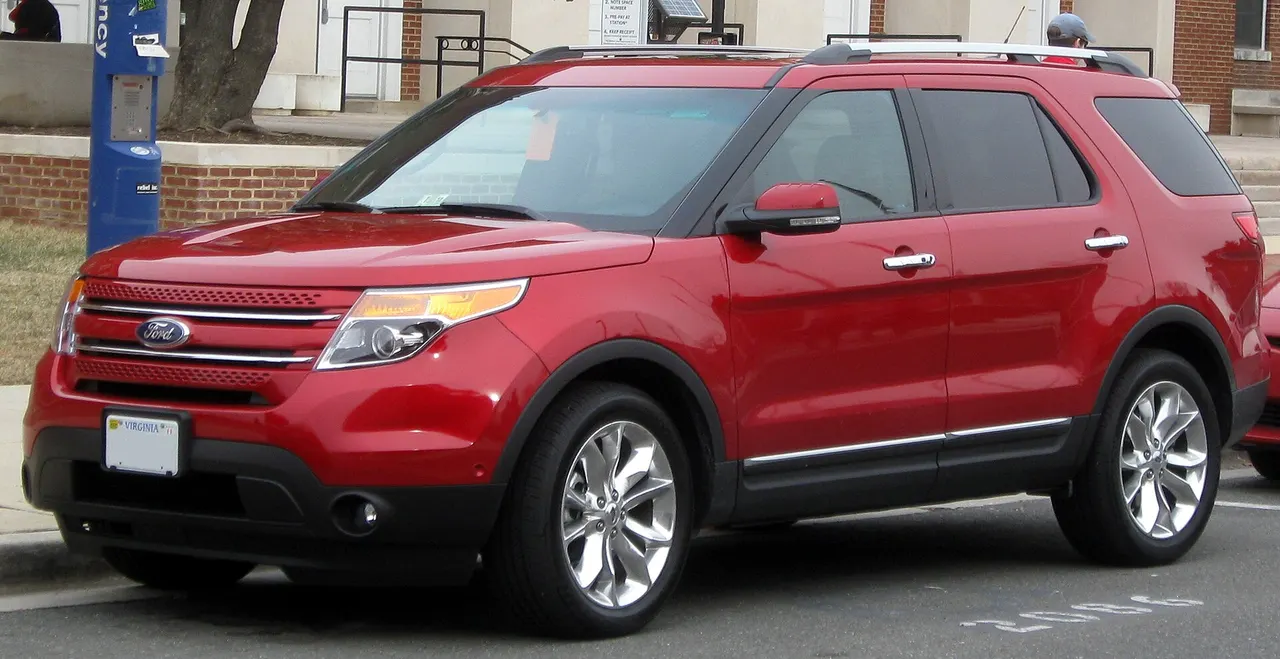
2011 Ford Explorer Limited

Photo: 2011 Ford Explorer Limited · IFCAR, public domain, via Wikimedia Commons

Problem areas

Ranked by severity-weighted complaints · share · median miles
  1. Steering76% · 304 complaints · median 32,000 miles
  2. Brakes10% · 41 complaints · median 28,000 miles
  3. Electrical8% · 34 complaints · median 33,000 miles
  4. Powertrain7% · 27 complaints · median 34,000 miles
  5. Engine5% · 20 complaints · median 30,000 miles
  6. Air bags2% · 9 complaints · median 40,000 miles
  7. Fuel and propulsion3% · 12 complaints · median 32,000 miles
  8. Speed control2% · 9 complaints · median 24,000 miles
  9. Seats and belts2% · 10 complaints · median 34,000 miles
  10. Body and structure4% · 17 complaints · median 24,000 miles

Bars rank problem areas by complaints weighted for severity (crashes, fires, injuries and deaths count more). A complaint can name more than one area. Mileage is reported on about half of complaints.

What owners describe

Brakes

Owners describe brakes that suddenly lose stopping power or feel soft, sometimes tied to power steering and traction control warnings appearing at the same time. Many say dealers struggled to diagnose the issue, replacing calipers or rotors repeatedly while some problems kept recurring.

Warning signs:
Many report dashboard warnings for power steering, traction control, or ABS, along with squealing, grinding, or a soft brake pedal before the failure.
What shops did:
Dealers often replaced brake calipers, pads, or rotors, though some owners say technicians could not duplicate the problem or find a cause.
Mileage:
most between 15,000 and 70,000 miles, among 51 complaints that give it

“As I pressed on the brake pedal it collapsed all the way to the floor but the brakes did not engage”

“There is squealing sound coming from front drivers side of vehicle and smoke coming from rear driver tire”

Electrical

Owners describe their Explorer's power steering suddenly cutting out while driving, sometimes with dash warnings, making the vehicle hard to control until they restart it. Many also report separate SYNC screen, backup camera, or APIM electronics failures that dealers struggled to permanently fix.

Warning signs:
Many mention warning chimes or lights (power steering assist fault, service advancetrac, terrain management fault) just before or during the steering loss, sometimes with dimming gauges or stalling.
What shops did:
Owners report dealers reset or reprogrammed systems, replaced steering columns, control modules, or APIM units, sometimes under recall coverage, though several say the problem returned or was never duplicated.
Mileage:
most between 30,000 and 100,000 miles, among 65 complaints that give it

“The power steering suddenly went out. The vehicle gave me a warning, but only after the steering failed. The vehicle became almost impossible to steer.”

“The "power steering failure" light comes on and the vehicle immediately becomes difficult to steer.”

Steering

Owners of this Explorer describe the power steering suddenly failing or locking up while driving, often with a dashboard warning just before it happens. Many say turning the car off and restarting temporarily fixes it, but the problem frequently returns and dealers sometimes struggle to permanently repair it.

Warning signs:
Many report warning chimes and dashboard messages such as "Power Steering Assist Fault," "Service AdvanceTrac," or traction/terrain warnings appearing right before or during the loss of steering.
What shops did:
Dealers often could not duplicate or diagnose the issue; when repaired, many report replacement of the steering rack, gear, control module, or angle sensor, sometimes delayed by backordered parts.
Mileage:
most between 30,000 and 130,000 miles, among 576 complaints that give it

“As we were slowing for a stop sign on a curve, the steering wheel literally jerked out of my husband's hands, straightening the wheels.”

“The steering got tight and there was little movement to turn the wheel right or left.”

Summaries are written with AI from the owner complaints shown on NHTSA's site and checked against them; quotes are word for word.

  • NHTSA 24V031000January 20241,889,110 vehicles

    Structure: body: roof and pillars

    Ford Motor Company (Ford) is recalling certain 2011-2019 Explorer vehicles. The A-pillar trim retention clips may not be properly engaged, allowing the trim to detach.

    Risk: A detached trim piece can fall off the vehicle, becoming a road hazard and increasing the risk of a crash.

    Fix: Dealers will inspect and replace the A-pillar trim as necessary, free of charge.

  • NHTSA 21V746000September 2021150,723 vehicles

    Suspension: rear

    Ford Motor Company (Ford) is recalling certain 2011-2013 Explorer vehicles originally sold, or currently registered in Connecticut, Delaware, the District of Columbia, Illinois, Indiana, Iowa, Kentucky, Maine, Maryland, Massachusetts, Michigan, Minnesota, Missouri, New Hampshire, New Jersey, New York, Ohio, Pennsylvania, Rhode Island, Vermont, Virginia, West Virginia, and Wisconsin. These vehicles may be equipped with a cross-axis ball joint (CABJ) replacement part that could seize, and result in a fracture of the outboard section of the rear suspension toe link.

    Risk: A rear toe link fracture can result in a loss of steering control, increasing the risk of a crash.

    Fix: Dealer will inspect for the presence of a CABJ.

  • NHTSA 19V435000June 20191,194,173 vehicles

    Suspension: rear

    Ford Motor Company (Ford) is recalling certain 2011-2017 Explorer vehicles. The rear suspension toe links may fracture due to stress on the rear suspension.

    Risk: A fractured rear toe link will cause a sudden change in vehicle handling and increase the risk of a crash.

    Fix: Ford will notify owners, and dealers will replace the rear suspension toe links, and inspect both rear toe link ball joints, replacing the rear wheel knuckle(s), if necessary, free of charge.

  • NHTSA 15V171000March 2015194,484 vehicles

    Structure: body: door

    Ford Motor Company (Ford) is recalling certain model year 2011-2013 Explorer vehicles. In the affected vehicles, the interior door handle return spring may unseat, resulting in interior door handle that does not return to the fully stowed position after actuation.

    Risk: If the interior door handle return spring is unseated, the door may unlatch in the event of a side impact crash, increasing the risk of personal injury.

    Fix: Ford will notify owners, and dealers will inspect all four of the interior door handles and either repair or replace them, free of charge.

  • NHTSA 14V286000May 2014179,027 vehicles

    Steering: electric power assist system

    Ford Motor Company (Ford) is recalling certain model year 2011-2013 Ford Explorer vehicles manufactured May 17, 2010, through February 28, 2012. The affected vehicles may experience an intermittent connection in the electric power steering gear, which can cause a loss of the motor position sensor signal resulting in a shut down of the power steering assist.

    Risk: If the vehicle experiences a loss of power steering assist it will require extra steering effort at lower speeds, increasing the risk of a vehicle crash.

    Fix: Ford will notify owners, and dealers will update the Power Steering Control Module (PSCM) software, free of charge.

  • NHTSA 11V063000February 20111,658 vehicles

    Seats

    Ford is recalling certain model year 2011 explorer vehicles manufactured from july 15, 2010, through december 13, 2010, equipped with second row 60% seats with manual recliner mechanisms that may have components that are out of dimensional specification. These seats fail to conform to the requirements of federal motor vehicle safety standard no. 207, "seating systems."

    Risk: In the event of a crash, the seat back may not provide the required strength, increasing the risk of injury.

    Fix: Ford will notify owners and dealers will repair the seats free of charge.

A recall only helps if the repair was done. Enter the vehicle's 17-character VIN on NHTSA's official recall lookup before you buy.
Service bulletins

Ford sent NHTSA 78 service bulletins and other notices to dealers covering the 2011 Explorer. These are repair instructions, not recalls. Warranty extensions and bulletins about its top problem areas:

  • SSM 54601 · February 2026Ford and Lincoln vehicles equipped with wired keyless entry keypad systems and accessory wireless keyless entry keypad systems may or may not come with a wallet card containing the master code.
  • SSM 48070 · July 2019Some 2009-2017 Expedition/Navigator, 2009-2014 F-150/Mustang, 2008-2009 Sable, 2008-2019 Taurus/Flex/MKT, 2013-2019 Police Interceptor Sedan/Utility, and 2011-2019 Explorer vehicles may exhibit…
  • SSM 47797 · February 2019Some 2009-2017 Expedition/Navigator, 2009-2014 F-150/Mustang, 2008-2009 Sable, 2008-2019 Taurus/Flex/MKT, 2013-2019 Police Interceptor Sedan/Utility, and 2011-2019 Explorer vehicles may exhibit…
  • SSM 46900 · November 2017Some vehicles may exhibit a no start condition with an illuminated malfunction indicator lamp (MIL) and a DTC P161A after PCM replacement.
  • SSM 46210 · November 2016Some 2010-2016 epas equipped vehicles may exhibit steering related noises.
  • SSM 46132 · October 2016Some 2008-2017 ford/mercury/lincoln vehicles equipped with sync may generate a vhr that identifies a concern with the brakes and suspension category indicating service is required due to a brake…
  • SSM-45821 · May 2016Siri eyes free functional issues using bluetooth and apple ios 9.2 and 9.2.1
  • TSB-14-0175 · September 2014Ford/lincoln: the ambient lighting on lincoln (mylincoln touch) vehicles will default to white and on ford (myford touch) vehicles will default to ice blue after the ignition switch cycle.

All 2011 Explorer bulletins on NHTSA ›

Questions owners ask

Is the 2011 Ford Explorer reliable?
Owners filed 402 complaints with NHTSA about the 2011 Ford Explorer in its first five years on the road, about 344 for every 100,000 sold: 2.0× the rate of a typical Explorer year. That's more than twice a typical year, across more than one problem area. Ratings compare Explorer years with each other using complaints filed with NHTSA; they don't measure every problem owners have.
What are the most common 2011 Explorer problems?
Owners' complaints most often involve the steering (76%), the brakes (10%) and the electrical system (8%). A complaint can name more than one area.
Has the 2011 Ford Explorer been recalled?
Yes. NHTSA lists 6 recall campaigns for the 2011 Ford Explorer, the most recent in January 2024 (structure). Enter the vehicle's VIN on NHTSA's recall lookup to see whether the repairs were done.

Sources

Owner complaints, recalls and manufacturer communications from NHTSA's public data files, as of September 24, 2026. Complaints are counted once each, over the model year's first 60 months on the road. UsedScore is not affiliated with NHTSA or Ford. The 2011 Ford Explorer on NHTSA.gov · How we rate